- Hitech City, Hyderabad
- Office Hours: 10:30 am - 7:30 pm
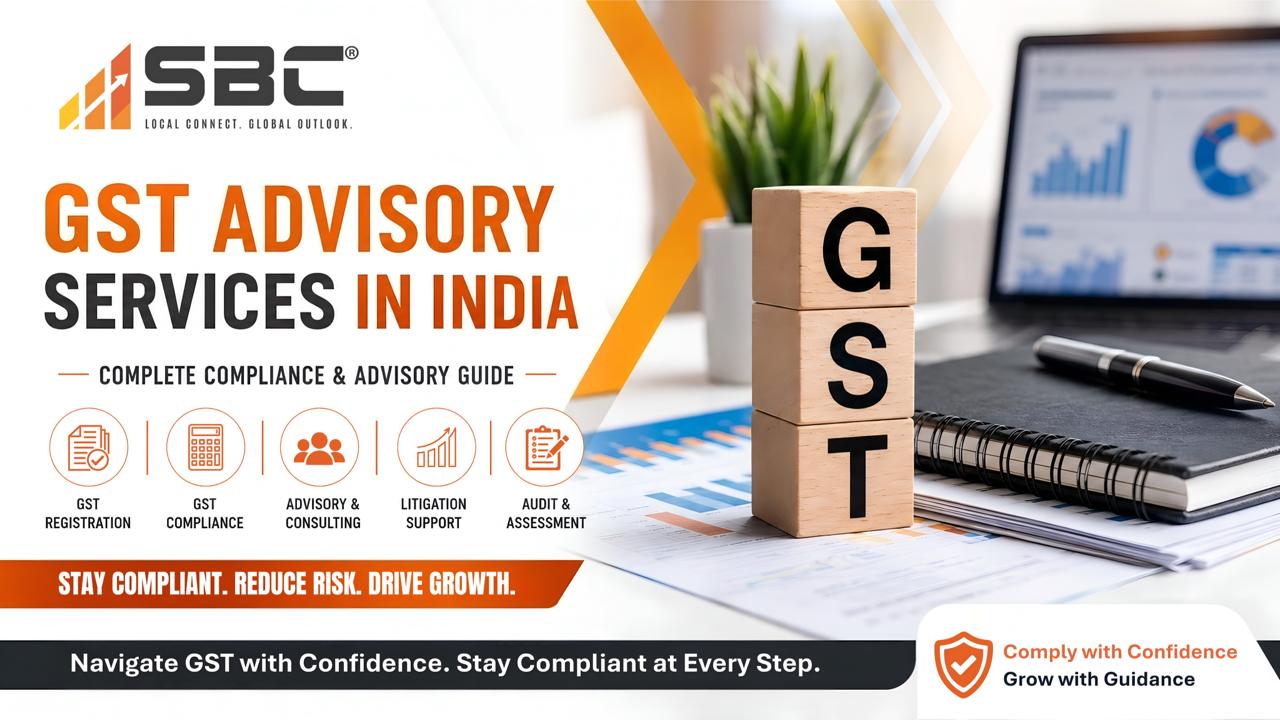
GST compliance has quietly gotten harder over the last few years, not easier. GSTN’s systems now cross-match GSTR-1, GSTR-3B, and GSTR-2B data almost in real time, e-invoicing thresholds keep expanding to smaller businesses, and a mismatch that used to slip through unnoticed now triggers an automated notice within weeks rather than surfacing in an audit years later. For a founder or finance head running a growing business, this means GST has shifted from a monthly filing chore into something that genuinely needs ongoing attention — which is exactly the gap GST Advisory Services in India exist to fill.
SBC works with startups, SMEs, and enterprises across Hyderabad, Mumbai, Pune, and Dubai who are dealing with this shift firsthand — some after receiving their first automated notice, others simply tired of reconciling GSTR-2B against their books manually every month. This guide walks through what GST advisory actually covers, why compliance has gotten more demanding, and where our team can plug in — from routine return filing to full litigation support when a dispute escalates.
Strip it down, and GST advisory is really about one thing: making sure what you report to the tax department matches what your books actually say, every single filing period, without exceptions.
That sounds simple until you’re running a business with multiple invoices, vendors who file late, input credit claims that need to match a vendor’s own filing, and a return calendar that doesn’t pause for anything. GST advisory covers registration, monthly and annual return filing, reconciliation between your books and what GSTN’s systems show, and — when something goes wrong — responding to notices and representing you through disputes.
The difference between basic bookkeeping-level GST filing and genuine advisory is the same difference as in transfer pricing or income tax: one tells you what already happened, the other helps you stay ahead of what’s coming, whether that’s a rule change, a reconciliation gap, or a notice before it escalates.
A few real shifts explain why GST needs more attention now than it did even two or three years ago:
None of this means GST has become impossible to manage — it means it rewards a business that treats it as an ongoing function rather than a once-a-quarter scramble before a deadline.
There’s a strategic upside worth naming here too. Businesses that build clean, monthly GST reconciliation into their routine don’t just avoid notices — they get a much clearer, real-time picture of input credit health, vendor compliance risk, and cash flow tied up in unclaimed ITC. That visibility matters well beyond the tax department’s expectations; it’s genuinely useful for running the business day to day, which is part of why GST advisory has shifted from a compliance-only function into something closer to financial hygiene.
Getting registration right at the outset avoids a surprising amount of downstream pain. This covers:
Our GST Compliance Services India are built around the reality that compliance now needs to happen continuously, not just at filing deadlines:
If you want the full picture of upcoming statutory deadlines across tax, secretarial, and compliance obligations, our Compliance Calendar is a useful companion resource alongside this guide.
Our GST Return Filing Services cover the full return cycle rather than treating each filing as an isolated task:
Filing on time is the baseline. What actually protects a business is filing accurately enough that it doesn’t generate a mismatch flag three months later.
Getting a GST notice is unsettling, but most notices trace back to a reconciliation gap or a process issue rather than fraud. Our GST Notice Reply Services cover:
This is a natural companion to our detailed guide on how to respond to a GST notice in India, which walks through the reply format and timelines in more depth.
Timing matters more than most businesses realise here. GST notices carry statutory reply windows that don’t flex for a busy month or a finance team caught off guard — missing that window can convert a straightforward reconciliation gap into a much harder-to-defend position. The businesses that come out of a notice cleanly are almost always the ones who treat the first week after receiving it as the priority, not the ones who wait until the deadline is close.
When a notice escalates into a genuine dispute, our GST Litigation Support Services provide representation through:
Having the same firm handle both compliance and litigation matters more than it might seem — a litigation team parachuting in cold, without the filing history and reconciliation context, starts every dispute at a disadvantage.
Most GST disputes that end up escalating share a common thread: the underlying issue was fixable at the notice stage, but a generic or rushed reply made the position harder to defend later. Part of the value in keeping compliance and litigation under one team is that the reply drafted at the notice stage is already written with an eye toward how it would hold up if the matter escalates — not just written to close out the notice as quickly as possible.
GST risk profiles differ meaningfully by sector:
A SaaS business exporting services and a manufacturer moving physical goods across state lines are dealing with entirely different GST questions, even though both are technically “just filing GST returns” — which is exactly why a sector-aware approach catches issues a generic filing service tends to miss.
Our GST advisory practice is based in Hyderabad, with dedicated teams also working from our Mumbai and Pune offices and close coordination with our Dubai team for businesses managing India-UAE transactions. Whether your business is headquartered in Hyderabad or works with our surrounding regional teams, the same reconciliation discipline and notice-response speed apply regardless of location. You can find office details on our contact page.
Pulling everything together, here’s what engaging SBC as your GST Registration Consultant India actually covers end to end:
If your GST reconciliation still feels like a monthly scramble, or you’ve already received a notice and aren’t sure where it came from, that’s exactly where this conversation should start. Get in touch with our GST advisory team for a practical review of where your compliance stands today.
GST Advisory Services in India work best as an ongoing function, not a once-a-quarter fix — the value compounds as reconciliation, filing accuracy, and notice-readiness all improve together over successive periods. Whether you’re a startup registering for the first time, an SME finance head trying to get ahead of ITC mismatches, or a business already navigating a notice, our team is a solid place to start that conversation.
SBC is a member of PrimeGlobal, a global network of 300 highly successful member firms having a presence in 100+ countries. SBC is a one-stop transfer pricing consultant firm for MNEs for regional/country comparable studies & filings.
SBC offers transfer pricing services in India through its branches and affiliates. SBC has a track of jurisdiction-wise precedents and practices.
Being Big 4 Alumni, our Transfer Pricing Audit team has direct hands-on experience in handling complex TP assignments and leverages the best practices drawn from the team’s collective experience with a view to delivering a robust transfer pricing documentation that can be defendable from a TP audit/scrutiny standpoint.
Being Big 4 Alumni, our Transfer Pricing Audit team has direct hands-on experience in handling complex TP assignments and leverages the best practices drawn from the team’s collective experience with a view to delivering a robust transfer pricing documentation that can be defendable from a TP audit/scrutiny standpoint.
Our network partners are former Tax Officers, Ex-Regulators, and Senior Counsels who share their expert opinions & views for countering aggressive regulatory positions.