- Hitech City, Hyderabad
- Office Hours: 10:30 am - 7:30 pm
Home > Common GST Compliance Mistakes That Trigger Tax Notices in 2026
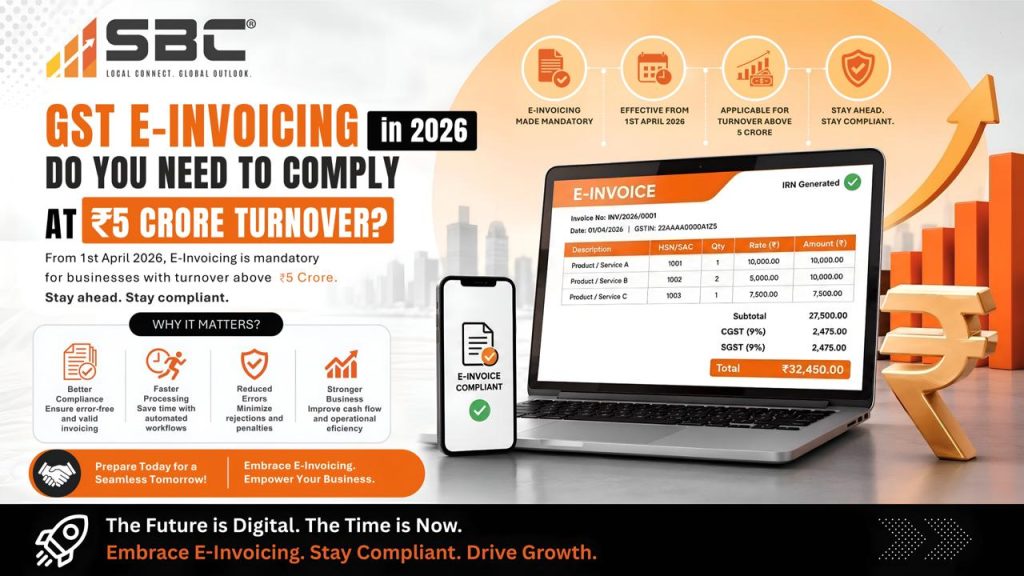
When GST e-invoicing first rolled out in 2020, it only applied to businesses with turnover above INR 500 crore, a rule so narrow it barely touched anyone outside India’s largest corporates. That’s not the situation anymore. The threshold has been stepped down repeatedly since, and it now sits at INR 5 crore, low enough that a genuinely large share of mid-size Indian businesses are already in scope, whether or not they’ve actually checked.
This matters more than a compliance footnote. An invoice issued without a valid IRN isn’t just non-compliant on your side, it’s legally invalid, which means your buyer can’t claim input tax credit on it. That turns a missed e-invoicing obligation into someone else’s cash flow problem, and in our experience, that’s usually the moment it gets noticed and escalated often via the same kind of automated GST compliance mismatch that triggers a notice. Here’s exactly where the threshold stands right now, how it got here, and how to check whether your business is actually in scope.
A GST e-invoice isn’t just a digital copy of a regular invoice, it’s a business-to-business invoice that’s been reported to and validated by a government-authorized Invoice Registration Portal (IRP) before it’s issued to your customer. The IRP checks the invoice data, generates an Invoice Reference Number (IRN), and returns a digitally signed QR code that gets embedded on the final invoice. Only once that IRN exists is the invoice considered valid under GST law.
This is different from simply emailing a PDF invoice or generating one through accounting software, the validation step through the IRP is what makes it an “e-invoice” in the legal sense, not the file format.
The Current Threshold INR 5 Crore, and Here’s What That Actually Means
As things stand for FY 2026-27, e-invoicing is mandatory for any GST-registered business whose aggregate annual turnover (AATO) has exceeded INR 5 crore in any financial year going back to 2017-18. This threshold was set under Notification 10/2023-Central Tax and has been in force since 1 August 2023, it’s held steady since then, even as other GST rules around it have continued to shift.
“Aggregate turnover” here means the total value of sales across all GSTINs registered under the same PAN, including exports and exempt supplies, not just the turnover sitting in one branch or one state registration.
| Effective Date | Turnover Threshold |
|---|---|
| October 2020 | Above INR 500 crore |
| January 2021 | Above INR 100 crore |
| April 2021 | Above INR 50 crore |
| April 2022 | Above INR 20 crore |
| October 2022 | Above INR 10 crore |
| August 2023 | Above INR 5 crore (Current) |
The direction here isn’t subtle. Every step down has pulled a wider band of ordinary mid-size businesses into scope, and CBIC’s own commentary has signaled the trend is toward covering more registered businesses over time, not fewer. If your business has been comfortably below past thresholds, that’s exactly the kind of assumption worth re-checking today rather than next year.
This is the detail that catches businesses off guard most often: the INR 5 crore check isn’t based on your current year’s turnover alone. If your aggregate turnover crossed INR 5 crore in any financial year since 2017-18, even a single year, even years ago, the e-invoicing obligation applies from the relevant notified date onward, and it doesn’t switch off if turnover later drops back below INR 5 crore.
In practice, this means a business that had one unusually large year a while back, followed by several quieter years since, can still be squarely in scope today. Checking only this year’s numbers and concluding you’re exempt is one of the more common and more costly mistakes we see.
Businesses with aggregate turnover of INR 10 crore or more face a tighter compliance layer on top of the base e-invoicing requirement. Since April 2025, invoices, credit notes, and debit notes older than 30 days from their invoice date can no longer be reported to the IRP for IRN generation at all, not delayed, simply blocked.
This is a genuinely easy rule to miss if invoice reporting isn’t built into a business’s regular monthly rhythm, since the consequence isn’t a penalty notice, it’s the invoice quietly becoming unable to be validated at all once the window closes.
A handful of categories remain outside e-invoicing requirements even above INR 5 crore turnover:
Worth flagging: SEZ units are exempt, but SEZ developers are not, a distinction that trips up businesses operating within SEZ structures more often than it should.
A proper check means looking at aggregate turnover across every GSTIN registered under your PAN, across every financial year since 2017-18, not just the most recent one. In practice:
Building this check into your regular filing rhythm is easier alongside our Compliance Calendar, which tracks this alongside your other statutory deadlines rather than as a separate, easy-to-forget task.
An invoice issued without a valid IRN when one was required isn’t a minor paperwork gap, it’s treated as not having been issued at all under GST law. That has two consequences that compound quickly: your own return reporting on the GSTN portal can be flagged as inconsistent, and your buyer loses the ability to claim input tax credit on that invoice. In practice, it’s often the buyer who notices first and escalates the issue back to you, since the missing ITC hits their numbers directly and if that escalation turns into an actual notice, our guide on how to respond to a GST notice in India walks through the reply format and timelines.
Based on the pattern of the last five years, it would be reasonable to expect the threshold to be reviewed again rather than left permanently at INR 5 crore but no specific future figure has been officially announced, and speculating on one wouldn’t be useful. What’s more actionable right now is treating the current INR 5 crore line as a moving target worth re-checking periodically, rather than a one-time box to tick.
If you haven’t checked your aggregate turnover history against this threshold recently or if you’re already above INR 5 crore and want a second opinion on whether your invoicing workflow is fully compliant, that’s exactly the kind of review worth having before a mismatch surfaces on its own. Our GST Advisory Services in India cover exactly this kind of compliance check, alongside ongoing return filing and reconciliation support.
Q: Does e-invoicing apply to B2C (business-to-consumer) sales?
A: No, the core e-invoicing mandate applies to B2B supplies and exports. B2C invoices follow separate rules, including dynamic QR code requirements for certain businesses, but not IRN generation.
Q: What happens if my turnover drops below INR 5 crore next year?
A: The obligation doesn’t switch off. Once your aggregate turnover has crossed INR 5 crore in any year since 2017-18, e-invoicing remains mandatory going forward, regardless of later fluctuations.
Q: Which Invoice Registration Portal (IRP) should I use?
A: Several government-authorised IRPs are available, including NIC’s portal and other authorised providers. Most businesses use whichever IRP their accounting software or ERP integrates with directly.
Q: Is a 6-digit HSN code mandatory for e-invoices?
A: Businesses above INR 5 crore turnover are required to use a minimum 6-digit HSN code at the item level; businesses at or below that threshold can use 4-digit codes.
Q: Does this affect my GST return filing directly?
A: Yes, indirectly a missing or invalid IRN can create inconsistencies between your e-invoice data and your GSTR-1 filing, which is exactly the kind of mismatch GSTN’s automated systems are now built to catch quickly.
Q: What if I’m not sure whether I’ve crossed the threshold in a past year?
A: This is worth a proper reconciliation rather than a guess, aggregate turnover has to be checked across every GSTIN under your PAN, across every year since 2017-18, which is easy to get wrong without a documented review.
Verify your email address below to download the PDF