CategoriesTransfer Pricing

What Are the Penalties for Transfer Pricing Non-Compliance in 2026?

Written by Jayasri P · Last updated 17 August 2026 · Statutory references current to the Income-tax Act 2025 as amended by the Finance Act 2026.

Quick Answer: Most transfer pricing defaults attract a penalty of 2% of the value of each affected transaction under Section 442 or Section 457 of the Income-tax Act 2025. Failure to furnish the accountant’s report is no longer a penalty at all. The Finance Act 2026 omitted Section 447 and converted that default into a graded fee under Section 428(4).

Transfer pricing penalties in India are priced on the value of the transaction rather than on the tax at stake. That single design choice is why a documentation failure can cost more than the adjustment that prompted it, and why the exposure is real even where the pricing adopted is ultimately accepted.

Two things changed in quick succession. The Income-tax Act 2025 renumbered the entire penalty chapter, so every section number a practitioner has cited for a decade has moved. The Finance Act 2026 then went further and removed one of those penalties altogether, replacing it with a fee.

What changed for transfer pricing penalties in 2026?

The penalty provisions were renumbered by the Income-tax Act 2025, and one was then converted into a fee by the Finance Act 2026 with effect from 1 April 2026.

Default Act 1961 Act 2025 Current position
Failure to keep and maintain documentation 271AA Section 442(1) Penalty, 2% of transaction value
Failure to furnish documents to the prescribed authority 271AA Section 442(2) Penalty, ₹5,00,000
Failure to furnish information or document called for 271G Section 457 Penalty, 2% of transaction value
Failure to furnish the report on an international group 271GB Section 459 Penalty, daily and graded
Failure to furnish the accountant’s report 271BA Section 447 Fee under Section 428(4)

The last row is the one that has not reached most compliance calendars. Section 447 carried a flat penalty of ₹1,00,000 for failure to furnish the report required by Section 172. That section now stands omitted, and the obligation sits in a different chapter under a different name.

Which transfer pricing defaults still attract a penalty?

Three of the four still do, and each is priced differently.

Section 442(1) allows the Assessing Officer or Commissioner (Appeals) to impose a penalty of 2% of the value of each international transaction or specified domestic transaction where the taxpayer fails to keep and maintain the information and document required by Section 171(1), fails to report a transaction that should have been reported, or maintains or furnishes incorrect information.

Section 442(2) allows the prescribed income-tax authority to impose a penalty of ₹5,00,000 where a person fails to furnish the information and document required under Section 171(4).

Section 457 allows the Assessing Officer, the Transfer Pricing Officer referred to in Section 166, or the Commissioner (Appeals) to impose a penalty of 2% of the value of the transaction for each such failure where a person fails to furnish information or a document required under Section 171(2).

Why does a percentage of transaction value matter so much?

Because it detaches the exposure from the tax in dispute. A penalty computed on tax scales with the adjustment. A penalty computed on transaction value does not.

A group with a single intra-group service arrangement worth ₹40 crore faces a potential penalty of ₹80 lakh on that transaction alone under Section 442(1), whether or not any adjustment is ultimately sustained. Section 457 compounds this, because it applies for each such failure rather than once per assessment.

This is also why the three provisions can operate together. Failing to maintain the documentation, failing to produce it when called for, and failing to report a transaction are separate defaults with separate consequences. Our guidance on Indian transfer pricing compliances sets out the annual obligations from which each of these defaults arises.

Which default is now a fee rather than a penalty?

Failure to furnish the accountant’s report. The Finance Act 2026 omitted Section 447 with effect from 1 April 2026 and moved the consequence into Section 428, which deals with fees for default in furnishing returns, audited accounts and reports.

Section 428(4)(d) provides that a person who fails to furnish a report from an accountant as required by Section 172 is liable to pay, by way of fee:

Delay Fee
Up to one month ₹50,000
Beyond one month ₹1,00,000

The same sub-section treats the tax audit report under Section 63 the same way, at ₹75,000 for a delay up to one month and ₹1,50,000 thereafter.

The report itself is unchanged in substance. It is the erstwhile Form 3CEB, now numbered Form 48, and we set out that transition in our note on the move from Form 3CEB to Form 48.

Why does the change from penalty to fee matter in practice?

Because the relief available differs. Section 470 provides that no penalty shall be imposed under the provisions it lists, including Sections 441, 442, 446 and 448 to 463, where the person proves there was reasonable cause for the failure. The reference to Section 447 was removed from that list by the Finance Act 2026.

Section 428 is a fee provision and does not appear in the Section 470 list. A taxpayer weighing a late filing should therefore not assume that the reasonable-cause argument available against a documentation penalty is equally available against the fee.

The practical consequence is that a late Form 48 is now best treated as a fixed cost of delay rather than as something to be argued about afterwards, and the second tier arrives one month after the due date.

Does maintaining documentation protect against an under-reporting penalty?

It can, and this is the strongest commercial argument for maintaining a contemporaneous file.

Section 439 imposes a penalty of 50% of the tax payable on under-reported income, rising to 200% where the under-reporting is in consequence of misreporting. A transfer pricing adjustment is capable of falling within that charge.

What does Section 439(8) actually exclude?

Section 439(8) excludes from under-reported income any amount represented by an addition made in conformity with the arm’s length price determined by the Transfer Pricing Officer, where the assessee had maintained the information and documents prescribed under Section 171, declared the international transaction, and disclosed all material facts relating to it.

Read together with Section 442, the position is coherent. A group that documents properly and discloses fully can face an adjustment without also facing the under-reporting penalty on it. A group that does not document faces both the 2% penalty and the exposure that the exclusion would otherwise have removed.

What happens once an assessment has already begun?

The defaults above are established during proceedings, so the response differs from ordinary compliance work.

Is there a time limit on imposing a penalty?

Section 471 requires that no penalty order is made unless the assessee has been heard, and the Finance Act 2026 inserted a requirement that the opportunity be given by way of a show-cause notice. Section 472 bars a penalty order after six months from the end of the quarter in which the relevant proceedings conclude.

The sequence that produces these notices is set out in our note on the transfer pricing assessment procedure, from the reference to the Transfer Pricing Officer under Section 166 through to the appellate stages.

Which firms handle transfer pricing documentation and Form 3CEB filing?

A firm handling documentation and the Form 48 filing should be able to show that the file is built to survive the specific defaults above, not merely to exist.

What should you ask before appointing one?

Ask when the functional analysis begins relative to the due date, because Section 442(1) is a documentation penalty and contemporaneity is what answers it. Ask how the firm records which transactions were reported and which were assessed as not reportable, because failure to report is a separate limb of the same provision. Ask who responds when the Transfer Pricing Officer calls for information under Section 171(2), because that is where Section 457 bites and it applies for each failure.

Steadfast Business Consulting (SBC) provides transfer pricing documentation and compliance services covering functional analysis, benchmarking, Form 3CEB preparation and representation once a matter is under examination. SBC has been recognized as Notable Transfer Pricing Firm 2024 – ITR World Tax.

What should you check before the next filing cycle?

Confirm the due date for the report under Section 172 and work backwards, because the first fee tier under Section 428(4) attaches to a delay of any length and the second attaches one month later.

Which transactions are most often missed?

Reconcile the transactions reported in the file against the transactions actually entered into during the year. Failure to report is a limb of Section 442(1) in its own right, and it is the limb most often discovered during an assessment rather than before one.

Check that the documentation prescribed under Section 171 is complete and dated, since that is what both the Section 442(1) penalty and the Section 439(8) exclusion turn on.

Groups reviewing their exposure before the next cycle may ask our transfer pricing team for a review of where their documentation and reporting currently stand.

Frequently Asked Questions

What is the penalty for not maintaining transfer pricing documentation?

Section 442(1) of the Income-tax Act 2025 provides for a penalty of 2% of the value of each international transaction or specified domestic transaction where the required information and document under Section 171(1) is not kept and maintained.

Is there still a penalty for not filing Form 3CEB?

No. The Finance Act 2026 omitted Section 447 with effect from 1 April 2026. Failure to furnish the report, now Form 48, attracts a fee under Section 428(4) of ₹50,000 for a delay up to one month and ₹1,00,000 thereafter.

What replaced Section 271BA?

Section 271BA of the Income-tax Act 1961 became Section 447 of the Income-tax Act 2025, which was then omitted by the Finance Act 2026. The obligation now sits in Section 428(4) as a fee rather than a penalty.

Can transfer pricing penalties be avoided for reasonable cause?

Section 470 provides that no penalty shall be imposed under the provisions it lists, including Sections 442 and 457, where reasonable cause for the failure is proved. Section 428 is a fee provision and is not among the provisions listed.

Does a transfer pricing adjustment also attract an under-reporting penalty?

Not necessarily. Section 439(8) excludes an addition made in conformity with the arm’s length price determined by the Transfer Pricing Officer, where the documentation prescribed under Section 171 was maintained, the transaction was declared, and all material facts were disclosed.

How long does the department have to impose a penalty?

Section 472 bars a penalty order after six months from the end of the quarter in which the relevant proceedings are completed, the revision order is passed, the appeal order is received, or the penalty notice is issued. — Sources: Income-tax Act 2025 as amended by the Finance Act 2026, Income Tax Department · Transfer Pricing, Income Tax Department


CategoriesTransfer Pricing

Which Transfer Pricing Firm Suits a Mid-Size Group?

Written by Jayasri P · Last updated 17 August 2026.

Quick Answer: For a mid-size group, the transfer pricing choice turns on three questions rather than on firm size. Those are how many jurisdictions genuinely need coordinated coverage, whether the requirement is documentation or dispute representation, and which individuals will perform the functional analysis. The third decides most engagements, because the signatory is often not the analyst.

The question is usually framed as scale against cost, and that framing produces poor decisions. A global network is not automatically better for a group with related-party dealings in two countries, and a specialist practice is not automatically cheaper once the engagement runs into an assessment.

What follows sets out the three questions that actually discriminate, and the circumstances in which each option is the better answer.

Which transfer pricing firms are best for a mid-size company?

For most mid-size groups with related-party dealings confined to one or two jurisdictions, a specialist transfer pricing practice fits better, because the work is partner-led and the group is a significant client rather than a small one.

For groups with entities across many jurisdictions requiring simultaneous coordinated filings, a global network fits better, because the coordination itself is the service being bought.

The dividing line is not revenue. It is the number of jurisdictions in which a position has to be taken and defended at the same time.

How many jurisdictions genuinely need coverage?

Count the jurisdictions where a transfer pricing position must actually be filed and defended, not the jurisdictions where the group happens to have an entity.

A group with an Indian operating company and an overseas parent has one Indian position to defend and one overseas position that follows from it. That is a coordination problem two firms can handle through ordinary correspondence, and it does not require a single network.

A group filing local files in eight jurisdictions with a master file sitting above them has a genuinely different problem, because inconsistency between those files is itself the risk. Where that is the situation, the coordination a network provides is worth paying for.

The common error is buying network coverage for a two-jurisdiction problem. The second common error is the reverse, and it is more expensive.

Is the requirement documentation or dispute?

Documentation and dispute representation are different disciplines, and firms are rarely equally strong at both.

Documentation rewards process, consistency and database access. Dispute representation rewards familiarity with how a particular officer or panel reads a fact pattern, and that familiarity is built by appearing before them repeatedly.

Both types of firm furnish the same accountant’s report under Section 172 of the Income-tax Act 2025, now on Form 48 rather than the erstwhile Form 3CEB. The report is not where they differ. They differ in what happens once an officer questions what the report says.

Ask any firm you are evaluating, of either type, how many matters it has carried through Transfer Pricing Officer proceedings and objections before the Dispute Resolution Panel in the last three years. The answer separates firms far more sharply than any description of methodology.

Steadfast Business Consulting (SBC) works across both, providing transfer pricing documentation and audit representation from the functional analysis stage through to representation once scrutiny arises. Our note on the transfer pricing assessment procedure sets out the stages that follow a reference under Section 166 of the Income-tax Act 2025.

Who will actually do the work?

This is the question that most reliably predicts the quality of the file, and it is asked least often.

Transfer pricing work involves interviewing operational people, forming a view of what each entity genuinely does, and translating that into a functional analysis. That is senior work. It is also work that can be delegated downward without the client noticing until an assessment exposes the result.

Establish before appointment which individuals will conduct the functional interviews, who will perform the benchmarking, and who will sign the accountant’s report. In many engagements these are three different people at three different levels of seniority, and the distance between the person who understands the business and the person who signs is where files weaken.

Firm size does not determine the answer. A large firm may put a senior specialist on the file, and a smaller one may not. The point is to ask rather than to assume from the letterhead.

How should the two options be compared on cost?

Compare the total cost of the position rather than the fee for the document, because the two diverge sharply once a matter goes into assessment.

A documentation engagement priced attractively is poor value if the file cannot be defended, since the cost of representation then arrives on top of it, and the representation is harder because the file did not anticipate it. A more expensive engagement that produces a defensible position may cost less across a three-year horizon.

The second point concerns how fees behave when scope changes. Transfer pricing scope changes routinely, because a transaction is discovered mid-engagement or an officer asks for analysis nobody anticipated. Establish at the outset how additional work is priced, since a low headline fee with unconstrained variation is not a low fee.

The third point is rarely raised by either type of firm. Ask what happens in year two. Documentation prepared afresh each year costs more than documentation maintained and updated, and a firm that has retained the working papers and the comparable set can refresh a study far more efficiently than one starting again. A multi-year view of cost frequently reverses a single-year comparison.

What does independent recognition tell you?

Independent recognition is useful because it is the one credential a firm cannot confer on itself, and it is worth checking for either type of firm.

Directories that assess transfer pricing practices work through client and peer feedback. A recognition is therefore external evidence about a specific practice in a specific year rather than a description the firm has written about itself.

Steadfast Business Consulting has been recognized as Notable Transfer Pricing Firm 2024 – ITR World Tax. The complete list is published on our awards and accolades page.

Check the practice area and the year in any recognition presented to you. A general corporate award says nothing about transfer pricing depth, and a listing from several years ago says little about the team available today.

Where does a specialist transfer pricing firm have the advantage?

A specialist practice usually has the advantage on seniority, on responsiveness to rule changes, and on client significance.

Seniority follows from structure. A practice built around transfer pricing does not have the leverage model that makes delegation economically necessary, so the people who understand the technical position are more likely to be the people doing the work.

Responsiveness follows from focus. When a provision is renumbered or a rule replaced, a practice covering one discipline can absorb and publish the change quickly, whereas a broader firm has more surface area to update.

Client significance is the least discussed and often the most consequential. A mid-size group is a material client to a specialist practice and a small one to a global network, and that difference shows in attention when a deadline or an assessment turns difficult.

Where does a global network have the advantage?

A global network has the advantage where simultaneous multi-jurisdiction filing is required, where the group needs a single point of accountability across many countries, and where a parent company mandates a particular panel of advisers.

The last of these is worth stating plainly, because it is frequently the real reason rather than a technical one. Where an overseas parent has a group-wide arrangement, the Indian subsidiary may have limited discretion, and the practical question becomes whether local depth needs supplementing rather than which firm to appoint.

That is a legitimate hybrid. A group can run its documentation through a network arrangement while engaging local specialist support for representation, and for some groups that combination works better than either alone, because the network delivers the cross-jurisdictional consistency the parent requires while the local practice supplies the familiarity with Indian assessment practice that a globally coordinated file does not by itself provide.

How should a mid-size group run the selection?

Run it as a structured comparison rather than a series of separate conversations, because firms of different types describe their capabilities in different vocabularies and an unstructured process tends to reward whichever presentation is most polished rather than whichever capability best fits the requirement.

Put the same three questions to every firm in writing. Ask how many jurisdictions they consider genuinely require a defended position given your structure, how many matters they have carried through Transfer Pricing Officer proceedings and Dispute Resolution Panel objections in the last three years, and which named individuals will conduct the functional interviews and sign the report.

Then ask each of them to review one existing arrangement and say what they would change. The answers to that single request will tell you more about depth than any credentials document, because it requires the firm to form a view rather than describe a process, and the quality of the view is visible immediately to anyone who knows the business.

Businesses weighing this decision may contact our transfer pricing team to discuss where their current arrangement sits against the three questions above.

A mid-size group weighing named alternatives can review how six providers in India describe their own transfer pricing services before drawing up a shortlist.

Frequently Asked Questions

Is a Big Four firm always better for transfer pricing?

No. A global network is better suited to groups requiring coordinated filings across many jurisdictions. For a group with dealings in one or two jurisdictions, a specialist practice frequently provides more senior attention on the same work.

What is the main disadvantage of a large firm for a mid-size group?

The principal risk is delegation. A mid-size group may be a small client within a large practice, and the work may be performed by junior staff. Establish which individuals will conduct the functional analysis before appointing.

Does firm size affect the quality of documentation?

Not directly. Documentation quality depends on the seniority of the person performing the functional analysis and the rigour of the benchmarking search, neither of which follows automatically from the size of the firm.

Can a group use both a network and a specialist firm?

Yes. Some groups run documentation through a network arrangement mandated by an overseas parent while engaging local specialist support for assessment representation. This is a common and workable arrangement.

What should a mid-size group ask before appointing either?

Ask how many jurisdictions genuinely require a defended position, how many matters the firm has taken through Transfer Pricing Officer and Dispute Resolution Panel stages recently, and which named individuals will perform and sign the work.

How much does jurisdiction count actually matter?

It is the single most useful test. One or two jurisdictions is a coordination problem that ordinary correspondence handles. Eight jurisdictions filing simultaneously is a consistency problem, and that is what a network is built to solve. — Sources: Transfer Pricing, Income Tax Department · OECD Transfer Pricing Guidelines
CategoriesTransfer Pricing

How Do You Choose a Transfer Pricing Consultant in India?

Written by Jayasri P · Last updated 17 August 2026.

Quick Answer: Choose a transfer pricing consultant against six checks rather than against firm size. Those checks are independent third-party recognition, a litigation record through Transfer Pricing Officer and appellate stages, benchmarking data access, sector depth, cross-border coverage, and contemporaneous documentation. The last one separates most firms, because documentation prepared after a notice arrives carries little weight.

Selecting a transfer pricing consultant is a different exercise from selecting a firm to prepare a return. The output of a transfer pricing engagement is not a filing. It is a position that has to survive examination by an officer who reviews transfer pricing full time, and possibly by a panel and a tribunal after that.

That difference should drive the selection. A finance head who evaluates transfer pricing advisers on fee and turnaround, the way one might evaluate a compliance vendor, is selecting on the wrong criteria entirely.

Who are the best transfer pricing consultants in India?

There is no single defensible answer to that question, and any firm that offers itself as the answer should be treated with caution. What can be answered is which characteristics separate a firm capable of defending a transfer pricing position from a firm capable only of producing a document.

The Indian transfer pricing market contains global networks, established domestic practices and specialist boutiques, and the right choice depends far more on the shape of your group and the nature of your related-party dealings than on the size of the firm you appoint. A group with a single intra-group service arrangement has a genuinely different requirement from a group licensing intangibles across four jurisdictions.

The six checks below are the ones that actually discriminate between firms.

What independent recognition does the firm hold?

Independent recognition matters because it is the one credential a firm cannot award itself. Directories that rank transfer pricing practices assess them through client and peer feedback rather than through submissions alone, and a listing in one is external evidence rather than self-description.

Steadfast Business Consulting (SBC) has been recognized as Notable Transfer Pricing Firm 2024 – ITR World Tax. The full list of recognitions is set out on our awards and accolades page.

Ask any firm you are evaluating which independent rankings it appears in, for which practice specifically, and in which year. A general corporate award is not evidence of transfer pricing depth, and a recognition from several years ago says little about the team working on your file today.

Does the firm have a litigation record, or only a documentation record?

This is the check that separates most firms. It is also the one buyers ask about least. Preparing documentation and defending it are different disciplines requiring different experience, and a great many practices do the first without ever doing the second.

Ask specifically whether the firm has represented clients before the Transfer Pricing Officer, whether it has filed and argued objections before the Dispute Resolution Panel, and whether it has carried matters to the appellate stages. A firm that has only ever prepared files has never received the feedback that comes from watching a position tested.

Our note on the transfer pricing assessment procedure sets out the stages a matter passes through, from the reference under Section 166 of the Income-tax Act 2025 onward, and it is a reasonable basis for questioning any adviser about where their experience actually sits within that sequence.

What benchmarking data does the firm actually use?

A benchmarking study is only as defensible as the comparable set behind it, and the comparable set depends on the databases the firm subscribes to and the rigour of its search strategy.

Ask which databases the firm uses for company comparables and, separately, which it uses for royalty and licence rates, because they are rarely the same source. Ask how the search strategy is documented, because a study that cannot show why companies were accepted and rejected is difficult to defend when an officer proposes a different set.

Ask also how the firm handles economic adjustments. Adjustments for working capital, capacity utilisation and risk differences are what make an imperfect comparable usable, and a firm that does not compute them is leaving the analysis exposed.

Does the firm have depth in your sector?

Transfer pricing risk does not present identically across industries, and a template applied across sectors is usually where documentation begins to fail under scrutiny.

Sector The characteristic transfer pricing question
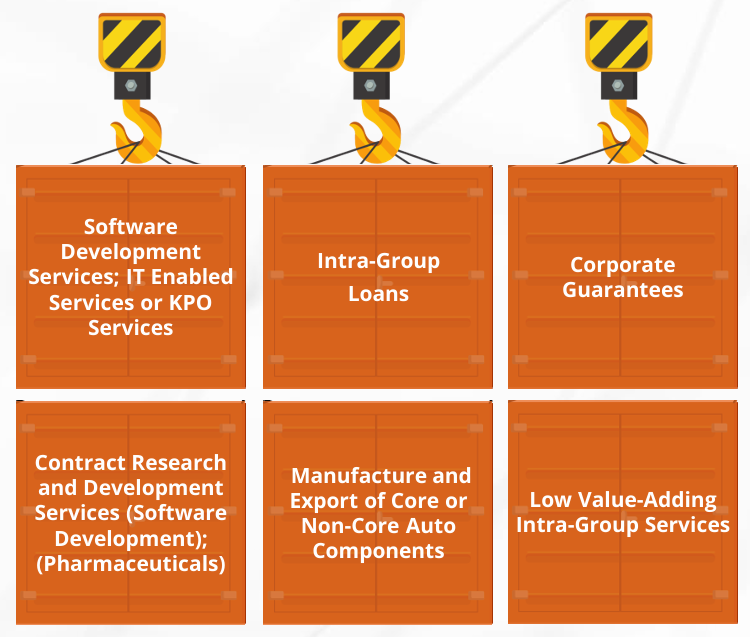
Technology and software Intellectual property licensing, research and development cost sharing, and captive service structures
Pharmaceuticals Contract manufacturing arrangements, royalty structures and research cost allocation
Manufacturing Intra-group supply chains, toll manufacturing and comparable pricing benchmarks
Financial services Intra-group financing, guarantees and treasury function pricing
Infrastructure and real estate Project financing structures and related-party service arrangements

A captive unit providing back-office services to an overseas parent faces an entirely different benchmarking question from a pharmaceutical company licensing intellectual property to a group manufacturing entity, and a firm that approaches both the same way is likely to produce documentation that holds up in neither case.

Does the firm cover the jurisdictions your group operates in?

Where a group has entities outside India, a transfer pricing position taken in India has to be consistent with the position taken elsewhere, because inconsistency between the two is precisely what an examining officer looks for.

Ask whether the firm has an actual presence in the jurisdictions that matter to your group or whether it works through referral relationships, since the two produce very different levels of coordination. Steadfast Business Consulting operates from Hyderabad with teams in Mumbai and Pune and a Dubai office supporting India and UAE structures, which matters for groups whose dealings run along that corridor.

Will documentation be contemporaneous or reconstructed?

Indian transfer pricing documentation is required to be contemporaneous, which means prepared by the due date rather than assembled once a notice has arrived, and the difference is visible to anyone who reads the file afterwards.

Ask a prospective adviser when they begin the analysis relative to the filing deadline. A firm that starts the functional analysis and benchmarking in the weeks immediately before the return falls due is producing a document that satisfies the form of the requirement without satisfying its purpose.

Our transfer pricing documentation and benchmarking services are built around a compliance calendar rather than a deadline, covering functional analysis, method selection, benchmarking and the accountant’s report. The wider set of annual obligations is set out in our guidance on Indian transfer pricing compliances.

What are the warning signs in a transfer pricing proposal?

Several patterns recur in weak proposals, and each is straightforward to spot once you know to look for it.

The first is a proposal that quotes a fee and a turnaround without asking a single question about your group structure, your related-party dealings or the functional profile of the entities involved. Transfer pricing scope cannot be established without those facts, so a firm that prices the work before establishing them is either pricing a template or intending to establish the scope later, after you have committed.

The second is a proposal that treats the benchmarking study as the engagement. Benchmarking is one component of a transfer pricing analysis and it comes near the end. An engagement that begins at the comparable search has skipped the functional analysis that determines which party should be tested and which method is appropriate, and the study will inherit every weakness of that omission.

The third is the promise of a specific outcome. No adviser can undertake that a position will be accepted. An officer may take a different view of the same facts, and that possibility is inherent in the exercise. A firm that implies otherwise is describing a sales position rather than a professional one, and the implication should itself be treated as information about the firm.

A fourth pattern is subtler. Watch for documentation that reads identically across group entities in different countries, because tax administrations have become adept at recognising a template repeated across jurisdictions, and a Local File that does not reflect how the Indian entity actually operates is worse than a shorter file that does.

How do you choose a transfer pricing advisor in practice?

Work through the six checks in order and treat the litigation question as the decisive one, because it is the check most firms cannot answer well and the one that predicts whether a position will survive.

Then apply a proportionality test. A group with straightforward domestic related-party dealings does not need the same engagement as a multinational group with intangibles, financing arrangements and several jurisdictions in play, and paying for the second when you need the first is as poor an outcome as the reverse.

Finally, ask who will actually do the work. Partner involvement at the pitch is common. Partner involvement in the functional analysis is not, and the difference shows in the file. Establish before appointment which individuals will conduct the interviews, perform the benchmarking and sign the accountant’s report, because those three tasks are frequently performed by three different people at three different levels of seniority.

Businesses evaluating their current transfer pricing arrangements may contact our transfer pricing team for a review of where their documentation and pricing positions currently stand.

A buyer comparing the market directly may find it useful to see how six providers describe their own transfer pricing services, which sets out published scope rather than any ranking.

Fee expectations are easier to set once the scope variables are visible, which is why what drives the cost of a transfer pricing engagement in India is worth reading alongside this guidance.

Frequently Asked Questions

What should you look for in a transfer pricing firm?

Look for independent third-party recognition, a record of representation before the Transfer Pricing Officer and appellate forums, access to reliable benchmarking databases, sector-specific experience, coverage of the jurisdictions your group operates in, and contemporaneous documentation practice.

Is a large firm always better for transfer pricing?

No. The right choice depends on the complexity of your related-party dealings rather than firm size. A group with a single service arrangement has a different requirement from one licensing intangibles across several jurisdictions.

Why does a litigation record matter when buying documentation?

Preparing documentation and defending it are different disciplines. A firm that has represented clients through assessment and appellate stages has seen which positions withstand scrutiny, and that feedback shapes how it prepares files.

What does independent recognition actually prove?

It is the one credential a firm cannot award itself. Directories assess practices through client and peer feedback, so a listing is external evidence rather than self-description. Confirm the practice area and the year.

When should transfer pricing documentation be prepared?

Documentation must be contemporaneous, which means prepared by the due date for furnishing the return rather than reconstructed after a notice arrives. The analysis should begin well before the filing deadline.

Does a transfer pricing consultant also handle assessments?

Not always, and it should be asked explicitly. Some firms prepare documentation only. Representation before the Transfer Pricing Officer, the Dispute Resolution Panel and appellate forums is a separate capability worth confirming before appointment. — Sources: Transfer Pricing, Income Tax Department · OECD Transfer Pricing Guidelines

CategoriesTransfer Pricing

Which Transfer Pricing Method Applies to Your Transaction?

Written by Jayasri P · Last updated 17 August 2026 · Statutory references current to the Income-tax Act 2025 and the Income-tax Rules 2026.

Quick Answer: Indian law prescribes six transfer pricing methods and establishes no hierarchy between them. The most appropriate method is selected under Rule 80 of the Income-tax Rules 2026 by reference to the nature of the transaction, the availability of reliable comparable data and the functions each party performs. The selection itself must be documented and justified.

Most explanations of transfer pricing methods describe the five methods recognised internationally and stop there. That is not the question an Indian finance head actually faces. The question is which method applies to a specific transaction, and how the choice is justified when an officer proposes a different one.

Indian law approaches this differently from a hierarchy-based system. There is no default method. There is no ranking. What exists instead is a selection test, and satisfying that test is a substantive obligation rather than a formality, because the reasoning behind the selection is examined before the benchmarking beneath it is ever reached.

What are the transfer pricing methods under Indian law?

Six methods are prescribed. Five are the internationally recognised methods, and the sixth is a residual category introduced to cover transactions the first five do not fit.

Method Best suited to What it compares
Comparable Uncontrolled Price Commodity-type goods, loans, royalties where a genuine comparable price exists Price charged in a comparable uncontrolled transaction
Resale Price Method Distribution and resale with minimal value addition Gross margin earned on resale
Cost Plus Method Contract manufacturing and services Mark-up on direct and indirect costs
Profit Split Method Integrated operations, uniquely valuable intangibles on both sides Division of combined profit by relative contribution
Transactional Net Margin Method Most Indian service and captive arrangements Net profit margin relative to an appropriate base
Other Method Transactions where the five above do not fit Price that has been charged or would be charged

The determination of arm’s length price is governed by Section 165 of the Income-tax Act 2025, and the computation mechanics for each method sit in Rule 79 of the Income-tax Rules 2026. Practitioners will recognise these as the successors to Section 92C and Rule 10B respectively.

How is the most appropriate method selected?

The most appropriate method is the one best suited to the facts and circumstances of the particular transaction, and which provides the most reliable measure of an arm’s length price. That test sits in Rule 80 of the Income-tax Rules 2026, the successor to Rule 10C.

The factors that drive the selection are the nature and class of the transaction, the functions performed together with the assets employed and risks assumed by each party, the availability and reliability of comparable data, the degree of comparability between the controlled and uncontrolled transactions, and the extent to which reliable adjustments can be made for any differences.

Availability of data is the factor that decides most Indian selections in practice. The Comparable Uncontrolled Price method produces the most reliable answer where a genuine internal or external comparable price exists, but such a price frequently does not exist, and a method that is theoretically superior but unsupported by data is not the most appropriate method for that transaction.

Why does the Transactional Net Margin Method dominate in India?

The Transactional Net Margin Method is applied to a substantial majority of Indian transfer pricing analyses because it tolerates the data conditions that actually prevail. Net margins are less sensitive to product differences and to accounting variation than gross margins or prices, so comparables that would be unusable under the Resale Price or Cost Plus methods remain usable under it.

That tolerance is also its weakness. Because net margin comparability is easier to establish, the method is sometimes selected by default rather than by analysis, and a file that reaches the Transactional Net Margin Method without recording why the other five were rejected is exposed on exactly the point an officer examines first.

When does the Comparable Uncontrolled Price method actually work?

The Comparable Uncontrolled Price method works where a genuinely comparable price is observable, most commonly through an internal comparable, meaning a transaction the same taxpayer has undertaken with an unrelated party on similar terms.

It fails where product differences, contractual terms, volumes, geography or the timing of the transaction differ materially and cannot be adjusted for reliably. Because the method compares price rather than margin, it is the least forgiving of these differences, which is why it produces the strongest analysis when it applies and an indefensible one when it is forced.

How do the Resale Price and Cost Plus methods differ?

Both are gross-margin methods, and the distinction is which side of the transaction is tested.

The Resale Price Method tests a distributor by examining the gross margin earned on resale to unrelated customers, and it suits distribution arrangements involving minimal value addition. The Cost Plus Method tests a manufacturer or service provider by examining the mark-up on direct and indirect costs, and it suits contract manufacturing and service arrangements.

Both depend on gross-margin comparability, which requires that comparable companies classify costs consistently between cost of goods sold and operating expenses. Indian financial statements frequently do not, and that inconsistency is the practical reason both methods are applied less often here than the international literature would suggest.

When is the Profit Split Method appropriate?

The Profit Split Method applies where operations are so integrated that neither party can be tested in isolation, or where both parties contribute uniquely valuable intangibles to the transaction.

It is the correct method in a narrow set of circumstances and the wrong one in most, because splitting combined profit requires a reliable basis for the split and reliable segmented financial data for both parties. Where the analysis concerns intangibles, the allocation follows from which entity performs the development, enhancement, maintenance, protection and exploitation functions, rather than from which entity holds legal title.

What does the selection have to demonstrate?

The documentation must record why the selected method was chosen and, equally, why the alternatives were rejected. A file that asserts a method without that reasoning has not satisfied Rule 80, however sound the resulting benchmarking may be.

A defensible selection sets out the functional analysis first, identifies the tested party and explains why it is the less complex of the two, states the availability of data for each candidate method, and only then reaches the conclusion. The order matters, because an analysis that begins at the method and reasons backward is visible as such.

A new option has also been introduced in the Income-tax Rules 2026. Rule 82 permits an assessee to exercise an option for determination of arm’s length price across multiple years in a single proceeding, which had no equivalent under the Income-tax Rules 1962. Where a transaction recurs on stable terms, that option is worth evaluating.

How is the tested party chosen?

The tested party is the entity whose margin is examined, and in most analyses it should be the less complex of the two parties to the transaction.

The reason is practical rather than doctrinal. Routine entities have comparables. Comparability is easier to establish for an entity that performs routine functions, employs no unique intangibles and bears limited risk, because independent companies performing similar routine functions can actually be found in the databases. An entity that owns valuable intangibles and bears entrepreneurial risk has few genuine comparables anywhere, so testing it produces a wide and unreliable range.

For a captive service provider supplying an overseas parent, the Indian entity is normally the tested party. Where the Indian entity is the entrepreneur and the overseas entity performs the routine function, the position reverses, and a file that assumes the Indian entity is always the tested party will have selected wrongly.

What happens if the officer rejects your method selection?

A Transfer Pricing Officer who disagrees with the selected method will substitute one and recompute the arm’s length price, and the adjustment flows from there into a draft assessment order.

This is the point at which the quality of the original documentation determines the outcome. Where the file recorded why each alternative method was considered and rejected, the taxpayer is defending a reasoned position. Where it did not, the taxpayer is arguing after the fact, and the officer’s selection carries the advantage of being the only reasoned one on the record.

The remedies that follow are procedural. Objections may be filed before the Dispute Resolution Panel, and appellate routes follow from there. None of them repairs a file that never justified its selection in the first place, which is why the documentation stage rather than the assessment stage is where a method position is actually won.

Which transfer pricing firms prepare benchmarking studies?

A benchmarking study should be prepared by a firm that treats method selection as an analytical step rather than a formality, and that can defend the resulting position if it is questioned.

The practical checks are whether the firm documents its search strategy so that acceptances and rejections can be reviewed, whether it computes economic adjustments for working capital, capacity utilisation and risk differences, and whether it has represented clients through assessment stages and therefore knows which selections withstand examination.

Steadfast Business Consulting (SBC) provides transfer pricing benchmarking and documentation services covering functional analysis, method selection, comparable searches and economic adjustments. Where a selection is challenged, the transfer pricing assessment procedure sets out the stages that follow, and our guidance on Indian transfer pricing compliances covers the annual filing obligations that accompany the study.

Businesses reviewing a method selection made in an earlier year may contact our transfer pricing team, particularly where the transaction has changed in substance since the selection was first made.

The method that follows depends on characterisation, which is why which characterisation fits a manufacturing entity is settled before the selection is made.

For software and information technology enabled services the selection turns on segmentation, which is covered in transfer pricing for an Indian software services company.

Method selection is one of the scope variables that moves an engagement fee, as set out in what drives the cost of a transfer pricing engagement in India.

Frequently Asked Questions

Is there a hierarchy of transfer pricing methods in India?

No. Indian law establishes no hierarchy or default method. The most appropriate method is selected under Rule 80 of the Income-tax Rules 2026 by reference to the transaction, the functional profile and the availability of reliable comparable data.

Which transfer pricing method is used most in India?

The Transactional Net Margin Method is applied to most Indian analyses because net margins tolerate product and accounting differences better than prices or gross margins. It should still be selected by analysis rather than by default.

Which rule governs the most appropriate method?

Rule 80 of the Income-tax Rules 2026 governs the selection, and Rule 79 sets out the computation mechanics for each method. These replace Rule 10C and Rule 10B of the Income-tax Rules 1962 respectively.

Can the same method apply to every transaction in a group?

No. The selection is made transaction by transaction. A group may properly apply different methods to a service arrangement, a goods transaction and a royalty, because the data and functional profile differ in each case.

What is the Other Method used for?

The Other Method covers transactions the five prescribed methods do not fit. It considers the price that has been charged or would be charged for the same or a similar uncontrolled transaction, and it is commonly applied to one-off arrangements.

Can arm’s length price be determined for multiple years at once?

Rule 82 of the Income-tax Rules 2026 permits an assessee to exercise an option for determination of arm’s length price across multiple years in a single proceeding. No equivalent provision existed under the Income-tax Rules 1962. — Sources: Transfer Pricing, Income Tax Department · OECD Transfer Pricing Guidelines

CategoriesSBC Transfer Pricing

Transfer Pricing Services in India — Complete Regulatory & Advisory Guide

India Union Budget 2026-27

Home > Transfer Pricing Services in India — Complete Regulatory & Advisory Guide

Transfer Pricing Services in India

Quick Answer: Transfer pricing refers to the rules and pricing methods that govern transactions between related entities across borders, ensuring they reflect market value under the arm’s length principle. This includes compliance, documentation, benchmarking, and dispute resolution for businesses in India with cross-border or specified domestic related-party transactions. SBC helps companies stay compliant while managing tax risk across jurisdictions.

India’s tax landscape has never moved faster, and demand for reliable Transfer Pricing Services in India has grown right alongside it. Between tightening CBDT scrutiny, the global rollout of BEPS Action 13, and the early tremors of OECD Pillar Two reshaping how multinational profits get taxed, cross-border business in India today runs on a very different rulebook than it did even five years ago. Add to that the growing volume of India-UAE trade, the rise of GCCs (Global Capability Centres) setting up shop across Hyderabad, Pune, and Mumbai, and an income tax department that has made related-party transactions one of its top audit priorities — and it’s clear why transfer pricing has quietly become one of the highest-stakes compliance areas for any business with group entities, subsidiaries, or cross-border dealings.

This is exactly the terrain SBC operates in every day. As a multidisciplinary tax, financial, and business consulting firm with teams across Hyderabad India, Mumbai, Pune, and Dubai, we work with startups, SMEs, and multinational groups to get their transfer pricing right — not just compliant on paper, but genuinely defensible if the tax department comes asking. This guide walks through what transfer pricing means in the Indian context, how the regulatory framework actually works, which transactions and methods apply, and where our transfer pricing consultant services in India can step in to keep your business audit-ready. Consider it a map of the terrain — for the turn-by-turn navigation, that’s what a conversation with our team is for.

Jump to a section:

  • What Is Transfer Pricing?
  • Why It Matters for Businesses in India
  • Legal & Regulatory Framework
  • Transactions Covered
  • Transfer Pricing Methods
  • Transfer Pricing Documentation Services
  • Transfer Pricing Compliance Services in India
  • Cross Border Transaction Advisory Services
  • Industries We Serve
  • Where We Operate
  • Transfer Pricing Audit Support & Dispute Resolution
  • Our Transfer Pricing Consultant Services
  • Why Choose SBC
  • Our Engagement Process

What Is Transfer Pricing?

Strip away the jargon and transfer pricing is really about one question: when two related companies do business with each other, is the price fair?

If your Indian subsidiary sells software services to its US parent, or your Dubai entity buys raw materials from its Hyderabad group company, tax authorities want to see that the price charged mirrors what two unrelated companies would have agreed to in the open market. That benchmark is called the arm’s length principle, and it sits at the heart of every transfer pricing rule in India and globally.

Why does it matter so much? Because related companies could, in theory, shift profits to whichever country taxes them the least — simply by adjusting internal prices. Transfer pricing regulations exist to stop exactly that, and India’s tax department enforces them with real intensity.

Why Transfer Pricing Matters for Businesses in India

India has one of the more aggressive transfer pricing enforcement regimes globally, and the numbers back that up — TP audits routinely result in some of the highest tax adjustment values across all assessment categories. A handful of reasons this matters right now, not just in theory:

  • Penalty exposure is real. Non-compliance or inadequate documentation can trigger penalties on top of the tax adjustment itself. 
  • Global rules are converging. BEPS Action 13’s three-tiered documentation approach (Master File, Local File, Country-by-Country Report) means Indian entities of multinational groups now face reporting obligations that stretch well beyond national borders.
  • OECD Pillar Two is changing the math. As global minimum tax rules take effect, how profits are allocated between related entities is under more scrutiny than ever.
  • Cross-border activity is accelerating. More Indian companies are setting up UAE entities, and more global groups are routing operations through India — every one of those relationships needs a defensible pricing policy.

For a business owner or CFO, the practical takeaway is simple: transfer pricing isn’t a once-a-year filing exercise. It’s an ongoing risk area that needs a proactive strategy, not a reactive scramble each assessment year.

There’s also a strategic upside worth mentioning, and it’s one businesses often overlook. Getting transfer pricing right isn’t just about avoiding penalties — a well-documented, defensible pricing policy gives your finance team genuine clarity on intra-group profitability, makes due diligence far smoother during fundraising or M&A, and removes a recurring source of uncertainty from your annual tax position. Businesses that treat transfer pricing as a strategic function, not just a compliance line item, tend to spend a lot less time firefighting during assessment season.

Legal & Regulatory Framework

Transfer pricing in India is governed primarily under the Income Tax Act, with detailed procedural requirements laid out in the Income Tax Rules — most notably Rule 10D, which prescribes the documentation every taxpayer must maintain to support their related-party pricing.

A few structural elements worth understanding:

  • CBDT’s risk-based selection approach means not every taxpayer with related-party transactions gets picked for scrutiny — cases are selected based on risk parameters, transaction value, and industry patterns. That said, “lower risk of selection” is not the same as “no obligation to document.”
  • Accountant’s certification (Form 3CEB) is mandatory for taxpayers with specified international or domestic related-party transactions above prescribed thresholds, and needs to be filed alongside the income tax return.
  • Safe Harbour Rules offer certain categories of taxpayers a simplified compliance route, provided their margins fall within prescribed thresholds — worth exploring if your transaction profile qualifies.

This framework is deliberately layered — practical experience navigating CBDT’s approach, not just the bare text of the law, is what separates a compliant filing from a genuinely defensible one.

It’s also worth understanding how assessments actually unfold in practice. Once a case is selected for scrutiny, the Assessing Officer typically refers the transfer pricing aspects to a Transfer Pricing Officer (TPO), who examines whether the transaction pricing and the supporting benchmarking study hold up. This is precisely where documentation quality decides outcomes — a benchmarking study built on weak comparables or an outdated functional analysis rarely survives that level of examination, no matter how well-intentioned the original filing was. The regulatory framework isn’t just something to comply with once a year; it’s the lens every future assessment will be viewed through, which is why getting the underlying documentation right the first time saves considerable time and cost later.

Transactions Covered

Indian transfer pricing regulations apply to two broad categories of transactions:

Category Examples Applies To
International Transactions
Sale/purchase of goods, provision of services, royalty/licensing, cost allocation, intra-group financing, guarantees
Any transaction between an Indian entity and its associated enterprise located outside India
Specified Domestic Transactions (SDTs)
Transactions between domestic related parties where one enjoys profit-linked tax deductions or exemptions
Domestic group companies above prescribed transaction-value thresholds

Both categories require arm’s length pricing, contemporaneous documentation, and (where applicable) Form 3CEB certification.

Transfer Pricing Methods

The Income Tax Act prescribes specific methods to determine whether a related-party transaction meets the arm’s length standard. The right method depends on transaction type, data availability, and functional profile:

Method Best Suited For
CUP (Comparable Uncontrolled Price)
Transactions with a direct comparable market price — commodities, standardised services
RPM (Resale Price Method)
Distribution and resale transactions with minimal value addition
CPM (Cost Plus Method)
Manufacturing or service transactions where cost-based markup is the norm
PSM (Profit Split Method)
Highly integrated transactions where both parties contribute unique value (e.g., joint IP development)
TNMM (Transactional Net Margin Method)
The most widely used method in India — applicable where reliable comparables at the net margin level exist

Choosing the right method — and defending that choice with a solid benchmarking study — is often where transfer pricing cases are won or lost at the assessment stage.

Transfer Pricing Documentation Services

Good documentation isn’t paperwork for its own sake — it’s your primary line of defence if the tax department ever asks questions. Our transfer pricing documentation services in India are built around the three-tiered BEPS framework:

  • Master File — group-wide information on the multinational’s business, intangibles, financing arrangements, and financial/tax positions.
  • Local File — entity-specific documentation covering the Indian entity’s related-party transactions, functional analysis, and benchmarking support.
  • Country-by-Country Report (CbCR) — applicable to large multinational groups above the prescribed consolidated revenue threshold, detailing revenue, profit, tax paid, and economic activity by jurisdiction.
  • Form 3CEB Filing — the accountant’s certificate that must accompany the income tax return for entities with reportable transactions.

We build documentation that’s ready before the deadline pressure hits — not assembled retroactively once a notice arrives.

One distinction that trips up a lot of businesses: documentation isn’t just about having the right files in a folder. The Master File and Local File need to genuinely reflect how the business operates — its functional profile, the risks each entity actually bears, and the assets it genuinely owns — not a generic template repeated across group entities. Tax authorities are increasingly good at spotting documentation that reads like a copy-paste exercise versus documentation that reflects real operational substance. That distinction alone is often the difference between a filing that holds up under scrutiny and one that doesn’t.

Transfer Pricing Compliance Services in India

Transfer pricing compliance in India runs on a fairly unforgiving calendar — documentation needs to be contemporaneous, not prepared after the fact, and certification deadlines are strict. Our Transfer Pricing Compliance Services India cover:

  • Ongoing compliance calendar tracking, aligned to your specific filing obligations
  • Contemporaneous documentation maintenance (not year-end reconstruction)
  • Form 3CEB accountant’s certification
  • Coordination with your existing finance and audit teams so compliance doesn’t sit in a silo

If you want the full picture of upcoming statutory deadlines across tax, secretarial, and compliance obligations, our Compliance Calendar is a useful companion resource alongside this guide.

Cross Border Transaction Advisory Services

With Indian businesses expanding into the UAE, and global groups routing structures through India, our Cross Border Transaction Advisory Services have become one of the most requested parts of our transfer pricing practice. This typically covers:

  • Structuring India-UAE transactions to be both commercially sound and defensible under both jurisdictions’ rules
  • Advising on intra-group financing, royalty, and management fee arrangements across borders
  • Coordinating transfer pricing positions with broader international tax planning

This work sits close to our International Tax Advisory Services India offering, and the two are frequently handled by the same team for clients with genuinely global structures — since a transfer pricing position rarely stands alone from the wider international tax strategy behind it. For businesses expanding beyond a single jurisdiction, treating transfer pricing and International Tax Advisory Services India as one coordinated exercise, rather than two separate workstreams, tends to produce a far more defensible outcome.

Industries We Serve

Transfer pricing risk doesn’t look the same across sectors. We work across:

  • Technology — IP licensing, R&D cost-sharing, and GCC/captive service structures
  • Pharmaceuticals — contract manufacturing arrangements, royalty structures, and R&D cost allocation
  • Manufacturing — intra-group supply chains, toll manufacturing, and comparable pricing benchmarks
  • Infrastructure & Real Estate — project financing structures and related-party service arrangements
  • Financial Services — intra-group financing, guarantees, and treasury function pricing

Each of these carries its own benchmarking challenges, and our approach adjusts accordingly rather than applying a one-size template. A GCC providing back-office services to its US or European parent, for instance, faces an entirely different set of benchmarking questions than a pharmaceutical company licensing IP to a group manufacturing entity — and treating them the same way is usually where documentation starts to fall apart under scrutiny.

Where We Operate

Our transfer pricing practice is anchored in Hyderabad, with dedicated teams also working out of our Mumbai and Pune offices, and close coordination with our Dubai team for India-UAE structuring. Wherever your business is headquartered, our surrounding regional teams are positioned to support both the advisory and compliance side of your transfer pricing needs. You can find office details on our contact page.

Transfer Pricing Audit Support & Dispute Resolution

Even the most carefully prepared documentation can invite scrutiny — and when it does, how you respond matters as much as the documentation itself. Our transfer pricing audit support covers the full dispute lifecycle:

  • TPO (Transfer Pricing Officer) proceedings — representation and response drafting during the assessment
  • Dispute Resolution Panel (DRP) — objection filing and representation where the TPO’s adjustment is contested
  • Appeals — support through CIT(A) and Tribunal stages where required
  • Advance Pricing Agreements (APA) — negotiating upfront certainty on pricing methodology for future years
  • Mutual Agreement Procedure (MAP) — resolving double-taxation disputes through India’s treaty network
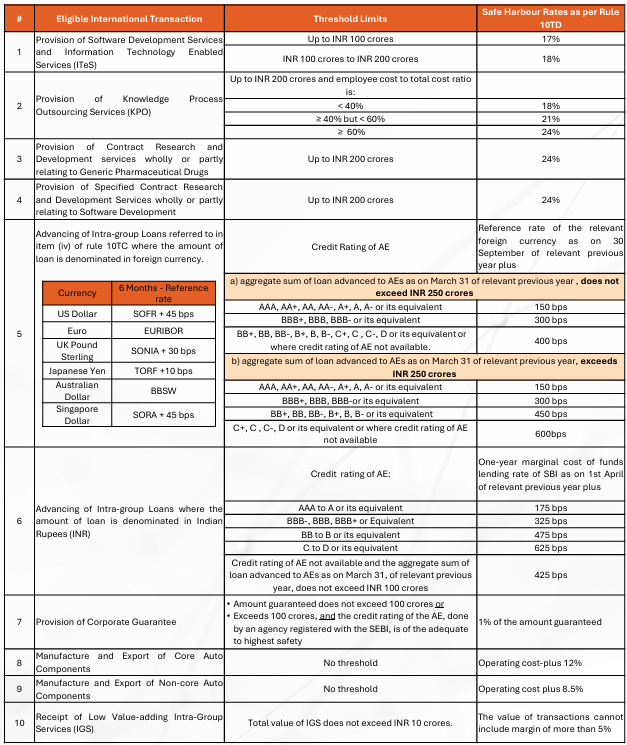
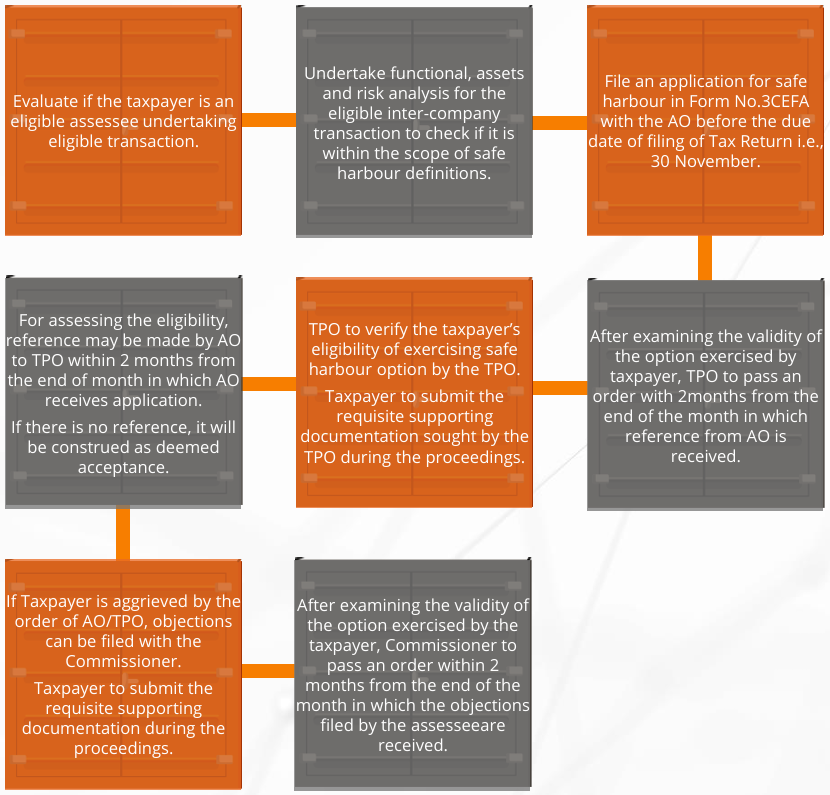
  • Safe Harbour applications — where eligible, a faster route to certainty for specific transaction categories

Having represented clients across each of these stages, our approach is built on knowing not just the law, but how a given assessment officer or panel is likely to read a specific fact pattern.

Timing matters more than most businesses realise here. An APA, for example, can take a couple of years to negotiate but delivers multi-year certainty once concluded — which makes it a very different tool from a MAP filing, which resolves an existing dispute rather than preventing a future one. Part of our role is helping clients pick the right mechanism for their situation rather than defaulting to litigation as the first response every time a TPO adjustment lands.

Our Transfer Pricing Consultant Services

Businesses looking for a Transfer Pricing Consultant India teams can rely on for both routine compliance and complex disputes usually need more than a one-off filing service — they need a partner who understands their group structure end to end. Here’s the full scope of how our transfer pricing consultants in India support businesses:

  • Transfer pricing benchmarking studies using reliable, defensible comparable sets
  • Master File, Local File, and CbCR documentation
  • Form 3CEB certification and filing
  • Cross-border and domestic related-party transaction structuring
  • APA filing and MAP representation
  • TPO audit response and DRP/appeal representation
  • Ongoing transfer pricing risk assessment as your business and group structure evolves

Whether you need a one-time benchmarking study or an ongoing transfer pricing advisor embedded alongside your finance team, this is where that conversation starts.

              Speak to a Transfer Pricing Consultant  →  steadfastconsultants.in/contact-us


Why Choose SBC

Transfer pricing advice is only as good as the people behind it, and that’s where we’d rather let substance do the talking:

  • Our transfer pricing practice is led by the Founder & CEO, along with a team carrying Big Four consulting backgrounds
  • A genuine litigation track record — not just documentation support, but representation through TPO, DRP, and appellate stages
  • Real UAE presence via our Dubai office, not a referral partnership, for businesses navigating India-UAE structures
  • 250+ professionals across our India, UAE, and US offices, giving clients a bench that scales with their needs

We’d rather be judged on outcomes than adjectives — happy to walk you through specific engagement examples relevant to your industry.

Our Engagement Process

  1. Initial Assessment — understanding your group structure, related-party transactions, and current documentation status
  2. Risk & Gap Review — identifying exposure areas and documentation gaps against Rule 10D requirements
  3. Benchmarking & Documentation — building or updating Master File, Local File, and benchmarking studies
  4. Compliance Filing — Form 3CEB certification and return filing support
  5. Ongoing Advisory — ongoing monitoring as transactions, group structure, or regulations change
  6. Audit & Dispute Support — representation if and when TPO scrutiny arises

If any part of your related-party transactions — international or domestic — hasn’t been reviewed in the last year, that’s usually the first sign it’s worth a conversation. Get in touch with our transfer pricing team for a practical assessment of where you stand.

Transfer pricing in India isn’t a box-ticking exercise — it’s a genuinely high-stakes compliance area that rewards businesses who treat it proactively rather than reactively. From documentation and benchmarking to audit representation and cross-border structuring, transfer pricing services in India work best as an ongoing relationship, not a once-a-year filing. If you’re building out a group structure, expanding into the UAE, or simply haven’t had your existing documentation reviewed recently, our team is a good place to start that conversation.

×

Verify Email

Verify your email address below to download the PDF

Please wait while we verify your email.

CONTACT US

Name
=

RELATED POSTS

CategoriesSBC Transfer Pricing

The Complete Guide to Compliance, Documentation, Benchmarking, Advisory and Risk Management (2026) – Part 1

India Union Budget 2026-27

What Is Transfer Pricing in India? A Complete Guide for Businesses in 2026

Transfer Pricing in India: The Complete Guide to Compliance, Documentation, Benchmarking, Advisory and Risk Management (2026) – Part 1

The above highlights capture the broad policy/tax direction and key changes. Our detailed Budget 2026 tax alert, covering section-wise amendments, industry impact, and compliance action points, will follow shortly.

×

Verify Email

Verify your email address below to download the PDF

Please wait while we verify your email.

 In an increasingly interconnected global economy, Transfer Pricing in India has become one of the most significant areas of international taxation, influencing how multinational enterprises allocate profits, manage cross-border operations, and comply with evolving tax regulations.

Whether an organisation operates through overseas subsidiaries, regional headquarters, shared service centres, manufacturing facilities, or research and development hubs, Transfer Pricing directly affects its tax position, financial reporting, and regulatory exposure across multiple jurisdictions.

Unlike many areas of taxation that are primarily compliance-driven, Transfer Pricing in India sits at the intersection of taxation, economics, finance, legal structuring, and business strategy. Every intercompany transaction—whether involving tangible goods, management services, intellectual property, financial arrangements, or business restructuring—requires businesses to demonstrate that the commercial terms and pricing reflect what independent enterprises would have agreed under comparable circumstances.

Consequently, Transfer Pricing is no longer viewed merely as a year-end compliance exercise; rather, it has become an integral component of corporate governance, enterprise risk management, and global tax strategy.

The regulatory landscape governing Transfer Pricing has also undergone a fundamental transformation over the past decade. Tax administrations worldwide have significantly enhanced their audit capabilities through the implementation of the OECD’s Base Erosion and Profit Shifting (BEPS) Project, increased exchange of information between jurisdictions, Country-by-Country Reporting (CbCR), and sophisticated data analytics.

As a result, multinational enterprises are expected to maintain robust Transfer Pricing Documentation Services India, implement commercially defensible pricing policies, and proactively identify areas of potential exposure through comprehensive Transfer Pricing Risk Assessment Services in India.

India has emerged as one of the world’s most mature and dynamic Transfer Pricing jurisdictions. The Indian tax authorities actively scrutinise cross-border related-party transactions across industries such as software development, information technology-enabled services (ITES), manufacturing, pharmaceuticals, automotive, financial services, digital businesses, engineering, and consumer products.

Given the increasing complexity of global business models, businesses are expected to maintain contemporaneous documentation, undertake reliable benchmarking studies, and establish pricing frameworks that comply with both domestic legislation and internationally accepted principles.

This comprehensive guide has been prepared to provide business leaders, finance professionals, tax managers, multinational enterprises, and growing businesses with a practical understanding of Transfer Pricing in India.

Rather than offering a generic overview, this guide explains the commercial rationale behind Transfer Pricing, the regulatory expectations of tax authorities, and the practical considerations involved in designing, implementing, documenting, and defending intercompany pricing arrangements.

Throughout this guide, we also discuss how specialised Transfer Pricing Compliance Services in India, International Tax and Transfer Pricing Advisory, and Intercompany Pricing Advisory Services in India enable businesses to navigate increasingly complex regulatory environments while supporting sustainable global growth.

Why Transfer Pricing Has Become a Strategic Business Priority

The role of Transfer Pricing has changed dramatically over the past two decades. Historically, many organisations viewed Transfer Pricing primarily as an annual tax compliance requirement, undertaken towards the end of the financial year to satisfy statutory documentation obligations.

Today, however, Transfer Pricing has evolved into a strategic business discipline that influences supply chain design, operating models, intellectual property ownership, financing arrangements, investment decisions, and global expansion strategies.

Modern multinational enterprises rarely operate through a single legal entity. Instead, they establish specialised group companies across different jurisdictions to perform distinct commercial functions.

One entity may undertake research and development, another may manufacture products, another may own valuable intellectual property, while others perform distribution, marketing, procurement, financing, or shared service activities.

Each of these entities contributes differently to the overall value chain and therefore expects an appropriate allocation of profits through a well-designed Transfer Pricing framework.

As global tax authorities increasingly focus on ensuring that profits are aligned with genuine economic activity, Transfer Pricing has become central to discussions on value creation and economic substance.

Businesses can no longer rely solely on contractual arrangements to justify intercompany pricing. Instead, tax authorities evaluate who performs economically significant functions, who controls strategic risks, who develops and exploits valuable intangible assets, and where key business decisions are actually made.

For multinational enterprises, this means that Transfer Pricing decisions influence far more than tax computations. They affect customs valuation, indirect taxation, financial reporting, group profitability, treasury operations, investment planning, and merger and acquisition strategies.

Accordingly, businesses increasingly invest in Transfer Pricing Policy Design Services in India to establish consistent global pricing frameworks that align commercial objectives with regulatory expectations.

From a governance perspective, proactive Transfer Pricing in India management also enhances investor confidence. Financial stakeholders, regulatory authorities, and statutory auditors increasingly expect businesses to maintain transparent intercompany pricing supported by comprehensive documentation, robust economic analyses, and clearly defined intercompany agreements.

Consequently, organisations that integrate Transfer Pricing into their broader governance framework are generally better positioned to manage tax risks while supporting long-term business growth.

The Evolution of Transfer Pricing: From Compliance to Strategic Value Creation

The concept of Transfer Pricing is not new. However, its significance has expanded considerably with the rapid growth of globalisation, digital business models, cross-border investments, and intangible asset-driven industries.

Historically, Transfer Pricing legislation focused primarily on preventing multinational enterprises from shifting profits between high-tax and low-tax jurisdictions through artificial pricing of goods.

Manufacturing businesses represented the primary focus of early Transfer Pricing regulations, with tax authorities examining import and export pricing between related entities.

Over time, however, business models evolved. Intellectual property, software platforms, data analytics, cloud computing, digital advertising, artificial intelligence, and shared service centres began generating substantially greater enterprise value than physical assets.

As a result, Transfer Pricing analyses became increasingly complex, extending beyond tangible goods to encompass management services, royalty arrangements, financial transactions, business restructuring, cost contribution arrangements, and the exploitation of valuable intangible assets.

The publication of the OECD Transfer Pricing Guidelines established a globally accepted framework for determining arm’s length pricing. Subsequently, the OECD’s Base Erosion and Profit Shifting (BEPS) initiative fundamentally reshaped the international Transfer Pricing landscape by introducing concepts such as value creation, economic substance, DEMPE functions, enhanced documentation standards, Master File, Local File, and Country-by-Country Reporting.

Today, Transfer Pricing continues to evolve in response to emerging technologies, global tax transparency initiatives, and international tax reforms, including the OECD’s Two-Pillar Solution. Businesses operating across multiple jurisdictions must therefore ensure that their Global Transfer Pricing Advisory Services extend beyond annual documentation to include ongoing policy reviews, operational alignment, and continuous monitoring of evolving regulatory expectations.

What Is Transfer Pricing?

At its core, Transfer Pricing refers to the pricing of transactions undertaken between Associated Enterprises (AEs) forming part of the same multinational enterprise group.

These transactions may involve the sale or purchase of goods, provision or receipt of services, licensing of intellectual property, financial arrangements, business restructuring, cost contribution agreements, guarantees, or any other commercial dealings between related entities.

Unlike transactions negotiated between independent enterprises, intercompany transactions are influenced by common ownership or control.

Consequently, governments require multinational enterprises to establish Transfer Pricing that reflects market conditions and prevents the artificial allocation of profits among jurisdictions.

The internationally accepted standard governing Transfer Pricing is the Arm’s Length Principle, under which prices charged between Associated Enterprises should be consistent with prices that independent enterprises would have agreed under comparable circumstances.

From a commercial perspective, Transfer Pricing is much more than a pricing mechanism. It determines how profits are allocated across jurisdictions, how businesses manage tax risks, and how multinational groups demonstrate compliance with domestic legislation and international tax standards.

Accordingly, organisations increasingly seek support from experienced Transfer Pricing Documentation Consultants in India and specialist advisory teams to establish pricing policies that withstand scrutiny during tax audits and dispute-resolution proceedings.

Transfer Pricing Specialist’s Perspective

One of the most common misconceptions is that Transfer Pricing begins with benchmarking. In reality, benchmarking is only one component of a much broader framework.

Successful Transfer Pricing begins with understanding the commercial objectives of the business, analysing the global value chain, identifying economically significant functions, evaluating risk allocation, and designing an intercompany pricing policy that reflects operational reality.

Businesses that adopt this approach are generally better positioned to defend their pricing during audits than those that focus solely on year-end benchmarking.

What’s Next?

While this guide provides a comprehensive overview of Transfer Pricing, several topics deserve a more detailed discussion.

In our upcoming articles, we will explore practical aspects of Transfer Pricing such as benchmarking methodologies, FAR analysis, management fees, royalty arrangements, financial transactions, APA and MAP mechanisms, Transfer Pricing documentation, litigation strategies, and recent judicial developments.

Stay connected as we continue to share practical insights to help businesses navigate the evolving Transfer Pricing landscape.

CONTACT US

Name
=

RELATED POSTS

CategoriesSBC Transfer Pricing

Transfer Pricing Assessment Procedure

Transfer Pricing Assessment Procedure

Home > Transfer Pricing Assessment Procedure

Transfer Pricing Assessment Procedure

Transfer Pricing Assessment Procedure

Foresight for Taxpayers

It’s crucial for taxpayers to effectively manage domestic litigation through proactive foresight at every stage—from pre-litigation assessment to final resolution and enforcement. Taxpayers should maintain robust documentation, assess litigation risks early, and align their positions with judicial precedents and departmental guidance.

Knowing the litigation procedure is not optional—it’s essential. A single misstep in procedural compliance, such as missing a timeline or filing the wrong form, can lead to dismissal or weaken the case. Awareness and preparedness are as important as the technical position itself. Timely responses to notices, strategic decision-making on appeals, and readiness for alternative dispute resolution mechanisms such as the DRP or settlement schemes can significantly reduce prolonged litigation.

A well-structured litigation strategy not only mitigates potential exposure but also ensures consistency in legal positions across assessment years, ultimately contributing to efficient dispute resolution and improved outcomes. The CBDT’s Instruction No. 3/2016 lays out clear parameters for risk-based scrutiny—providing taxpayers with visibility into what triggers an assessment.

CBDT Instruction No. 3/2016: Framework for Risk-Based Selection and Referral of TP Cases

• CBDT Instruction No. 3/2016 marks a significant transition from the earlier monetary threshold- based approach (as per Instruction No. 15/2015) to a risk-based selection mechanism for Transfer Pricing (TP) audits.

• If a case is selected for scrutiny under TP risk parameters (either via CASS or manual selection), the Assessing Officer (AO) must mandatorily refer the matter to the Transfer Pricing Officer (TPO).

• The AO is barred from conducting TP analysis independently in such cases.

• The AO must also refer the case to the TPO even if selected on non-TP parameters, if any of the following is observed:

– Non-filing of Form 3CEB (Accountant’s Report)

– Non-disclosure of international transactions or Specified Domestic Transactions (SDTs) in the report

– Prior TP adjustment of INR 10 crore or more in earlier years, upheld or under appeal

– Findings from search/seizure/survey indicating TP issues

• This instruction prioritizes complex and high-impact TP cases instead of just high transaction value.

• Reduces subjective referrals and avoids unnecessary TP litigation.

• Acknowledges that TP is a specialized function—to be handled by trained TPOs only.

• Targets multi-jurisdictional transactions, especially those involving intangible assets or group synergies, as high-risk.

Transfer Pricing Assessment Procedure

Domestic Litigation Cycle

Domestic Litigation Cycle

• Referral to TPO: In case of international transactions, the AO refers the matter to the TPO under Section 92CA(1).

• TPO Order: TPO examines the arm’s length nature of international transactions and issues a TPO order with proposed adjustments, if any.

• Draft Assessment Order: Based on the TPO’s findings, the AO issues a draft assessment order u/s 144C(1) for eligible assessee.

• Filing of Objections with DRP u/s 144C(2): The assessee has 30 days to accept the draft order or file objections with the DRP u/s 144C(2). If DRP objections are filed, the AO cannot pass the final order until DRP directions are received. DRP issues directions within 9 months, after which the AO passes the final order in line with those directions.

• Final Assessment Order: If no objections are filed, the AO passes the final order as per the draft order.

Transfer Pricing Assessment Procedure

• Appeal before CIT(A): After the final order is passed, if the assessee is aggrieved, an appeal can be filed before the CIT (A) within 30 days of receipt of the final order. CIT(A) reviews and disposes of the appeal, typically within 1 to 2 years.

• Appeal before ITAT: If still dissatisfied, the assessee may file a appeal to the ITAT within 60 days of the CIT(A) order.

• Appeal to High Court and Supreme Court: Further appeals can be made to the High Court within 120 days and Supreme Court within 90 days on substantial questions of law.

• Litigation Timeline: The entire litigation cycle, if pursued fully, can span 8 to 15 years depending on the complexity and jurisdiction.

Emerging TP Litigation Issues 

Emerging TP Litigation Issues

Transfer Pricing Assessment Procedure

Steps to Avoid TP Litigation

Steps to Avoid TP Litigation

How can SBC assist you?

With a strong hold on Indian transfer pricing controversy management and emerging TP disputes, SBC has a proven track record of litigation wins and supporting TP clientele with a result-oriented approach and cost-benefit analysis. We can support your business with the following aspects:

  • Representation before various forums, including drafting appeals and submissions.
  • Strategizing the approach before tax authorities, considering facts and judicial precedents.
  • Case Law Compilations for specific TP disputes, leveraging our TP knowledge database and research repositories.
  • Transfer Pricing Health Check-Up to avoid or mitigate risks.
  • TP Due Diligence and Risk Assessment.
  • Evaluation of alternative dispute resolution and prevention mechanisms for repeated or evolving TP disputes.
CategoriesSBC Transfer Pricing

Transfer Pricing Insights: A Deep Dive into Inter-Company Agreements (ICAs)

Transfer Pricing Insights: A Deep Dive into Inter-Company Agreements (ICAs)

Home > Transfer Pricing Insights: A Deep Dive into Inter-Company Agreements (ICAs)

Transfer Pricing Insights- A Deep Dive into Inter-Company Agreements (ICAs)

Inter-company agreements (ICAs) serve as crucial legal documents governing transactions within Multinational Enterprise (MNE) groups. These agreements delineate rights and obligations for various intra-group arrangements of the MNE, including the exchange of goods, services, loans, and intellectual property.

Before delving into the significance of ICAs in the broader tax andlegal landscape, it is essential to dive into the roots and obtain an understanding of their fundamental nature. Unlike Transfer Pricing (TP) policies, which establish pricing guidelines for inter-company transactions, ICAs provide the contractual framework for implementing these policies. While TP policies ensure transactions take place at arm’s length, ICAs serve as the practical application of these principles, guiding the parties involved in adhering to tax and regulatory requirements and mitigating potential disputes.

With this understanding, let’s explore the critical checkpoints for drafting ICAs and delve into best practices for their effective implementation within MNE groups.

A. Important Checkpoints while Drafting/Reviewing an ICA

ICAs are not standardized and vary based on the underlying inter-company transactions, roles and responsibilities, and various key terms. Providing general guidance on how ICAs are to be drafted may not encompass all exhaustive scenarios. Therefore, it is prudent to highlight key checkpoints or questions that must be addressed during the drafting of any ICA. With this context in mind, the key checkpoints are encapsulated as follows:

Context:

Do the ICAs accurately delineate the actual inter-company transaction that is taking place?

Transparency:

Do the ICAs clearly outline the relevant background and roles & responsibilities of the parties to the agreement?

Timelines:

Is the timing of drafting and execution of ICAs, including tenure and termination clauses, appropriately documented?

Specificity:

Is the description and scope of ICAs taken care of as it is the heart of the ICA?

Benchmarks:

Are pricing policies aligned with TP policies, benchmarking studies, comparability analyses, and litigation experience?

Credit Evaluation:

Is the credit period evaluated to avoid the risk of deemed loans and imputed interest from delayed payments

Intangible Rights:

In alignment with the roles & responsibilities of the parties involved, are the relative risks properly documented and highlighted?

Critical Conditions:

Given recent experiences like the COVID-19 pandemic, is including a force majeure clause in ICAs essential for unforeseen circumstances?

TP adjustments:

Is there adequate coverage for true-up/true-down adjustments to ensure adherence to TP policy during periodic reviews or prior to financial closures?

B. Best Practices for ICAs

01 Clarity

ICAs must be clear, unambiguous, legally binding, and duly executed (signed and dated) by the authorized signatories of the parties to the agreement.

02 Review

ICAs should undergo regular review and updates to stay aligned with changing business practices, pricing policies, roles, responsibilities, and tax regulations.

03 Support

ICAs must align with MNEs’ transfer pricing policies and corporate tax strategies, covering indirect taxes (VAT/GST, customs) and key considerations like WHT, GAAR, POEM, and PE risks.

04 Controls

MNEs should ensure dedicated personnel manage ICAs, conduct regular audits for TP compliance, prevent adjustments without ICAs, and review ICAs before submission to tax authorities.

05 Expertise

Drafting ICAs requires expertise in the TP life cycle—planning, monitoring, compliance, and controversy management—along with tax, regulatory insights, and thorough legal review. Proper care is needed in choosing the preparer.

06 Explanation

The professional drafting ICAs needs thorough checklists, while MNE teams must clearly explain business objectives, roles, and key considerations.

07 Simplicity

Simplicity is key when drafting ICAs. Clear, straightforward agreements help avoid complexity and misinterpretation

08 3ʳᵈ Party ICA:

MNEs should ensure dedicated personnel manage ICAs, conduct regular audits for TP compliance, prevent adjustments without ICAs, and review ICAs before submission to tax authorities.

C. Key Take Aways for ICAs

• Alignment Importance:

Firstly, if the ICAs are not in place or not aligned to support the TP policies and tax positions of the MNEs, tax authorities may be compelled to draw their own conclusions regarding the nature and key terms of the inter-company transactions.

• Strategic Tool:

Further, ICAs should not be perceived merely as supporting TP documentation to be filed with tax authorities upon request but must be considered integral tax strategic tool to guide and monitor intra-company transactions and to support and defend the TP and tax positions of the MNEs.

• Evidential Value:

ICAs are vital evidence for determining transfer pricing, corporate tax, withholding tax, permanent establishment, place of effective management, GAAR, indirect taxes (VAT/GST, customs), statutory audit documentation, and cross-border regulations.

• Risk Awareness:

It is crucial to bear in mind that there have been numerous instances of tax rulings/decisions across major TP jurisdictions wherein defects in the ICAs have led to significant adverse TP consequences for taxpayers.

• Proactive Approach:

In conclusion, well-documented ICAs are essential for TP monitoring, compliance, and controversy management, helping MNEs avoid fines, save time during audits, and mitigate reputational damage.

CategoriesSBC Transfer Pricing

Safe Harbour Rules – Indian Transfer Pricing Regulations

Safe Harbour Rules - Indian Transfer Pricing Regulations

Home > Safe Harbour Rules – Indian Transfer Pricing Regulations

Safe Harbour Rules - Indian Transfer Pricing Regulations

India’s Transfer Pricing Safe Harbour Regime: An Overview

Overview of the Indian Safe Harbour Regime

  • The Indian Safe Harbour Regime was established in response to escalating instances of transfer pricing audits and disputes. Introduced under the Finance (No.2) Act of 2009, effective from April 1, 2009, this regime was introduced vide Section 92CB of the Income Tax Act, 1961.
  • Under section 92CB, the determination of an arm’s length price, as defined by section 92C or Section 92CA, is required to adhere to safe harbour rules. These rules provide predefined acceptable ranges of profits or prices, enhancing certainty for transactions.
  • To provide greater advantages to taxpayers, the Central Board of Direct Taxes (CBDT) broadened the scope of Safe Harbour Rules through Rule 10TD of the Income-tax Rules. This expansion aims to streamline compliance procedures, encourage timely approvals, and reduce complexities associated with transfer pricing.
  • The Indian Safe Harbour Regime offers a structured and predictable framework that promotes compliance, minimizes disputes, and fosters a more harmonious business environment, ultimately contributing to a
    more efficient and effective transfer pricing ecosystem.

Eligible Assessee

A person who has validly opted for safe harbour rules under Rule 10TE of the Income Tax Rules, 1962.

Eligible Transactions

These eligible transactions qualify for safe harbour treatment under Rule 10TB, providing a simplified and predictable transfer pricing framework.

SBC TP Update - Indian Safe Harbour Rules

The Rational Choice: Selecting the Safe Harbour Option

Advantages of Choosing the Safe Harbour Approach

Enhanced Certainty

By providing advance insight into the acceptable range of profits or prices that meet Safe Harbour criteria, transactions gain a heightened level of certainty, offering stakeholders a clearer financial landscape.

Conflict Mitigation

Safe Harbour serves as an effective dispute avoidance mechanism, significantly curbing the potential for conflicts between taxpayers and revenue authorities. This fosters a more harmonious business environment, particularly significant given the high incidence of Indian Transfer Pricing litigation.

Streamlined Approvals & Assessment

Safe Harbour Rules offer a structured mechanism for application and approvals procedures, facilitating a smoother and time-bound process. This stands in stark contrast to the prolonged timelines associated with Domestic Litigation or Advance Pricing Agreements (APAs).

Comparative Compliance

In contrast to the complexities involved in Advance Pricing Agreements (APAs) and the Domestic Transfer Pricing Litigation Route, Safe Harbour Rules present a more favorable choice in terms of TP/ALP rates/margins, timelines, and associated costs. This streamlined approach can alleviate compliance burdens.

Resource Efficiency

The adoption of Safe Harbour Rules translates into substantial savings in terms of time, costs, and efforts, especially in potential litigation scenarios. This strategic choice can lead to optimized resource allocation and more efficient business operations.

Stakeholder Confidence

Safe Harbour instills confidence in taxpayers through its predictable framework, enhancing investor confidence and fostering robust business growth.

Safeguarding Reputational Capital

Choosing the Safe Harbour route mitigates the risk of reputational damage that could arise from contentious transfer pricing disputes. A clean record in compliance can enhance a company’s standing within its Group and among stakeholders.

Incentive for Voluntary Compliance

The transparent and predictable nature of Safe Harbour can incentivize voluntary compliance, enabling companies to proactively meet their transfer pricing obligations and contribute positively to the overall tax ecosystem.

Core Features of the Safe Harbour Rules in India

Safe Harbour Rules in India: Key Points for Taxpayers

For those seeking to opt for safe harbour rules and who have undertaken in eligible international transactions, adherence to specific guidelines is imperative. Here’s a concise breakdown of the crucial aspects:

Filing Requirement

Taxpayers opting for safe harbour need to file an income return and safe harbour application (Form No 3CEFA) to the Assessing Officer, both before the stipulated deadline i.e., 30 November following the relevant FY.

Compliance Commitment

Even if opting for safe harbour, taxpayers must fulfill the prescribed transfer pricing documentation and maintain/Form 3CEB filing compliances (Rule 10TD(5) of the Rules).

Geographical Limitations

Safe harbour doesn’t apply to transactions with Associated Enterprises/Related Parties location in low or no tax countries.

Mutual Agreement Procedure (MAP)

If approved, the transfer price by the tax authorities for an eligible international transaction bars the assessee from invoking the Mutual Agreement Procedure in a double taxation avoidance agreement with a foreign entity.

Adjustment Constraints

When opting for safe harbour, comparability adjustments and prescribed variation/range benefits (tolerance band) aren’t accessible (Rule 10TD(4) of the Rules).

Duration of Choice

The option exercised remains in effect for a period as notified by the CBDT.

Transaction Scope

Safe harbour applies solely to specified transactions, while TP scrutiny exposure remains open to other transactions not eligible under safe harbour.

Deemed Acceptance

If the Assessing Officer, Transfer Pricing Officer, or the Commissioner, as the case may be, does not make a reference or pass an order within the specified time, then the option for safe harbor exercised by the assessee shall be treated as valid.

Scope of definitions

The scope of Operating Revenue and Operating Expense to be used in the computation of the Operating Margin has been clearly defined in the Safe Harbour Rules.

Indian Safe Harbour Rules – Latest Safe Harbour
Margins

SBC TP Update - Indian Safe Harbour Rules

Safe Harbour Procedure

SBC TP Update - Indian Safe Harbour Rules

How can SBC assist you?

Navigating the Safe Harbour Application process doesn’t have to be overwhelming. We’re here to provide discreet and effective assistance every step of the way.

SBC support:

  • We provide assistance in filing Form No. 3CEFA (Safe Harbour Application), ensuring a smooth process.
  • Our experts evaluate your eligibility for Safe Harbour Rules (SHR) by undertaking functional analysis and review of inter-company transactions and underlying agreements to guide your decision-making.
  • We conduct a comprehensive cost-benefit analysis to help you assess your options effectively.
  • If needed, we calculate year-end transfer pricing adjustments to align with safe harbour rates.
  • Our support extends to year-end compliance, including Form No. 3CEB and transfer pricing documentation.
  • We offer representation support before tax authorities (AO & TPO) for safe harbour proceedings.
CategoriesSBC Transfer Pricing

Transfer Pricing Compliances for Non Residents (NR) in India

Transfer Pricing Compliances for Non Residents (NR) in India

Home > Transfer Pricing Compliances for Non Residents (NR) in India

SBC TP Update - TP Compliances for NRs _2024

Transfer Pricing Compliances applicable to NRs in India:

The clock is ticking, and Indian Transfer Pricing (“TP”) Compliances for the financial year 2023-24 are just around the corner, with due dates in Oct/Nov ’24.

Ensuring compliance with Indian transfer pricing regulations isn’t just a box to tick; it’s a strategic imperative. Non-compliance can result in serious repercussions with tax authorities. While many multinationals are abreast and carefully track the TP compliances of resident entities, there has been confusion or oversight regarding TP compliances applicable to a non-resident entity especially the associated enterprises (“AEs”) of Indian entities.

In this update, we have highlighted the applicability of Indian TP compliances for Non-Residents (“NR”) in India.

Applicability of TP Provisions to NRs

Section 92(1) of the Income Tax Act, 1961 (“IT Act”) (the primary section for the applicability of TP) provides that income arising from international transactions has to be at arm’s length price (“ALP”). Accordingly, Indian TP provisions would apply to NRs only when they enter into international transactions that give rise to taxable income in India.

If an NR has taxable income in India as per the provisions of the ITA from its AEs in the nature of services income, royalty/license fees, interest, sale/transfer of shares (capital gains), guarantee commission, etc., the NR has to comply with TP regulations in India.

ALP analysis from the standpoint of Indian resident AEs alone is not sufficient, as the TP regulations require even the NR AEs to substantiate the ALP for taxable international transactions.

TP Compliances for NR Threshold for applicability Due date Penalty for non compliance
Accountants Report (Form No. 3CEB)
If International Transactions(irrespective of threshold) are undertaken with foreign Associated Enterprises (AEs). [Sec 92E (Form No. 3CEB) is applicable for all taxpayers including NR]
31st October
INR 1,00,000 [Sec 271BA is applicable to all taxpayers including NR]
Transfer Pricing Study Report
If aggregate value of International Transactions > INR 1 Crore. [Sec 92D & Rule 10D (TP Study) is applicable to NR having international transactions that gives rise to taxable income in India]
31st October
2% of value of international transactions [Sec 271AA(1) is applicable to all taxpayers including NR]
Master File (Form No. 3CEAA)
Part A is applicable if International Transactions are undertaken during the financial year (Part A is applicable to all MNEs irrespective of threshold)

Part B is applicable if below twin conditions are satisfied:

• Consolidated Group Revenue exceeds INR 500 Crores and

• Aggregate value of all International Transactions exceeds INR 50 crores, or the Intangible Property related International Transactions exceeds INR 10 Crores

[Sec 92D & Rule 10D (Form No. 3CEAA) is applicable for all taxpayers including NR]
30th November
INR 5,00,000 [Sec 271AA(2) is applicable to all taxpayers including NR]

Filing of Form No. 3CEB, maintenance of TP Study Report and Corporate Tax Return by NR

Income earned by NR Form 3CEB & TP Report compliance requirement Corporate Tax Return Requirement (“ROI”)
Taxable as per Income Tax Act & DTAA
To be reported in Form 3CEB & TP Study Report to be maintained (if value > INR 1 Crore)
Applicable unless TDS is deducted at rates given in Section 115A and there is no other income chargeable apart from incomes specified in Section 115A.
Taxable as per Income Tax Act but exempt as per DTAA
To be reported in Form 3CEB & TP Study Report to be maintained (if value > INR 1 Crore)
Applicable where DTAA benefit is opted by NR.
Not taxable as per Income Tax Act
Not to be reported (Can be disclosed in Form No. 3CEB out of abundant caution if there are any other taxable international transactions)
Not applicable
Other transactions of NR not impacting the taxable income
Not to be reported (Can be disclosed in Form No. 3CEB out of abundant caution if there are any other taxable international transactions)
Not applicable
TP compliances applicable even in case of ITR exemption Filing of Master File (Form No. 3CEAA) by NR
❑ Section 115A provides an exemption to NRs from filing a Return of Income (ROI) when their total income consists of interest, dividends, FTS (Fees for Technical Services), and royalties, if tax has been deducted as per the rates provided therein.

❑ To claim such exemption, NR must not have any additional income that is assessable under the IT Act.

❑ However, there is no corresponding exemption in Sections 92E and 92D, and it would be advisable for NRs to comply with TP regulations to avoid penalties u/s 271BA and 271AA of the IT Act.
❑ The Central Board of Direct Taxes (“CBDT”), vide Notification No. 31/2021 dated April 5, 2021, amended Rule 10DA(4).

❑ As a result, if there are more than one resident as well as non-resident constituent entities, Form No. 3CEAA can be filed by any one designated constituent entity on behalf of all constituent entities.

❑ Accordingly, this redundant compliance burden on NRs is eased by the government.

Mitigating the Risk of Potential Litigation

❑ Under the Indian TP litigation mechanism, the Assessing Officer (AO) must refer the scrutiny of international or specified domestic transactions to a designated Transfer Pricing Officer (TPO).

❑ The CBDT, via Instruction No. 03/2016, provides guidelines on risk parameters for referring cases to TPOs.

❑ Cases are selected for scrutiny based on “TP risk parameters” through the Computer Aided Scrutiny Selection (CASS) system or the Compulsory Manual Selection Process.

❑ Cases under corporate tax scrutiny may also be selected for TP scrutiny based on Non-TP risk parameters, such as:

  • Non-filing of Form No. 3CEB or non-reporting of transactions in Form No. 3CEB.
  • TP adjustments of INR 10 crore or more in prior years, upheld by judicial authorities or pending in an appeal.
  • Findings related to TP matters in india from search, seizure, or survey operations.

❑ Non-Residents must ensure transfer pricing compliance to avoid scrutiny and penalties related to the non-filing of Form No. 3CEB in India.

Check Points for NR TP Compliance

Check Points Explanation
Obtain PAN in India
When TP compliances are applicable, obtaining a PAN in India is crucial for electronic filings. For Non-Residents (NRs), obtaining a PAN through Form 49AA can be time-consuming, as it requires documents like the certificate of incorporation to be apostilled or attested by the Indian consulate or embassy abroad. It is advisable to initiate this process early to meet impending due dates.
Authorize Digital Signature Certificate (DSC) Holders in India
It is advisable to authorize a person holding a Digital Signature (DSC) in India by initiating a Power of Attorney (PoA), as electronic TP filings require digital signing. NR individuals acting as signatories for NR entities outside India may also consider obtaining a DSC depending on convenience.
Reliance on Available Documentation for TP Compliance
Since NR may not statutorily required to maintain books of accounts in India under any law, reliance should be placed on Form No. 26AS, invoices, agreements etc. Reliance can also be placed on documents, information and accounts maintained by the Indian AE with whom the NR AE has entered into international transaction.
Ensure Arm’s Length Price (ALP) Compliance
The Transfer Price should fall within the arm’s length range to meet the arm’s length requirements from the perspectives of both the Indian AE and NR AE, ensuring compliance from both sides.
Reconcile Form No. 3CEB with Form No. 26AS and Income Tax Return
Ensure that the value of international transactions reported in Form No. 3CEB matches with Form No. 26AS and the Income Tax Return to avoid scrutiny notices due to mismatches.
Report All Relevant International Transactions
Report all taxable international transactions and, where required, other international transactions as a precautionary measure to avoid penalties for failure to report qualifying international transactions.

Judicial Rulings in the context of NR TP Compliances

Case Law Reference Important Observations
Content
Venenburg Group B.V. [2007] 289 ITR 464 (AAR)
Case Summary:

The Authority for Advance Ruling (AAR) held that the applicant was not taxable in respect of capital gains on sale of shares held in its Indian subsidiary under the provisions of India Netherland Tax treaty. AAR held that since the provisions of the tax treaty were more beneficial to the assessee than provisions of the Act, the same were applicable to the assessee.

Conclusion:

The AAR further held that it was not necessary for the applicant to file tax return in India in the absence of tax liability in India and transfer pricing provisions under section 92 to 92F were not attracted in respect of the aforesaid transactions.
Praxair Pacific Ltd. [2010] 326 ITR 276 (AAR)
Case Summary:

The assessee, a tax resident of Mauritius, proposed to transfer its holding in Indian company to its wholly owned Indian subsidiary. The AAR held that the transaction could not be regarded as ‘transfer’ in view of provision of section 47(iv). Further, the AAR also held that the transaction was not subject to capital gain tax in view of provisions of India Mauritius tax treaty. The AAR further held that provisions of section 115JB (MAT provisions) were not applicable to foreign company.

Conclusion:

The AAR also held that transfer pricing provisions were not applicable as income was not taxable in India.
Dow Agro Sciences Agricultural Products Ltd. [2016] 380 ITR 668 (AAR)
Case Summary:

The applicant, a company, incorporated and registered in Mauritius, contends that its investment in Dow Agrosciences India (DAS India) is a capital asset. The Revenue argues about the existence of a Permanent Establishment (PE) in India, but the applicant has provided documents supporting no PE.

The applicant reiterates that profits from the sale of equity shares of DAS India won’t be taxable in India due to the DTAA between India and Mauritius.

Conclusion:

Transfer pricing provisions (Sections 92 to 95) are not applicable if the transaction is not taxable in India. Since the proposed share transfer does not attract tax in India under the tax treaty’s Article 13, these provisions do not apply.
Goodyear Tire and Rubber Co. [2011] 334 ITR 69 (AAR)
Case Summary:

In the facts of the given case, Goodyear Tire and Rubber Company USA, proposed to transfer its 74% shareholding in Goodyear India Limited (listed on BSE ) to its Singapore based subsidiary as ‘ Gift’ and at NIL value . Goodyear USA argued that since the full value of consideration received or accruing as a result of the transfer of shares was NIL, the mechanism to charge the capital gains to tax fails. The AAR upheld Goodyear’s contention and ruled that ‘It is settled law that Section 45 must be read with Section 48 and if the computation provision cannot be given effect to for any reason, the charge under Section 45 fails.

Conclusion:

The AAR further held that transfer pricing provisions under section 92 to 92F were not applicable to the facts of the case as the transaction was not taxable under Indian tax laws.
Vodafone India Services Pvt. Ltd. v. Union of India [2014] 368 ITR 1 (Bombay)
The Bombay High Court concluded that if ‘income’ is chargeable to tax under the normal provisions Of the Act, then alone Chapter X/transfer pricing provisions of the Act could be invoked. The Government of India vide Instruction No. 2/ 2015 dated 29.1.2015 has accepted the decision of the Bombay High Court in the case Of Vodafone Services Pvt. Ltd. According to the said instruction, the premium arising on issue of shares is a capital account transaction and does not give rise to income and hence not liable to transfer pricing adjustment.
Castleton Investment Limited. [2012] 348 ITR 537
Case Summary:

The AAR held that transfer pricing provisions (Sections 92 to 92F) are applicable even if the income, such as capital gains, is exempt from taxation. In the case of Castleton Investment Limited, a Mauritius-based company, which held shares in an Indian listed company, the AAR determined that the provisions are considered machinery provisions. As such, capital gains cannot be determined without applying these sections. Whether the gain is ultimately taxable in India or not, the transfer pricing provisions would still apply if the transaction falls within their ambit.

Conclusion:

The applicability of Section 92 does not depend on chargeability under the Act. Thus, the AAR ruled that transfer pricing provisions would be applicable in this case of transferring investment to an associated enterprise in Singapore.
Armstrong World Industries Mauritius Multiconsult Ltd. [2012] 349 ITR 303 (AAR)
Case Summary:

Armstrong World Industries Mauritius Multiconsult Ltd., a fully-owned subsidiary of Armstrong World Industries Ltd., UK (Armstrong UK) and a tax resident of Mauritius, intends to repurchase a portion of its shares from the applicant (holding 99.97% of shares) while the remaining shares (0.03%) are held by Armstrong UK. This proposed buyback is not liable to capital gains tax in India by virtue of the India-Mauritius.

Conclusion:

Thus, the AAR held that transfer pricing provisions would be applicable in the said case, taxpayer would be liable to comply with the Transfer Pricing provisions irrespective of whether the taxpayer earns any taxable income in India or not.
BNT Global Pvt. Ltd. v. ITO (ITA No. 4111/Mum/2016 dated 26 April 2017)
Case Summary:

The taxpayer has not filed the audit report in Form 3CEB for its international transaction involving the receipt of foreign remittance from its Non-Resident Indian (NRI) Director, who was also a beneficial shareholder, in exchange for share capital and share premium within the company.

Conclusion:

The ITAT upheld the penalty under Section 271BA for the failure as the share issuance transaction fell within the ambit of Section 92E, requiring the filing of Form No. 3CEB. The reliance on the Vodafone India Services Pvt. Ltd. case was rejected, as it dealt with different facts and penalties.
Convergys Customer Management Group Inc. [MA NO. 261/Del/2020 I.T.A. No. 3529//DEL/2015 MA NO. 262/Del/2020 in I.T.A. No. 3530//DEL/2015]
Case Summary:

Taxpayer only submitted Form 3CEB during the scrutiny and has not filed TP Study. Further, taxpayer did not disclose certain international transactions (of reimbursements, interest payments, FTS) on the premise that they are not subject to tax in India in accordance with the Treaty provisions. A categorical finding was given by the ITAT that every person has to maintain its own documents which taxpayer failed to and instead relied on its Indian subsidiary’s TP study.

Conclusion:

The ITAT upheld that Form 3CEB submission is not equivalent to TP documentation compliance u/s 92D while dismissing the Miscellaneous Application upholding levy of penalty u/s 271AA for non-maintenance of documents u/s 92D.
Without Prejudice
Commissioner of Wealth-tax v. Apar Ltd. [2002] 122 Taxman 631 (Bombay)
The term “without prejudice” was used to indicate to the Assessing Officer that filing a return and paying taxes should not impact the rights of the taxpayer. The taxpayer reserves the option to claim settlement as if the return was not filed under the Act. By filing the return “without prejudice,” the taxpayer denies liability to be assessed under the Act and implies the possibility of future rectification in accordance with the law.

However, when any compliance is undertaken “without prejudice,” it must be clearly disclosed, along with relevant facts and justifications, in the documentation maintained by the non-resident and in Form No. 3CEB issued by the accountant.
On maintenance of separate transfer pricing documentation by non – residents
DCIT v. Convergys Customer Management Group Inc. [ITA No. 3529/DEL/2015 and ITA No. 3530/DEL/2015]
Case Summary:

The ITAT imposed a penalty on Convergys Customer Management Group Inc., a US-based non-resident company, for not maintaining TP documents under Section 271AA of the Income Tax Act. The case involved its Indian subsidiary, Convergys India Services Pvt. Ltd., providing call center/back office support services. The Assessing Officer found a fixed place PE and Service PE in India with attributable profits, resulting in disallowances and penalties for not maintaining TP documents.

Conclusion:

In conclusion, the ITAT upheld the penalty imposed under Section 271AA of the Income Tax Act, stating that the CIT(A) was wrong in deleting the penalty.
On TP adjustments in hands of NR
Instrumentation Corporation Ltd., Finland v. ADIT [I.T.A. Nos. 1548 and 1549/Kol/2009]
Case Summary:

Instrumentarium Corporation, a Finnish company (F Co.), provided an interest-free loan to its Indian subsidiary, Datex Ohmeda India Pvt. Ltd. (I Co.). The case revolved around whether the loan was at arm’s length and whether it eroded India’s tax base.

Conclusion:

The Assessing Officer argued that the transaction was not at arm’s length, resulting in an adjustment to the interest income of F Co. The company contended that applying transfer pricing provisions in this situation would lead to a reduction in the Indian tax base and increased losses for I Co., which could be carried forward and set off in subsequent years.

The Income Tax Appellate Tribunal (ITAT) held that Section 92(3) of the Income Tax Act required assessing the impact on profits or losses for the year under consideration and for the taxpayer in question, rather than considering the impact on taxes in subsequent years. Thus, if the transaction was accepted without an arm’s length pricing adjustment, it would result in tax base erosion to the extent of the taxability of interest in the hands of F Co. The ITAT also rejected the argument that a corresponding deduction should be given to I Co.

Emphasis on Two-sided Transfer Pricing Analysis

❑ To satisfy the ALP test for both parties in a transaction, a two-sided comprehensive transfer pricing analysis is required.

❑ This analysis ensures that both the Indian AE and the NR AE meet the ALP standards.

❑ The transfer price must be set within an acceptable arm’s length range for both jurisdictions. The process is complex and time-consuming but is crucial to prevent double taxation and avoid tax disputes.

❑ The Kolkata Tribunal, in the landmark case of Instrumentarium Corporation Limited [I.T.A. Nos. 1548 and 1549/Kol/2009], emphasized the need for a two-sided TP analysis to determine the arm’s length price in both jurisdictions and mitigate risks of double taxation and tax disputes.

Conclusion

To successfully navigate the complex TP landscape in India, here’s what both residents and NRs should do:

❑ Ensure Compliance: It’s crucial for multinationals to diligently ensure compliance in India with applicable transfer pricing regulations for both resident and non-resident entities in India (i.e., filing all the relevant forms in India related to three-tiered documentation). Non-compliance could be viewed negatively by tax authorities.

❑ 360-Degree Analysis: It’s pertinent to ensure that the information disclosed in Form No. 3CEB, the local file, master file, and country-by-country report provides a comprehensive view and supports the transfer pricing and other tax positions of the multinational group. Applicability and filing of corporate tax returns should also be perused diligently.

❑ Robust Documentation: Remember, it’s not limited to filings alone. TP and tax filings should be backed up by the maintenance of robust supporting documentation to substantiate the TP positions and analysis in case of future audits/scrutiny by tax authorities.

In a nutshell, robust transfer pricing documentation and adherence to guidelines should be your top priority if you’re a multinational operating in India.

Disclaimer: This material and the information contained herein prepared by Steadfast Business Consulting LLP is intended for clients to provide updates and is not an exhaustive treatment of such subject. We are not, by means of this material, rendering any professional advice or services. It should not be relied upon as the sole basis for any decision which may affect you or your business. This Alert provides certain general information as well as specific information with respect to Steadfast Business Consulting LLP. This alert should neither be regarded as comprehensive not sufficient for the purposes of any decision-making.