CategoriesSBC

Checklist To Make Your Business GST Compliant Ready

Checklist To Make Your Business GST Compliant Ready

  • Home
  • Checklist To Make Your Business GST Compliant Ready
SBC

The introduction of Goods and Services Tax (GST) has changed how business is conducted across the country. The law has been dynamic and more electronic-oriented, with more emphasis on data analysis. However, with the dynamism involved and the ever-changing law of GST, businesses are required to put in more effort to streamline their tax processes and keep track of all the changes happening in the tax laws.

Ignorance of Law is of no excuse. Every business ought to know the law of the land and has to abide by the same. In case of any violation, the business might have to incur a lot of expenses on interests and penalties.

Given the above background, every business must have a firm hand on GST and its implications if the company needs to fare better in the market. Compliance with GST laws is important for a business. However, many businesses are yet to adopt the right processes to become GST compliant.

In this article, we have discussed the necessary checkpoints a business has to follow for complying with GST Laws and grab the business opportunities GST will generate.

What is meant by being GST compliant?

The GST provisions has established standards for how various records, invoices, and reports are to be maintained and, subsequently, the manner of filing returns and paying tax. But, being a GST complaint means abiding by all the provisions of the law and rules framed thereunder. Any business may have to incur significant costs as a result of any noncompliance with the provisions of GST.

GST Compliance Checklist to Follow

1.GST Registration

Under Goods And Services Tax (GST), businesses whose aggregate annual turnover exceeds the threshold limit of Rs.40 lakh or Rs.20 lakh or Rs.10 lakh, as the case may be, must register as a normal taxable person. It is called GST registration.

For certain businesses, registration under GST is mandatory. If the organization carries on business without registering under GST, it is an offence under GST, and heavy penalties will apply.

Once you are clear that the business is liable to get registered under GST, the business has to make an application for registration under GST Laws in the Online GST portal (www.gst.gov.in). Although the process for registration is relatively straightforward, there are a few things to keep in mind to get the registration under GST. Hence a professional is required to guide through the nuances of registration.

2. Compliance with Tax Invoices, E-invoicing requirements

GST-registered businesses must adhere to invoicing regulations in order to distribute input tax credits. Every time a product or service is sold, businesses must generate an tax invoice as part of routine business operations. To be in conformity with compliance regulations, these invoices must contain the following mandatory elements:

  • Date and invoice number
  • Name of the recipient
  • Shipping addresses of the recipient
  • GSTIN of the supplier
  • GSTIN of the recipient
  • Place of supply
  • Billing address
  • HSN code for goods
  • SAC for services
  • Descriptions of items
  • Discounts
  • Tax rates
  • Reverse charge status
  • Signature

All items must be stated on the GST invoice for a firm to comply with invoicing compliance regulations.

In addition to the above, for businesses where the turnover exceeds the specified limit, the business should comply with the E-invoicing requirement where the details are to be uploaded to the e-invoicing portal of the government. Once the details are uploaded, a unique number is generated, which has to be printed on the Invoice being issued by the taxpayer.

3. Filling the Correct GST Monthly Forms

All registered businesses must file monthly, quarterly, and yearly returns, irrespective of the turnover. The type of economic activity largely determines the frequency of returns. GST returns must be electronically filed using the GST site or software. The following is a list of the GST return forms that regular taxpayers must submit:

GSTR 1

A statement which contains details of sales made during the period to be submitted to the government.

Frequency: Monthly

Due Date: 11th of the subsequent month

Concept of Invoice Matching

Every month for any business claiming Input Tax Credit against the purchases made, a reconciliation of the purchase register and the details appearing in GSTR 2A/2B are to be made in order to be eligible for claim of ITC.

In this regard, businesses need to adopt a mechanism for reconciling the data in a timely manner before claim of ITC.

Frequency: Monthly

Due Date: Before the filing of GSTR 3B for the said month

GSTR-3B

A simplified form called GSTR-3B is used to report all of a taxpayer’s GST liabilities during the period. In this return, a description of all outgoing supplies made, claimed input tax credits, assessed tax obligation, and paid taxes must be self-declared. All GST-registered taxpayers are required to submit it.

Frequency: Monthly

Due Date: 20th of subsequent month

GSTR-9

All GST-registered taxpayers are required to submit GSTR-9 returns once a year. Data on outgoing supplies made, incoming supplies received, and taxes due and paid for the prior year under various tax categories are included in the annual GST return. It is a combination of the data furnished in GSTR-1 and GSTR-3B returns that were submitted on a monthly or quarterly basis during the year. However, currently, this form is applicable only in case the business’s annual turnover is in excess of INR 2 crores.

Frequency: Annual

Due Date: 31st December

GSTR 9C

Every registered person whose aggregate turnover during a financial year exceeds five crore rupees shall get his accounts audited as specified under sub-section (5) of section 35 of the CGST Act.

They shall furnish a copy of the audited annual accounts and a reconciliation statement, duly certified, in form GSTR-9C.

Frequency: Annual

Due Date: 31st December

File your GST Returns on Time

A key component of GST compliance is timely return filing. Even if there is no activity within the designated time, returns must still be filed and submitted electronically. The components cannot be modified after they are filed, but modifications may be made in subsequent filings. Not to add that doing this task without the aid of excellent GST service would be very difficult.

How to file GST Return?

The GST returns can be completed online or offline.

  1. Online Mode: Using their PAN number, monthly reports, and inbound and outgoing supply verification, one may submit their GST returns online on the GST portal at https://gst.gov.in.
  2. Using an Offline Utility Tool: By browsing and downloading the offline tool, one may upload the data in the tool to generate a JSON upload file to be uploaded to the GST online portal.

How Steadfast Business Consulting Can Help

Our expertise in Indirect taxation and handling the GST transition for different businesses puts us in a prime position to guarantee compliance with the GST law and deliver GST Services in India that is focused on our customers’ needs.

It is important to keep track of all the updates and analyze the impact of new changes in the law on businesses. Our experts have hands-on experience in performing impact analysis of various notifications. They can help formulate strategies and structure transactions in the best possible manner within the boundaries of the law.

Now that you know how to become GST compliant, it’s important to keep your business up to date on the most recent rules governing GST compliance and other GST rulings to analyze the impact on your businesses to avoid unnecessary interest and penalties.

We at Steadfast can help your businesses right from registering your business to planning transactions under GST.

Frequently Asked Questions

Is it important to provide and track GSTIN while dealing with vendors and customers?

It is important to track the GSTN while dealing with vendors, as you can claim ITC on any invoice issued by a vendor who had filed their GST Returns. Further, it is important to ensure the frequency of return filing before getting into business with the vendors as non-filing of GST Returns by the vendor shall result in non-availability of ITC to the business, thereby impacting the working capital of the business.

Will HSN Codes / SAC Codes have any impact on invoicing?

If your turnover is above INR 1.5 crores but below INR 5 crores, you must mention HSN Code on the Invoice to the 4-digit level; if it is INR 5 crores and above, you must mention the HSN Code on the Invoice to a 6-digit level.

HSN Code determines the tax rate on a particular product. Further, the businesses also have to disclose the HSN summary of outward supplies made in their monthly GSTR 1.

CategoriesSBC

5 Common Mistakes Taxpayers Make While Filing Their Income Tax Returns

5 Common Mistakes Taxpayers Make While Filing Their Income Tax Returns

  • Home
  • 5 Common Mistakes Taxpayers Make While Filing Their Income Tax Returns
SBC

Making errors when filing an income tax return can result in penalties and legal action, rendering the return invalid. For some people, submitting an income tax return might be difficult while being simple for others. However, it is quite common to become perplexed because there are so many clauses, exclusions, sections, and restrictions.

Owing to this, taxpayers are bound to make mistakes. Therefore, we have listed below some of the most common mistakes tax filers make. To prevent similar errors, read the guide.

Failure to E-Verify ITR V

The burden of submitting a tax return extends beyond the ITR filing. Within 120 days after filing, you must validate the return; otherwise, the Income Tax Department won’t process your tax return. ITR V can be verified either offline by mailing the ITR V (Acknowledgement) to CPC Bangalore or electronically using the EVC, Aadhar OTP, or Net banking.

Most individuals fail to do this. Your tax return won’t be regarded as filed if ITR V isn’t verified, and the department will send you a notification that your return is “Invalid.” The income tax authority will assume that you have never filed a return if you don’t E-verify the return within the allotted period.

Failure to account for more than two properties

If a person owns more than two house properties, they can choose which two to include as their primary residences, and the other two will be regarded to be “deemed to be rented out.”

This implies that if a person owns three properties, any one of them will be regarded as taxable even if it is empty for the whole year and does not result in any financial advantages for the taxpayer. The potential for profits by the taxpayer will be taken into account, and tax will be assessed on the yearly value determined in accordance with the legislation.

Non-Disclosure of Certain Income / Loss

Over the past several years, many assesses have started investing / trading in listed equity shares and Futures & Options through various online trading platforms. As there is no withholding of tax done by the trading platforms on these transactions, most of the time, assesses fail to disclose the income earned / loss sustained through these activities. This may result in the issuance of notice by the tax authorities asking the assessed reasons for failure to disclose the same.

Further, where the assessed sustains any loss, it would be pertinent to disclose such loss in the Return, as such loss can be carried forward for set off against future profits.

Understand ‘Residential Status’ and applicable disclosure requirements

In case you are a Non-Resident Indian (NRI), or you have recently moved out of / into India, you would need to check your ‘Tax Residential Status’ before you file your Return of Income, as the taxability of your income would largely depend on the same. Further, disclosure requirements also vary from person to person. For example, an NRI who falls under the ‘Resident and Ordinary Resident’ category would need to disclose his worldwide income in India, even though he / she had paid taxes on such income in another country. However, foreign tax credit may be claimed on such income as per the applicable provisions.

In the event that a person has any assets overseas, even though his income is below the taxable limit, he must nevertheless file an income tax return.

For instance, opening a bank account in the nation where your education was pursued is essential. Many times, when students return to India, they take money out of their overseas bank accounts but don’t close them. The individual would not be able to file ITR 1 if the bank account was still open; instead, he or she would need to utilise ITR 2 and provide all relevant information regarding the account. Any non-disclosure may bring notice from the Income Tax Department.

Not mentioning exempted income. 

A taxpayer is required by law to report all of his income, regardless of whether it is tax-exempt. The baseline exemption level is Rs. 2.5 lakh, and if a taxpayer’s gross income exceeds this amount, they are required to file income tax returns. Although exempt income is not taxed, failing to mention it might result in notifications from the income tax department.

For Instance –

  • According to Section 54 of the Income Tax Act of 1961, capital gains are excluded if you sell your home and utilise the proceeds to buy a new one. But one must accurately declare this transaction in the ITR.
  • Income from a life insurance policy that is exempt from taxes under Section 10(D) or gifts from close family members, such as a parent, sibling, or parent, are excluded. Nevertheless, the IT act requires the disclosure of all of these incomes.

Income tax forms should be filed carefully since even a tiny error can get you into serious difficulties with the Income Tax Department. You could be penalized or served a tax notice. If you are also facing difficulties, Steadfast Business Consulting Tax Services are always there to help you navigate the tax filing journey. You can connect with our tax experts for any tax-related concerns.

Important checkpoints: 

  • Ensure that PAN, e-mail address, and Bank account details are correct
  • Identify the correct return form applicable
  • Study the documents such as

­ Form 16, Form 16A’s, as applicable

­ Bank statement / passbook

­ Interest certificate

­ Investment proofs for which deductions are to be claimed along with books of accounts, B/S, and P&L, if applicable.

  • Ensure to have Receipts of eligible deductions (viz. LIC payments, Mediclaim, donations, etc.)
  • Link PAN with Aadhar
  • Pre validate your bank account in the e-filing portal
  • Ensure Disclosure of all Income Sources and appropriate taxes are paid along with interest, if any
  • If Total Income exceeds INR 50 lakhs, disclose assets & liabilities particulars
  • Taxpayer shall go through Form 26AS, Annual Information Statement (AIS)
  • Check for Self-assessment tax payable if any
  • In case of ambiguity / disclosure in return, obtain an opinion from a tax expert

Frequently Asked Questions

What if I filed the incorrect ITR form?

If someone submits the incorrect ITR form, the return may be deemed faulty, or the ITR may become completely invalid. So, it’s important to select the right ITR form. The ITR may be revised and corrected until 31st December of the relevant Assessment Year. Alternatively, correct this as soon as you get the Income Tax Department’s Notice of Defective Return.

How many times can I revise the return?

The number of times an income tax return may be revised is not limited, provided the Original Return of Income is filed within the due dates. However, the revised Return of Income can be filed before 31st December of the relevant Assessment Year.

I have claimed a refund on my tax return, but the same is not received. What to do?

The tax return is often processed within a few weeks after filing the same. However, in certain circumstances where there are multiple sources of income/deduction claimed, the processing of the return may take time. In such cases, the assesses may raise a grievance with the Centralized Processing Center (CPC) as well as constantly check for status in the e-filing portal for refund failure intimations, if any.

CategoriesSBC

10 Steps Businesses Need To Take To Maintain Tax Compliance In 2022-2023

10 Steps businesses need to take to Maintain Tax Compliance in 2022-2023

  • Home
  • 10 Steps businesses need to take to Maintain Tax Compliance in 2022-2023
SBC
How does tax compliance affect your business? What steps should you take to ensure that you are compliant?

The recent changes in the tax laws have led to a number of challenges for businesses across the country. In particular, the new rules have created uncertainty around how companies should report their earnings and pay taxes. This means that businesses need to be prepared to meet these requirements.

Businesses need to be aware of the new corporate taxation rules and prepare accordingly. They also need to consider whether they need to hire additional staff or purchase software to comply with the new regulations. In this roundup, let’s look at the top 10 essential steps that businesses need to take to maintain compliance in 2022-23 and avoid penalties and scrutiny by the Income Tax Department.

1. Keep Timely, Complete, and Accurate Records

You need reliable records in order to produce accurate financial accounts. Due to the legal requirement for tax conformity, accuracy is essential if you wish to avoid paying severe fines. Maintaining accurate records will not only make filing your tax returns a lot simpler, but it will also make it simpler to monitor the development of your company.

2. Changes in Laws and Regulations

Your company is not automatically compliant. Monitoring, identifying the areas where it affects your business, modifying policy, and executing the changes are all ongoing processes and you must keep an eye out for changing laws and regulations. Keep track of developments and determine which rules and regulations your firm is subject to for your corporate tax planning. When you are prepared for forthcoming changes, you avoid being stressed when new laws are implemented.

3. Schedule Regular Internal Audits

Internal audits conducted on a regular basis are a great way to identify inefficient and ineffective processes that result in noncompliance. Internal audits may concentrate on the company’s financial, operational, technical, or regulatory elements. When examining compliance, an internal auditor’s independence is crucial.

4. Ensure Everything is Updated

Another important end-of-year activity is to ensure that all applicable certifications, licences, and permissions are up to date. Some expire and need to be renewed on a regular basis, even though some may be valid for the duration of your business (provided your business doesn’t change).

5. Evaluate risks

It’s no secret that every company faces risks of some kind. Risk factors might change based on a number of variables. To avoid being caught off guard when an issue arises, it is critical to keep in the know and spot possible hazards. You may prepare for a solution by evaluating the risks. As a result, you will be all set to handle it when or if it arises without having it have an impact on your business.

6. Make Employees Follow Procedures

If employees do not abide by company rules, it has no value. Changes in policy, in particular, may not always be well received by the workforce, and employees may be reluctant to adopt new procedures in their regular workdays. HR must be involved in this procedure.

Above all, make sure to effectively convey corporate policies and processes. Making ensuring they are well-documented and accessible—both physically and digitally—is a part of this. Additionally, make sure that staff members comprehend the rationale behind any changes to policies and procedures. Employee training on how to correctly adjust procedures may also be required.

7. Know your Tax Brackets

Your tax bracket, or the amount of tax you pay on your income, might influence how much income tax you must pay. There are multiple tax-brackets depending on the income a business makes in a year.

8. Deductions and Exemptions

You should be aware of what may and may not be deducted from business taxes. There are multiple deductions that you can claim. It is wise to get in touch with your nearest income tax consultant.

9. Get Some Expert Advice

You might wish to consult an expert if the person you often turn to for tax guidance has any doubts about how they interpret the law. You can discover if someone has a different view of new regulations by speaking with many specialists. If they do, you might need to go above and above to make sure you’re paying your taxes.

10. Get your Account Audited from a Third Party

Make sure that you get your account audited by a third party. This will ensure that you know all your tax liabilities and mismatches in your accounts before the income tax department sends any notice for the inconsistencies.

How Steadfast Business Consulting Can Help?

Steadfast Business consulting has set up a customized compliance program design and support to help comply with regulatory requirements or internal policies of a company. In addition, we also provide invoice review programs to monitor compliance with billing guidelines and develop meaningful legal expenditure analytics as a part of our business tax services.

You may be less willing to make the required adjustments the less prepared you are to adapt to tax rules. Do your best to get ready in advance so that when modifications are required, they won’t seem as tough.

We hope that this brief article on the most crucial steps you can take to ensure that your tax compliance is as it should be able to provide you with some useful information. If you’ve ever struggled with tax compliance, you understand how crucial it is to stay away from.  Please feel free to reach out to the team of Steadfast Business Consulting at any time if you’d want to learn more about keeping your taxes in order and where to locate professionals that can assist you.

CategoriesSBC

Take Charge Of Your Taxes In Legal, & Ethical Ways With Steadfast Tax Planning Services

Take Charge of Your Taxes in Legal, & Ethical Ways with Steadfast Tax Planning Services

  • Home
  • Take Charge of Your Taxes in Legal, & Ethical Ways with Steadfast Tax Planning Services
SBC

For everyone, including individuals, sole proprietors, and small enterprises, tax preparation may be a cause of frustration. It’s normal to feel disoriented during tax season if you don’t have any experience with accounting or taxes.

Everyone has options for tax and financial planning. While the majority of people feel that only those with substantial wealth need to plan for taxes, the truth is that everyone may gain from doing so. In this round-up, let’s understand how you can take charge of your taxes in legal and ethical ways.

What is Tax Planning?

Tax planning is systematically analyzing finances and assets in order to legally and legitimately lower the tax burden. To develop a suitable investment strategy that enables the achievement of financial objectives while also minimizing tax liability, it is necessary to understand the tax implications of various cash inflows and outflows, including salary composition, property income, home loan, investments, sale or purchase of assets, gifts, and interest-bearing deposits. Careful tax planning is critical for both individuals’ and organizations’ success in an unpredictable and dynamic global economy.

Tax Planning Benefits

Businesses that lower their tax obligations through tax planning may pay their employees and investors higher returns. They can also enhance working capital and boost performance efficiency with the money that would otherwise be paid in taxes, or they can spend more on capital expansion to increase market share.

Why Hire Tax Planning Consultant?

Every year, tax regulations change, and if you don’t stay on top of them, you might make expensive errors. Therefore, it is important to hire a tax planning consultant so that you can save yourself from all the hassles. You can explore how each investment advances financial objectives with the assistance of a tax planning professional or financial counsellor. You can uncover how each of the investment choices will impact your total tax status from a tax planning specialist.

Why Choose Steadfast Business Consulting?

Worldwide Network

SBC is a member of Prime Global, which has network of over 300 members in more than 100 nations. So, if you are looking for tax consultancy for your MNEs for national and international needs and filings, the firm is your one-stop solution.

Big Alumni and Team

The team has Big4 Alumni. They hold direct hands-on experience in handling complicated tax assignments and use the best practices from the expertise and experience of the team to deliver sturdy documentation and standpoint.

International Benchmarking Team

Along with Indian Database, Steadfast is well-decked with international databases. The company has abilities to handle end-to-end international benchmarking exercises of corporates spread across different regulations.

Security

With ISO 9001:2015 and ISO 27001:2013 certification, SBC ensures its clients that all their corporate data is safe, and it abides by the international confidentiality standards and client data security regulations. From the start, Steadfast has been adaptable to changing dynamics of the taxation realm and the needs of the new-gen clients and businesses.

Steadfast Range of Tax Planning Services

Personal/Expat Tax services:

Our services towards expats include compensation structuring, social security advisory & compliances, filing of tax returns (in India & outside India), tax litigation support in India, family trust set up & maintenance, office management services, and wealth management advisory.

Domestic Tax Planning:

We offer a plethora of fully integrated direct tax and regulatory services for dynamic businesses in their global operations as well as local operations. As the ease of doing business in India is increasing, investors are enthusiastic about making investments in the country. Our specialist teams provide the most tax-effective solutions to large multinational companies, mid-size businesses, high-net-worth individuals, and entrepreneurs looking to grow their businesses.

Tax Litigation & Controversy Services:

  • Faceless Assessment & Appeals Representation (including CIT-A, Tribunal, High Court & Supreme Court)
  • Advance Rulings (new Board for Advance Rulings) & MAP (Mutual Agreement Procedure)
  • NIL / Lower WHT Certificates (Domestic & International transactions)
  • Tax Scrutiny Preparedness (Maintaining effective tax documentation)

Transfer Pricing:

We offer Transfer Pricing Advisory on aspects like Pricing Policy & Price Setting, Secondary Adjustments, Transfer Pricing Due Diligence, Economic adjustments computation.; Transfer Pricing Litigation support & Representations before Income Tax Appellate Tribunals (ITAT), High Court, Supreme Court, etc.; BEPS advisory; Valuations for arm’s length determination for Transfer Pricing purposes; Complex inter-company transactions including Planning, Implementation & Compliance

Goods and Services Tax Support:

Our subject matter experience in Indirect Taxation and experience in handling GST transition for various businesses puts us in an ideal position to ensure compliance with GST law and in the provision of value-driven services to our clients. We can help our clients with GST Refunds, GST Litigation, GST Health Check-up services, etc.

Foreign Trade Policy Support:

We have consistently assisted our clients in optimising the claim of different incentives extended under the FTP.

Cross Border Taxation:

Our services under Cross-border taxation include Advisory on WHT applicability for various international transactions, Global Entity Structuring / Re-structuring, Permanent Establishment (PE) implications, etc.

Transaction Tax Assistance:

With deep technical skills and practical transactional experience, our Transaction Tax team will support you in achieving your goals in today’s rapidly changing environment.

Our offerings
  • Acquisition, disposal, merger, spin-off, capital reduction, share buyback, or any other form of organisational or capital structuring/restructuring
  • Acquisition of Distress Assets, and entities covered under Insolvency & Bankruptcy Code, 2016 (IBC)
  • Supporting the Committee of Creditors (CoC) in the evaluation of Resolution Plans submitted by bidders under IBC
  • Project manage cross-border mergers and acquisitions
  • Restructure your diversified businesses
  • Rationalise multi-layered structure or group holdings and facilitate achieving a tax-efficient organisational structure
  • Voluntary liquidation/spin-off under IBC

Conclusion

We specialize in taxes. With regard to tax issues, we can assist both individuals and corporations. Our Tax management team encompasses the entire spectrum of direct, indirect, and personal taxes with a multi-jurisdictional approach. We have tie-ups with other member firms’ offices spread across the globe, in ensuring to provide quality national and international tax advisory services.

Our professionals are drawn from diversified industries. They are specialized in various fields of industry specialization, service line specialization, international exposure and advanced training enable them to work with our clients and be their advisors in a wide spectrum of their business processes.

Make an appointment for a free consultation with us to find out more.

CategoriesSBC

Why Your Business Should Get A Corporate Valuation?

Why Your Business Should Get A Corporate Valuation?

  • Home
  • Why Your Business Should Get A Corporate Valuation?
SBC

Curious what the value of your company is? Knowing the worth of your company is crucial, particularly if you intend to grow it. If you’re thinking about selling or attracting investors, you’ll need a precise estimate. Knowing how much your business is worth will provide you with a competitive edge when entering a new market, even if you have no plans to sell.

If you are wondering why businesses should get a corporate valuation, read this blog, and get all the needed information.

What Is Business Valuation?

Business valuation establishes the overall economic worth of a business or a specific item inside it. For the purpose of estimating their company’s fair market worth, business owners require this information. Simply said, valuations may help you achieve your goals, and understanding the worth of your company (over its life cycle) can be a valuable and effective management tool. We’ll go over the top 7 factors that make valuation crucial as your company develops and grows in the paragraphs that follow.

7 Benefits of Getting a Business Valuation

1. Better Knowledge of Company Assets

It is considered crucial to obtain an exact business valuation assessment. Your most valuable possession may be best protected if you are aware of its true worth. While running your business, you need to safeguard it. You must protect your company in advance in the event of taxes, legal issues, a death, or divorce when the valuation of the company as an asset would be a topic of discussion.

2. Understanding of Company Resale Value

There is no other method to determine how much to expect in the event that you decide to sell your company. A business valuation that is overstated or understated can have negative effects on investments and tax reporting. A company valuation is still necessary for legal and estate tax reasons even if you want to give your entire firm or only a portion of it.

3. Mergers or Acquisitions

A merger largely requires both parties to get a valuation, while it may only be one group in an acquisition. Merger or acquisition may create challenges; you will be prepared to show them what the actual value of your company is as a whole, what its asset cover-ups are, how it has expanded, and how it can maintain its growth. In addition, you can refuse the offer if they offer less than your company’s value, and with any luck, you can negotiate a settlement with the information you have.

4. Access to More Investors

When you try to find additional investors to fund company growth or save it from financial failure, the investor usually asks for a full company valuation report. You should also provide potential investors with a valuation plan based on their funding. Presenting potential investors with a valuation projection helps make decisions based on the data. Investors feel secure while putting their money into a business when they see a thorough and accurate valuation.

5. Estate & gift tax

You may need a business valuation to file an estate tax return and provide support to the representative to comply with the decedent’s will. A well-documented business valuation is often a vital component of efficient tax planning strategies.

6. Valuations Assist in Finding Gaps

Key performance indicators (KPIs) are used in a thorough valuation to examine the non-financial facets of a company that are truly the underlying value generators. Examples include organisational structure, clientele, technological preferences, and business operations. KPIs are essential in pinpointing possible areas for business improvement and eventually offer solutions to generate value.

7. Accountability is Created Through Valuations

You may now establish discipline around your objectives since you’ve used a valuation to identify gaps and chart a course for the future (with quantifiable targets). In essence, you’ve now held yourself responsible for accomplishing those goals. Remember, if you can measure it, you can manage it, therefore utilise this as part of your strategic business strategy.

VALUATION METHODS

The 3 major valuation approaches based on which business assessment is undertaken are:-

● Asset-based method
● Income-based method
● Market-based method

Asset-Based Approach

This method is used basis on the fair value of assets and liabilities to determine business value. It’s crucial to bring in only those assets owned by the company and not assets individually owned by the founder.

Asset Method:

● Book value method
● Liquidation value method
● Replacement value method

Income-Based Approach

This Income-based approach evaluates the value of the business based on a firm’s capability to generate cash inflows.

Using this tactic, the corporate tax consulting firm considers the expected cash flows that the business can make in future years. The valuation may use other metrics, including earnings per share, to assess the value of the business.

● Capitalization of Earning method
● Discounted Free Cash Flow Method

Market-Based Approach

This method considers the value of related businesses that have been marketed in recent times. If the seller owned a home furnishing company, the advisor would consider the recent sales of other manufacturers in a similar industry.

● Comparable Company Market Method
● Comparable Transaction Method
● Market Value Method

If you are a business owner, you should never overlook or avoid business valuation because it helps you move forward in every aspect.

We at Steadfast Business Consulting are more than happy to help you with our corporate valuation advisory services. The aim is to educate the businesses about their available options. The experts at Steadfast have worked with thousands of businesses, and they know how hard small business owners work to grow their companies.

If we can help in any direction, don’t hesitate to contact us through the website or email and see how our corporate valuation team will give an accurate value report to your company.

CategoriesSBC

Transfer Pricing Services And Consultancy: Top Reasons Why You Should Choose SBC

Transfer Pricing Services And Consultancy: Top Reasons Why You Should Choose SBC

  • Home
  • Transfer Pricing Services And Consultancy: Top Reasons Why You Should Choose SBC
SBC

MNEs are operating in an environment of unprecedented complexity. The rising volume and variety of intercompany transactions in the midst of a continually evolving Transfer Pricing regulatory landscape, accompanied by increased enforcement activities worldwide, have made Transfer Pricing a leading risk management issue for global businesses.

Transfer pricing is a useful strategy for allocating earnings internationally throughout the value chain, ensuring that each tax jurisdiction is compensated with a fair and equitable tax distribution. When your prices are properly planned out and established, it is simple to win the tax authority’s trust by outlining how prices were developed and how the entire price-setting process was approached.

SBC with its rich experience and demonstrated capabilities, believe in providing holistic Transfer Pricing solutions to clients tailored to meet business objectives and at the same time be robust, scalable, and sustainable from a BEPS & local Transfer Pricing Regulations standpoint. This blog highlights why you should choose the expertise of Steadfast Business Consulting for your transfer pricing requirements!

Why should you choose SBC for Transfer Pricing Services?

Our Team:

Our team can provide a certain level of security for taxpayers in the event of audits, disputes, or double taxation because our experts are familiar with the risks and requirements specific to different industries. In addition, knowing that your transfer pricing reports are in compliance with industry standards gives you peace of mind.

With a robust and professional team of CAs, Corporate Consultants, Financial Consultants, and Tax Consultants, Steadfast Business Consulting is one of the best Transfer Pricing consultation companies for MNEs.

Robust Database

The firm is decked with international benchmarking databases to handle the global benchmarking work of companies spread across different jurisdictions.

Comprehensive Transfer Pricing Solutions

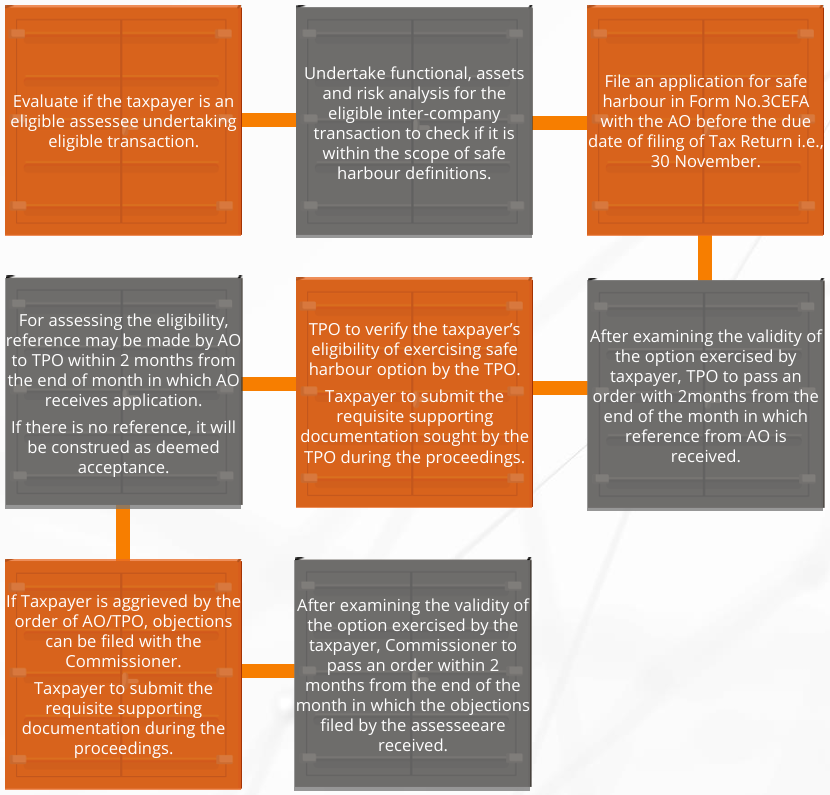
SBC provides comprehensive Transfer Pricing solutions encompassing – Transfer Pricing planning for new related party transactions and Transfer Pricing documentation (as statutorily prescribed by local jurisdictions). We provide end-to-end litigation support across judicial forums on all Transfer Pricing Services. We also assist MNEs to strategize and evaluate alternative dispute resolution routes – Advance Pricing Agreements, Mutual Agreement Procedure, and Safe Harbour Rules.

Transfer Pricing Compliances:

  • Transfer Pricing Documentation
  • Accountant’s Report – Form No. 3CEB
  • Master File
  • Country-by-Country Report
  • Global Transfer Pricing Compliance – Regional/Country comparable studies & filings adhering to OECD guidelines and local regulations.
  • Transfer Pricing Comfort Letters/Memos for Statutory Auditors
  • FIN 48 Assistance – Quantification & Opinion on Transfer Pricing exposure and uncertain tax positions
  • Transfer Pricing analysis and Board meeting presentations for Listed Companies from SEBI Regulations and Companies Act perspective.
  • In addition, SBC has access to all major Indian and Global databases/software – Prowess, CapitalineTP, AceTP, Amadeus, Compustat, Kt-Mine, RoyaltyRange, RoyaltyStat, Orbis, Osiris, IBISWorld, Factiva, One Source, Loan Connector etc.
Transfer Pricing Advisory:
  • Transfer Pricing Policy & Price Setting
  • Drafting/Review of Inter-Company Agreements
  • Alternative Business and Remuneration Models that are sustainable
  • Comparable Studies and Benchmarking analyses
  • Operational Transfer Pricing
  • Group Profit & Effective Tax Planning
  • Tax efficient structuring of international transactions & transaction flows
  • Supplementary analyses to strengthen the documentation from litigation perspective
  • Voluntary Transfer Pricing Adjustments
Secondary Adjustments
  • Transfer Pricing Health Check-Up to avoid/mitigate risks
  • Drawing Segmental P&L for Transfer Pricing Purposes
  • Economic adjustments computation – Risk, Working Capital, Forex, Capacity Utilisation, Depreciation, Cash PLI adjustments
Planning, Implementation & Compliance support for:
  • Intangibles – Structuring, Royalty & Licensing rates, Withholding implications, Agreements
  • Financial Transactions – Interest rates, Withholding implications, Agreements
  • Intra-Group Services, Management Charges, Cost Contribution Arrangements – Charging/mark-up rates, Agreements, Cost pooling & allocation
  • Business Restructurings – Transfer Pricing implications, Agreements & Contracts review
  • General Anti Avoidance Rules (GAAR) implications
  • Permanent Establishment (PE) Exposure for existing/proposed transactions
Transfer Pricing Litigation support & Representations before:
  • First level authorities – Transfer Pricing Officers (TPO)/ Assessing Officers (AO)
  • Dispute Resolution Panel (DRP)
  • Appellate authorities – Commissioner of Income Tax (Appeals) [CIT(A)], Income Tax Appellate Tribunals (ITAT), High Court, Supreme Court
  • Penalty, Rectification, Re-assessment, Revision, Remand, Order giving effect, Stay of demand proceedings
Alternate Dispute Resolution Routes – Advance Pricing Agreement (APA), Mutual Agreement Procedure (MAP), Safe Harbour Rules (SHR):
  • Cost-Benefit Analysis for decision making
  • Filing of Applications in prescribed Forms
  • Representations & Submissions
  • Application Renewals
  • APAs – both unilateral & bilateral
BEPS advisory – Readiness, Implementation, Impact on International Tax Structures
  • BEPS Contract Analysis
  • Value Chain Analysis and Management
  • OECD Pillar 1 & 2 – Readiness, Implementation & Impact
  • Supply Chain Restructuring
  • Three Tier Documentation support in line with Action 13
  • IP Structuring /DEMPE analysis in view of Action 8
  • Financial Transactions planning factoring in Action 4 and 9 and OECD guidelines on Financial Transactions
  • High-risk transactions structuring in coherence with Action 10
  • Profit Split Method – applicability, implementation, splitting factors, projections, segmentation, planning/price-setting as per BEPS
Valuations for arm’s length determination for Transfer Pricing purposes:

Assets (tangibles & intangibles) transfer between relation parties:

  • Capital/financial transactions (equity, debt & hybrid instruments, guarantees) – issue, sale, buybacks between related parties
  • Mergers & Acquisitions transactions – selling, buying, combining, restructuring involving related parties

Conclusion

Our expertise in international transfer pricing, transaction structure, and transfer pricing compliances spans many years. We are able to illustrate and explain the ideal fusion of an international viewpoint and insights with the Indian transfer pricing laws and the actual methodology used by the Indian transfer pricing authorities.

Feel free to contact our specialists if you have any questions regarding representing your case before the transfer pricing authorities or if you would want to talk about your transfer pricing audit services to prevent litigation.

CategoriesSBC

Why Are Mergers & Acquisitions Service Crucial For Enterprises

Why Are Mergers & Acquisitions Service Crucial For Enterprises

  • Home
  • Why Are Mergers & Acquisitions Service Crucial For Enterprises
SBC

The global mergers and acquisitions (M&A) activity fluctuated significantly over the past two decades in terms of the value of global M&A deals and the number of deals completed.

Mergers, acquisitions, internal reconstructions/reorganizations, hive-off, etc. are being taken up by companies which are seeking growth, efficiencies, synergies, business focus, wealth maximation in both domestic and international markets.

Why are M&A services crucial for businesses?

Successful businesses often think about acquiring another company or merging with a competitor in the same sector. Increasing profits by extending your market and lowering competition is the common driving force behind businesses engaging in mergers and acquisitions. Corporations may also merge in order to buy distinctive assets, break into undeveloped markets, or develop a synergy that increases the worth of the two or more merging businesses. M&A offer advantages and disadvantages that are unique from other corporate deals. Here are some more reasons for which organizations shall consider undertaking M&A:

Economies of Scale

One of the important end goals of an M&A activity is to achieve economic gains and economies of scale. This becomes feasible/ possible as the firms involved in the deal are stronger together than apart. The consolidated businesses reap benefits like:

  • Improved access to capital
  • Better bargaining power in the marketplace
  • Service to a wider customer base across geographical locations
  • Lower costs resulting from high volume production and more.

Competitive Approach in the Marketplace

Synergies are usually defined as ‘4+4= 10,’ i.e., the profit from two companies working together makes something more powerful than their performances. M & A services offer Corporate Finance Consulting, which helps organizations understand their potential financial strength if the M&A activity sails through. Having greater financial strength can lead to a higher marketplace segment, more customer control, and decreased competitive threats.

Talent acquisition

Indeed, every firm needs talented employees, and when it comes to talent acquisition, it is one of the major concerns for corporations that wish to stand out in the market. The bigger the business, the better access to the best available talent. This trend is distinct across industries, from manufacturing to technology and services. Therefore, one of the key considerations at the time of undertaking a restructuring activity is the retention of the old workforce and integrating them into the new structure, which helps the organization obtain a skilled and talented workforce.

Access to Resources adds Diversification through Portfolio

Businesses in a similar sphere can sometimes enhance procurement access to raw materials, suppliers, and tangible & intangible resources.

Expanding services into a new market can be difficult, even for well-established businesses. While setting up a branch is always a choice, it saves significant time, effort, and money compared to starting from scratch.

This is particularly right for businesses ready to move into an overseas market. Therefore, it is more practical for most companies to unite with an established local business having its legacy business and domain expertise with a dedicated customer base.

Enterprise Continuation

Often small businesses are privately owned. Once the founder step downs, business failure is possible because there may not be a strong succession strategy. This can put the organization out of work and affect the stakeholders of the business. M & A strategies help ensure business stability and succession, decrease operation interruptions, protect the stakeholders’ interests, and offer job security for employees.

Why SBC?

A sizable portion of M&A activities fall short of expectations in terms of advantages. In order to provide the desired results, integration of any mergers, acquisitions, internal reconstructions/reorganizations, hive-off, etc., should be carefully planned and carried out. After the sale closes, the hard work begins.

Reduced Risk: we provide end-to-end assistance in dealing with restructuring activities which namely involve pre-acquisition due diligence, ideating & conceptualizing restructuring activities, implementation assistance and post-closure compliances/ assistance.

Experience dealing with Indian businesses: Since more than 90% of Indian businesses are family-owned, we are aware of the value of building a long-term relationship with them and serving as their confidant.

Experience: We have decades of expertise in assisting various business groups (domestic and international) in undertaking numerous transactions/ restructuring activities from both the target/ vendor perspective as well as from the buyer perspective.

Our Services

Our professionals have a wide range of expertise in establishing integration governance, putting in place the structures necessary for effective integration, and collaborating closely with your teams to precisely define every aspect of the goal and carry out the plan smoothly. We provide M&A services to clients throughout the transaction’s lifecycle; from acquiring a company to structuring the transaction, from tax advisory to due diligence, from kick-starting the transaction to getting approvals from regulatory bodies and operate seamlessly across various functions within SBC to offer a complete suite of M&A solutions to our clients.

We will simultaneously ensure that you get the anticipated advantages and maximize the value of your M&A deal.

CORPORATE RESTRUCTURING
  • We assist in identifying alternate corporate restructuring options that may be available after M&A, critically evaluate the same from each stakeholder’s perspective and identify potential tax costs associated with it, suggest suitable options for cash and tax rationalization, evaluate regulatory hurdles if any, and help appropriate decision making.
FINANCIAL STRUCTURING
  • Extensive analysis of each transaction, enabling conceptualization, selection, and implementation of options from a tax and regulatory perspective, is provided during the process of undertaking M&A. In addition, advice on profit extraction/ cash repatriation techniques is also provided from a tax and regulatory efficient manner.
ACQUISITION STRUCTURING
  • Advice on domestic and inbound/ outbound acquisition structuring for strategic acquirers – directly or through appropriate intermediary jurisdictions, tax treaty network of intermediary jurisdiction, taxation on current acquisition & future divestment or exit, and capital market implications. In addition, we assist in structuring acquisitions, either by way of asset/ business purchase or share purchase, from a tax and regulatory perspective.
TRANSACTION ASSISTANCE
  • We provide in-depth advice on the transaction structure from an overall tax & cost optimization perspective in case of an acquisition of an existing business (share deal Vs Asset deal), undertake drafting/ reviewing contracts with local joint venture partners, provide due diligence support, assist in setting up of entities for international groups. Further, we also help foreign companies fine-tune their investment strategies while making inbound investments.
POST DEAL SUPPORT
  • We extend post-deal support such as drafting necessary documentation, management of condition precedents, necessary Regulatory approvals, project management of closure activities, compliance with FEMA, Companies Act and other applicable regulations, liaising with regulators and filing of necessary forms/ letters/ intimations. We even assist in post-deal integration activities such as identifying the various licenses and registrations, government sanctions, awards, etc., that need to be altered, or taken afresh, review customer contracts, vendor contracts and other business contracts. Further, a structured approach is provided by working with the key stakeholders in the client’s team. Substantial time is spent on the planning, sequencing, and timing of every action to ensure there is no business disruption. Subsequently, our experienced team manages and implements the said framework.
CategoriesSBC

How Tax Consulting Services Are Helpful To Your Business?

How Tax Consulting Services Are Helpful To Your Business?

  • Home
  • How Tax Consulting Services Are Helpful To Your Business?

Snippet:  Tax consultants are professionals who offer business-centered tax advice and implementation services to clients who function in different sectors. Their services add to an efficient tax experience.

No business can survive in isolation without complying with the laws of the land.

There are too many things that a business owner needs to consider to witness a positive graph. You have to manage the stress of finances, sales, clients, staff, and much more. But the most daunting and important thing is to deal with the taxes. It is a critical task that requires sound knowledge and is often time-consuming.

Hiring for corporate tax services can lower your burden related to tax management. A professional tax consulting company analyses financial and tax problems, formulates solutions, and makes recommendations designed to provide advice on taxation for clients ranging from individuals to businesses.

Need for Tax Consulting

  • Well, honestly, the need to file taxes depends majorly on your business requirements. In the present scenario, every penny saved by you is reinvested in your business. Hence, the precise suggestions on your finances and income statement will present the growth of your business capital.
  • Speaking about the taxes concerned, you can save taxes with a good awareness of tax credits and deductions.
  • When you focus on the growth of your business, you need to invest all your time, energy, and effort into its expansion, which becomes difficult at times to manage and make a proper decision that would be beneficial. The tax consultants will have a fair idea and take reasonable judgment because they would quickly know all the pros and cons of taking a particular decision at a specific time due to their professional and technical expertise.
  • At the inception of a business, if the planning is done with the help of tax consultants, they provide better planning advice for the business in a cost-effective manner.

Benefits of Choosing Tax Consulting Services:

A failure to file your taxes correctly may, out the penalties and fines due to the business, which may cause damage to the reputation of the entity, may lead to dissatisfaction of stakeholders and government intervention in the business. Hence it is important to hire the best tax consulting services to manage all the strain and save your business from a poor reputation.

1.More time to develop new business strategies

A business-centered person who has chosen a tax consultancy service will get more free time, mind, and energy to focus on generating higher profits, exploring new opportunities, and thereby enhancing their business. The problem of managing taxes which negatively impacts the entity if ignored can be taken care of by these professionals.

2.Holdover the changing tax regulations

The taxation system is dynamic, and it may be tough to know everything about the complex taxation system. A lot of complex guidelines need to be taken care of. It becomes more complex where new rules/amendments are added or tweaked within the guidelines to comply with them. The professional tax consulting firms are well aware of these changes and complexities. The professionals keep themselves updated about the new Indian taxation guidelines and cater to the changing tax structure.

3.Accuracy is a major help

Businesses involve all types of multidimensional assignments and tasks. There are several accounts, hundreds of transactions, and statements to take care of with a wide range of incomes and expenditures that should be dealt with while managing the tax liabilities/refunds.

For a normal persona, it may be tough to keep track of transactions of such levels with precision. This is where the services of a tax consultancy come into action. They offer the probable highest level of Accuracy by managing all the parameters.

4.Help in audit

The taxpayers are audited yearly by the tax regulatory bodies, and your business may become a part of the audit. Tax consultants in India consider these unexpected conditions while preparing tax returns and draft ITR filing with more careful attention by ensuring compliance with relevant laws and regulations applicable to your entity.

Sometimes auditing may become unavoidable; under such circumstances, they ensure that your presentation is done efficiently in front of the authorities.

5.Professional services

Hiring tax consulting and planning services comes with the additional benefit of getting a professional vision for every task. Working with different niches and business scales, the tax consultants acquire a better perspective on the subject. A tax consultant can handle complicated issues by lowering the financial risks and uncertainties and even helps you check any prospective problem that may arise during the business in the near future. They also offer unbiased and practical suggestions if any business issue is diagnosed.

6.Problem-free tax filing

Professional tax consulting companies offer expert tax preparation services to help you experience hassle-free tax filing as they deal with all the tax problems on your behalf. A tax consultant will manage your deductions, which will lower your tax liabilities.

7.Tax deductions

Tax professionals have updated knowledge of recent tax reforms and tax amendments. A professional tax consultant looks for the possibility of deductions and credits for taxpayers to mitigate the tax liability while filing your ITR. Hence, an expert tax advisor can save your time and money.

8.Organized document handling

Compared to individual tax filing, paperwork and documents legalities are more in a business tax filing. And every paper and document is important when you are handling tax calculations. A professional tax consultant thoroughly organizes and manages every needed document, decreasing your hassle. You do not need an additional person to manage your documents.

9.Lower computation mistakes

Even a minute error in the calculation of taxes can lead to devastating consequences. Tax consulting services are trained and experienced in handling numbers and transactions. Several tax professionals consider tax calculating software to double-check their work which diminishes the chances of errors.

Grow your business with professional tax consulting

In short, seeking help for business tax and consulting services is the best decision for your business. The facilities offered by tax consulting services are helpful for your business in the short and long term. They manage every parameter linked to your business taxes with great precision and excellence, lessening the burden so that you can easily focus on your core business.

These are the benefits that you can derive from tax consultants in India. If you are looking for tax consultants, your search is over. Steadfast Business Consulting is a tax consultancy firm that serves as the best tax advisor in India and globally. The firm has highly skilled and experienced tax consultants in diversified fields and industries who can help you efficiently deal with your business taxes.

CategoriesSBC

Why Hire SBC For GST Services?

Why Hire SBC For GST Services?

  • Home
  • Why Hire SBC For GST Services?
SBC

The Indian tax regime follows a methodology wherein different tax law provisions are applicable to a single transaction which tends to create contentious lawful problems. Currently, the Income-Tax Act 1961 and the GST Laws (CGST Act, 2017) are the major regulations working together in the direct and indirect tax front respectively.

Specific provisions in Income tax and GST, present a variety of chances and problems for any business.

Hence, it is crucial that the businesses gear up and be prepared to avoid any potential litigations.

Sometimes it might be difficult for any organisation to keep up with the timelines under both direct and indirect taxes. The burden to keep up with all the compliances, timelines, notices might become cumbersome. Thus, the need for a reliable and reputable professional service handling all tax related matters arise.

This is where Steadfast Business Consulting enters!

Developed on the five major pillars of Trust, Client Relationship and satisfaction, cost effectiveness, Time efficiency, and Quality, SBC is a multi-dimensional professional Corporate Tax Planning firm offering a broad range of taxation and regulatory services to its clients across the globe.

As a leading indirect tax consultant, we offer complete range of services in relation to indirect taxation, of high quality within budgetary limits. Here is why SBC is your ideal partner.

1. Team of Steadfast

The Company has a founding team of professional people who are its known consulting partners. Every partner has diverse and niche expertise in different fields such as Transfer Pricing, Indirect Taxes, Mergers and AcquisitionsOutsourcing Business, Domestic and International Taxes, Internal Audit, Government Incentives and more. The team’s diverse expertise makes Steadfast one of the best solutions providers, helping businesses meet their operational and financial goals.

2.Easing Tax Compliance through Technology

Steadfast Business Consulting focuses on Automation, Tracking and offers consistent updates, dashboard systems, MIS and Tax network connections, and access to databases that help acquire clients’ confidence. We at SBC have an organized GST automation product in collaboration with our IT partner to automate the GST E-Invoicing system to help clients to automate reconciliations and other manual tasks involved in GST. Along with this, a cloud-based database storage system provides real-time access to data for both clients as well as SBC staff.

3. Services Offered by SBC:

The majority of the previous indirect taxes collected by the Center and the States have been subsumed by the transaction tax known as GST. Given the size of the shift, there are particular difficulties and complications in its implementation. Businesses have reviewed their tax structures and restructured them to conform to the GST requirements.

We are in an optimum position to assure compliance with the GST law and in providing value-driven services to our clients, thanks to our subject matter expertise in indirect taxation and experience managing GST transition for diverse enterprises.

a. Compliances:

The GST has altered how business is conducted. Every firm must evaluate how the GST would affect different areas of their operations. Doing things not just right but also at the right time is very essential in adhering to tax compliances. Our gamut of services under GST compliances include:

  • Computation of tax payments and filing of various returns
  • Assist in reconciliation of input tax credits as per the GST system and as appearing in records maintained by the Company
  • Preparation of compliance tracker
  • Assist in queries related to e-Way bills generation
  • Assistance in undertaking GST Annual compliances

b. GST Refund:

Presenting choices for requesting refunds or rebates, aiding with the creation and submission of required paperwork, and following up with the agency to secure the benefits is also our core competency.

With the objective that the taxes are not exported or embedded in the supply chain, the refund of GST paid on eligible purchases is extended as a refund to exporters and businesses covered under an inverted duty structure (i.e., instances where the rate of tax paid on input is higher than the rate of tax payable on outward supplies made).

We undertake cost-benefit analysis and suggest the best workable options in client-specific facts, including the following:

  • Evaluating the alternatives of refund/rebates and advising on the beneficial method for claim
  • Designing system for generation of the necessary documentation for preparing refund claim
  • Assistance in the retrieval of supporting documents
  • Preparing refund claim as per statutory requirement
  • Filing refund claim with department and making follow up
  • Making representation in case refund claim rejected

c. GST Litigation:

GST still being in nascent stages and evolving both from a policy and implementation perspective; there are several uncertainties in the interpretation of the provisions. With the possibility of multiple interpretations being taken, several issues result in increased litigation. We assist our clients in:

  • Preparing replies to various intimations, notices received under the GST Act and drafting of appeals, etc.
  • Drafting and filing applications seeking advance rulings
  • Representation services
  • Litigation review exercise to formulate a strategy for swift resolution of matters

d. GST Health Check-up Services/ Reviews:

We undertake to review the overall tax positions and compliances undertaken by the Company, thereafter, suitably advising for any tax efficiencies. The review is intended to unearth any possible gaps in the tax system or position adopted. With our experience, we know the possible areas where there can be a lapse in the tax system implemented. As a part of the review, we shall:

  • Review the position of the Company as to whether the same is in consonance with the existing GST Compliances
  • Identify risks and opportunities, viz. areas of non-compliance and potential tax exposures, areas of savings, etc., and provide suggestions on the same
  • Review of various processes followed by the Company from a GST perspective

e. Foreign Trade Policy:

The Foreign Trade Policy has been issued by the Ministry of Commerce to promote and facilitate exports of goods out of India and also to govern imports into the country. Amongst others, the Policy provides for benefits like setting up the unit as an STP/EOU, remission of Duties and Taxes on Exported Products (RoDTEP), and Rebate of State & Central Taxes and Levies Scheme (RoSCTL), Service Exports from India Scheme (SEIS), etc. We at SBC have consistently assisted our clients in optimising the claim of different incentives extended under the FTP.

f. Special Economic Zone:

  • Assistance in filing applications, liaising with authorities in obtaining SEZ approval as a Co-developer, Unit.
  • SEZ Compliances including filing performance reports, SOFTEX forms, DTA Services Procurement Form (DSPF)

Conclusion

We are well familiar with the government’s operations and policies. As a result, our highly efficient team can effectively use the information and resources to reduce your tax burden while abiding by the law. Make sure to contact our Goods and Services Tax planning specialists as soon as possible if you don’t want to incur any more taxes or unwarranted fines.

CategoriesSBC

An Overview: Corporate Taxation In India

An Overview: Corporate Taxation In India

  • Home
  • An Overview: Corporate Taxation In India
SBC

Snippet: Know about corporate tax in India and how the profits earned by companies are calculated to compute corporate taxes. Find out corporate tax rates and details on rebates and deductions.

In India, taxes on revenue, money, and capital gains are rich sources of taxes for the Indian government. Whether domestic or foreign, corporate houses should pay taxes to run their business in India. A major tax that corporates pay to the Indian Government is corporate tax.

The corporate taxation rate in the country remained the same at 25.17% in 2022 from last year. However, according to Statista, the corporate tax rate in India may reach 30% by 2025.

What is Corporate Tax?

Corporate tax is a type of direct tax charged on the revenue earned by a business house during a specific yearly tenure. Corporate taxes are charged on a company’s income after deductions like depreciation, cost of goods sold, selling, and general and administrative expenditure have been considered. These deductions may be subject to certain conditions and if they don’t satisfy the same, the deduction may not be allowed or deferred. This leads to deferred tax calculations and difference in tax profits when compared to book profits.

The corporate tax can also be called income tax for revenue generated by businesses. Several countries charge corporate taxes for a better tax process. There are different rules for applying corporate tax in different countries.

Corporate tax in India

Corporate tax in India is charged basis the domicile of the corporates Just like individuals earn income and pay tax on it, business houses should also pay tax as part of the income generated.

For effective tax calculation, companies in India are divided into two categories:

Domestic Corporates: Any company which is formed as per Indian law is known as domestic corporate. Additionally, even if a company is formed under foreign laws but is managed wholly in India, it is also said to be domestic for the purpose of Indian Income-tax laws. A domestic corporate should ideally be registered under the Companies Act 2013.

Foreign Corporates: A company is called a foreign company if it does not belong to Indian origin or has its management or control cited outside India.

Corporate Tax Rates for Financial Year 2022-23

The effective corporate tax rate for any corporate house would have the following components:

  • Corporate tax
  • Surcharge (charged for corporates earning higher incomes) and
  • Education Cess (applied on corporate tax and surcharge above)

Corporate tax rates

For Domestic corporates

  • For a gross turnover of up to INR 400 crores in FY 2020-21, the corporate tax rate is 25%.
  • For a gross turnover above INR 400 crores in FY 20, the corporate tax rate is 30%.

The domestic corporate houses are also provided with an option to opt for a beneficial tax rate of 15% (if engaged in manufacturing) and 22% (subject to foregoing of certain benefits). These rates require satisfaction of an enumerated list of conditions as given under Indian Income-tax laws.

For Foreign corporates

  • Interest is charged at 5% or 20%
  • Royalty or Fee for technical services is charged at a 10% tax rate.
  • Any other kind of income is charged at a rate of 40%

Above rates are subject to rates given in Tax-treaty with the country in which the foreign corporate is domiciled.

Surcharge rates

For Domestic corporates

  • If the income range is from INR 10 Mn to 100 Mn, surcharge is 7% on corporate tax rate.
  • If the income range surpasses INR 100 Mn, surcharge rate is 12% on corporate tax rate.

For Foreign corporates

  • If the income range is from INR 10 Mn to 100 Mn, the tax rate is 2% for foreign companies.
  • If the income range surpasses INR 100 Mn, foreign companies’ tax rate is 5%.
Income of a company/corporate

To calculate corporate tax on the revenue of your business, it is important to know about the major factors which contribute to the income of a company/corporate.

  • Earning from business operations
  • Profits/Rent from properties let out
  • Capital gains on transfer of assets
  • Other sources which may include interest income and dividends
Corporate Tax Planning

Corporate tax planning means strategizing your business’s financial affairs to enhance profit and lower payable tax by managing the advantages of deductions, exemptions, and rebates.

Corporate tax solutions are a risky and tricky process that involves a big amount at stake. Thus, you need a professional corporate tax service provider to handle your taxation process.

In India, you have the best financial players offering corporate tax consulting and implementing services. Persistence and complete awareness of current tax regulations and relevant rules and laws are necessary to ensure efficient corporate tax planning.

Corporate tax planning involves the act of planning your finances in such a manner that the payable amount gets reduced, and the gains get enhanced. An amazing feature of tax planning is that it is completely in sync with the regulations and financial rules set by the Indian Government.

Accessible Deductions

Reducing payable taxes is done through deductions, rebates, and exemptions, along with efficient management and auditing of the company’s expenses. These deductions include:

  • Capital gains that are taxed at a rate of 15% or 20% or exempted u/s 54D, 54GA, 54G, and 54EC.
  • Deductions related to new employees under section 80JJAA.
  • Deductions related to depreciation, additional depreciation as per section 32 that allow for a flat 15% off for the old asset depreciation and 20% on the purchase of assets for your company.
  • Deductions that are eligible for rebates in specific scenarios.
  • Donations to charitable companies which are 50 to 100% tax exempted under Section 80G as per the terms and conditions.
Measures for suitable corporate tax planning

Along with the above deductions, check out some measures to save corporate tax. These corporate tax solutions depend completely on how the company plans its tax-saving strategies.

  • Proper management of expenditure: Often, businesses in India operate with unorganized labor, which hampers efficient record keeping. Hence, it is essential to maintain appropriate reports of wages, overhead expenses, etc., to claim deductions in labor and production expenditure.
  • Valuation of equity: Though stock prices are calculated at cost, sometimes stocks with shorter shelf lives are valued at their Net Realizable Value, preventing them from getting overvalued and restricting your capital gains taxable income.
  • Deductions: Use deductions to regulate taxable income and their efficient management to save corporate tax.
Key services of Corporate Tax Consulting Services

When you think of business, tax automatically comes into the picture. Hence, to avoid issues and uncertain losses to tax, it is essential to take corporate tax consulting services from time to time. Efficient planning mitigates the risk. With effective corporate tax consulting services, you can focus on helping business owners make informed tax decisions and execute methods to handle tax affairs to support your business operations and deal with non-compliance.

Steadfast Business Consulting is your one-stop solution to corporate taxation. The company helps deal with issues like effective tax planning, compliances and post-tax filings the resulting assessments and litigation management. The major corporate tax services offered by SBC are:

  • Compliance: Compliance services involve day to day tax filings, calculations before and after registration of the company in India, compliance support linked to preparation and filing of corporate tax returns, withholding tax returns etc.
  • Consultancy services: The company offers corporate tax consulting services. The professionals at SBC are aware of the consistent changes in the economic environment and offer effective tax advice.
  • Health checkup: The professional does detail health checks of the business operations to acquire tax incentive advantages, reduce prospective exposure and enhance the tax compliances.
  • Litigation Services: Preparation of responses to the notices, arguments, and appeals before the income tax office and appellate bodies of the Tax system, to acquire NOC and manage advance ruling proceedings; SBC manages everything.

SBC aims to strike the right balance and help you save corporate taxes using deductions and rebates. The firm aims to understand the situation of your company and help you in the long run by enhancing your company’s gains and tax effectiveness. At SBC, the professionals realize the complexities of corporate tax and their nitty-gritty’s. That’s where their expert team of professionals enters. With expertise in corporate taxation laws, they will help you get the best results for your corporation tax.