
CategoriesTransfer Pricing

Which Transfer Pricing Method Applies to Your Transaction?

Written by Jayasri P · Last updated 17 August 2026 · Statutory references current to the Income-tax Act 2025 and the Income-tax Rules 2026.

Indian law prescribes six transfer pricing methods and establishes no hierarchy between them. The most appropriate method is selected under Rule 80 of the Income-tax Rules 2026 by reference to the nature of the transaction, the availability of reliable comparable data and the functions each party performs. The selection itself must be documented and justified.

Most explanations of transfer pricing methods describe the five methods recognised internationally and stop there. That is not the question an Indian finance head actually faces. The question is which method applies to a specific transaction, and how the choice is justified when an officer proposes a different one.

Indian law approaches this differently from a hierarchy-based system. There is no default method. There is no ranking. What exists instead is a selection test, and satisfying that test is a substantive obligation rather than a formality, because the reasoning behind the selection is examined before the benchmarking beneath it is ever reached.

What are the transfer pricing methods under Indian law?

Six methods are prescribed. Five are the internationally recognised methods, and the sixth is a residual category introduced to cover transactions the first five do not fit.

Method Best suited to What it compares
Comparable Uncontrolled Price Commodity-type goods, loans, royalties where a genuine comparable price exists Price charged in a comparable uncontrolled transaction
Resale Price Method Distribution and resale with minimal value addition Gross margin earned on resale
Cost Plus Method Contract manufacturing and services Mark-up on direct and indirect costs
Profit Split Method Integrated operations, uniquely valuable intangibles on both sides Division of combined profit by relative contribution
Transactional Net Margin Method Most Indian service and captive arrangements Net profit margin relative to an appropriate base
Other Method Transactions where the five above do not fit Price that has been charged or would be charged

The determination of arm’s length price is governed by Section 165 of the Income-tax Act 2025, and the computation mechanics for each method sit in Rule 79 of the Income-tax Rules 2026. Practitioners will recognise these as the successors to Section 92C and Rule 10B respectively.

How is the most appropriate method selected?

The most appropriate method is the one best suited to the facts and circumstances of the particular transaction, and which provides the most reliable measure of an arm’s length price. That test sits in Rule 80 of the Income-tax Rules 2026, the successor to Rule 10C.

The factors that drive the selection are the nature and class of the transaction, the functions performed together with the assets employed and risks assumed by each party, the availability and reliability of comparable data, the degree of comparability between the controlled and uncontrolled transactions, and the extent to which reliable adjustments can be made for any differences.

Availability of data is the factor that decides most Indian selections in practice. The Comparable Uncontrolled Price method produces the most reliable answer where a genuine internal or external comparable price exists, but such a price frequently does not exist, and a method that is theoretically superior but unsupported by data is not the most appropriate method for that transaction.

Why does the Transactional Net Margin Method dominate in India?

The Transactional Net Margin Method is applied to a substantial majority of Indian transfer pricing analyses because it tolerates the data conditions that actually prevail. Net margins are less sensitive to product differences and to accounting variation than gross margins or prices, so comparables that would be unusable under the Resale Price or Cost Plus methods remain usable under it.

That tolerance is also its weakness. Because net margin comparability is easier to establish, the method is sometimes selected by default rather than by analysis, and a file that reaches the Transactional Net Margin Method without recording why the other five were rejected is exposed on exactly the point an officer examines first.

When does the Comparable Uncontrolled Price method actually work?

The Comparable Uncontrolled Price method works where a genuinely comparable price is observable, most commonly through an internal comparable, meaning a transaction the same taxpayer has undertaken with an unrelated party on similar terms.

It fails where product differences, contractual terms, volumes, geography or the timing of the transaction differ materially and cannot be adjusted for reliably. Because the method compares price rather than margin, it is the least forgiving of these differences, which is why it produces the strongest analysis when it applies and an indefensible one when it is forced.

How do the Resale Price and Cost Plus methods differ?

Both are gross-margin methods, and the distinction is which side of the transaction is tested.

The Resale Price Method tests a distributor by examining the gross margin earned on resale to unrelated customers, and it suits distribution arrangements involving minimal value addition. The Cost Plus Method tests a manufacturer or service provider by examining the mark-up on direct and indirect costs, and it suits contract manufacturing and service arrangements.

Both depend on gross-margin comparability, which requires that comparable companies classify costs consistently between cost of goods sold and operating expenses. Indian financial statements frequently do not, and that inconsistency is the practical reason both methods are applied less often here than the international literature would suggest.

When is the Profit Split Method appropriate?

The Profit Split Method applies where operations are so integrated that neither party can be tested in isolation, or where both parties contribute uniquely valuable intangibles to the transaction.

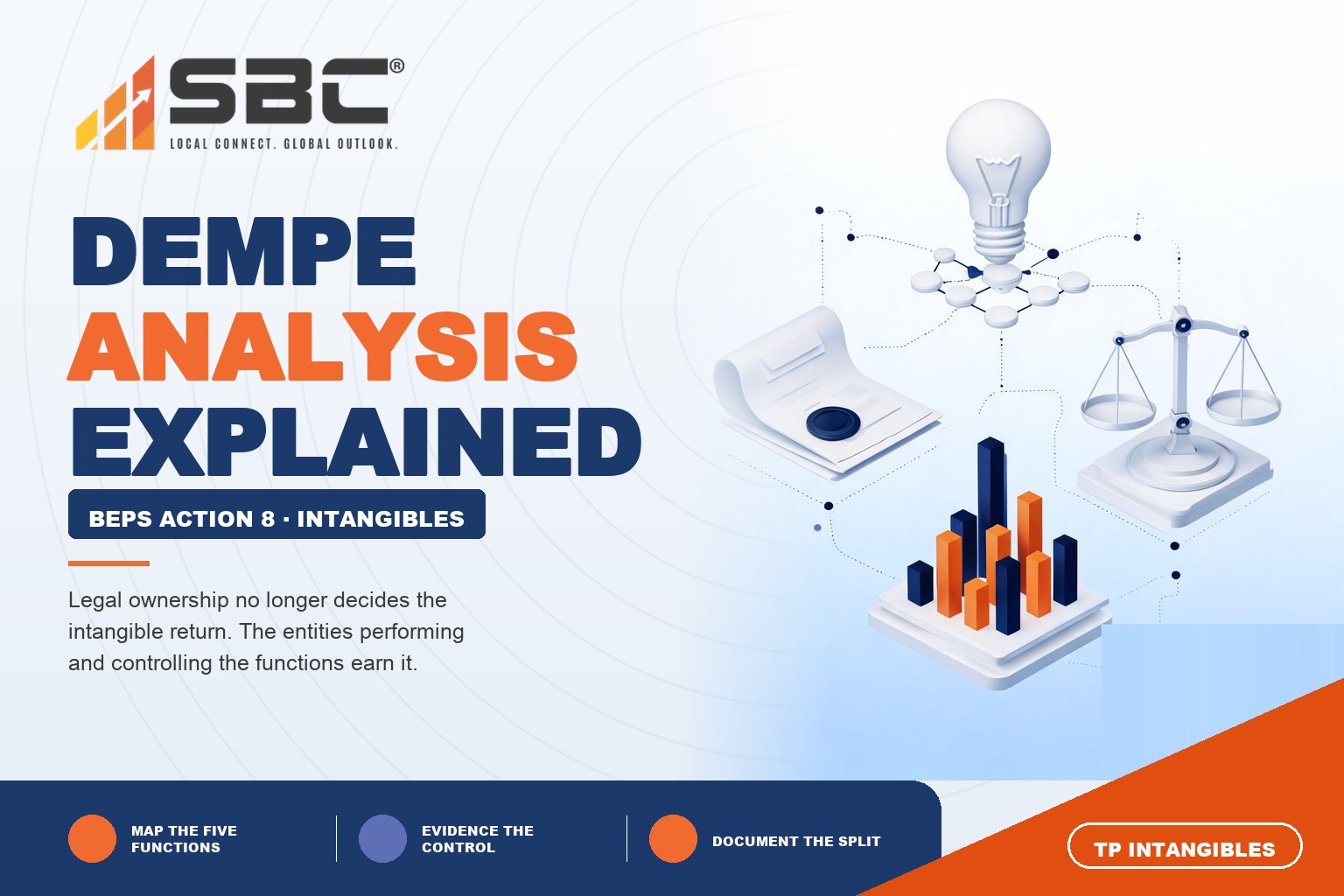
It is the correct method in a narrow set of circumstances and the wrong one in most, because splitting combined profit requires a reliable basis for the split and reliable segmented financial data for both parties. Where the analysis concerns intangibles, the allocation follows from which entity performs the development, enhancement, maintenance, protection and exploitation functions, rather than from which entity holds legal title.

What does the selection have to demonstrate?

The documentation must record why the selected method was chosen and, equally, why the alternatives were rejected. A file that asserts a method without that reasoning has not satisfied Rule 80, however sound the resulting benchmarking may be.

A defensible selection sets out the functional analysis first, identifies the tested party and explains why it is the less complex of the two, states the availability of data for each candidate method, and only then reaches the conclusion. The order matters, because an analysis that begins at the method and reasons backward is visible as such.

A new option has also been introduced in the Income-tax Rules 2026. Rule 82 permits an assessee to exercise an option for determination of arm’s length price across multiple years in a single proceeding, which had no equivalent under the Income-tax Rules 1962. Where a transaction recurs on stable terms, that option is worth evaluating.

How is the tested party chosen?

The tested party is the entity whose margin is examined, and in most analyses it should be the less complex of the two parties to the transaction.

The reason is practical rather than doctrinal. Routine entities have comparables. Comparability is easier to establish for an entity that performs routine functions, employs no unique intangibles and bears limited risk, because independent companies performing similar routine functions can actually be found in the databases. An entity that owns valuable intangibles and bears entrepreneurial risk has few genuine comparables anywhere, so testing it produces a wide and unreliable range.

For a captive service provider supplying an overseas parent, the Indian entity is normally the tested party. Where the Indian entity is the entrepreneur and the overseas entity performs the routine function, the position reverses, and a file that assumes the Indian entity is always the tested party will have selected wrongly.

What happens if the officer rejects your method selection?

A Transfer Pricing Officer who disagrees with the selected method will substitute one and recompute the arm’s length price, and the adjustment flows from there into a draft assessment order.

This is the point at which the quality of the original documentation determines the outcome. Where the file recorded why each alternative method was considered and rejected, the taxpayer is defending a reasoned position. Where it did not, the taxpayer is arguing after the fact, and the officer’s selection carries the advantage of being the only reasoned one on the record.

The remedies that follow are procedural. Objections may be filed before the Dispute Resolution Panel, and appellate routes follow from there. None of them repairs a file that never justified its selection in the first place, which is why the documentation stage rather than the assessment stage is where a method position is actually won.

Which transfer pricing firms prepare benchmarking studies?

A benchmarking study should be prepared by a firm that treats method selection as an analytical step rather than a formality, and that can defend the resulting position if it is questioned.

The practical checks are whether the firm documents its search strategy so that acceptances and rejections can be reviewed, whether it computes economic adjustments for working capital, capacity utilisation and risk differences, and whether it has represented clients through assessment stages and therefore knows which selections withstand examination.

Steadfast Business Consulting (SBC) provides transfer pricing benchmarking and documentation services covering functional analysis, method selection, comparable searches and economic adjustments. Where a selection is challenged, the transfer pricing assessment procedure sets out the stages that follow, and our guidance on Indian transfer pricing compliances covers the annual filing obligations that accompany the study.

Businesses reviewing a method selection made in an earlier year may contact our transfer pricing team, particularly where the transaction has changed in substance since the selection was first made.

Frequently Asked Questions

Is there a hierarchy of transfer pricing methods in India?

No. Indian law establishes no hierarchy or default method. The most appropriate method is selected under Rule 80 of the Income-tax Rules 2026 by reference to the transaction, the functional profile and the availability of reliable comparable data.

Which transfer pricing method is used most in India?

The Transactional Net Margin Method is applied to most Indian analyses because net margins tolerate product and accounting differences better than prices or gross margins. It should still be selected by analysis rather than by default.

Which rule governs the most appropriate method?

Rule 80 of the Income-tax Rules 2026 governs the selection, and Rule 79 sets out the computation mechanics for each method. These replace Rule 10C and Rule 10B of the Income-tax Rules 1962 respectively.

Can the same method apply to every transaction in a group?

No. The selection is made transaction by transaction. A group may properly apply different methods to a service arrangement, a goods transaction and a royalty, because the data and functional profile differ in each case.

What is the Other Method used for?

The Other Method covers transactions the five prescribed methods do not fit. It considers the price that has been charged or would be charged for the same or a similar uncontrolled transaction, and it is commonly applied to one-off arrangements.

Can arm’s length price be determined for multiple years at once?

Rule 82 of the Income-tax Rules 2026 permits an assessee to exercise an option for determination of arm’s length price across multiple years in a single proceeding. No equivalent provision existed under the Income-tax Rules 1962. — Sources: Transfer Pricing, Income Tax Department · OECD Transfer Pricing Guidelines

CategoriesGST SBC

India’s Transfer Pricing Reporting Framework Enters a New Era: Transition from Form 3CEB to Form 48

India Union Budget 2026-27

Home > Common GST Compliance Mistakes That Trigger Tax Notices in 2026

Preparing for the Next Phase of Transfer Pricing Compliance

The introduction of the Income-tax Act, 2025 marks a significant development in India’s transfer pricing framework. Among the notable changes is the replacement of Form 3CEB with Form 48, introducing a more comprehensive reporting framework for transfer pricing compliance. This is especially relevant for businesses relying on Transfer Pricing Services in India to stay compliant through the transition.

While this change may appear to be a simple replacement of forms, it has far-reaching implications for businesses undertaking international transactions and specified domestic transactions. Form 48 requires taxpayers to provide more detailed information supporting their transfer pricing positions, making it essential for businesses to strengthen their documentation and compliance processes well in advance.

The transition also provides taxpayers with an opportunity to review their existing transfer pricing documentation and ensure they are prepared for the enhanced reporting requirements under the new law.

Which Form Applies and When?

One of the most common questions among taxpayers is whether Form 48 is applicable for the current financial year.

The answer is straightforward.

Financial Year Applicable Form Governing Law
FY 2025–26 Form 3CEB Section 92E of the Income-tax Act, 1961
FY 2026–27 onwards Form 48 Section 172 of the Income-tax Act, 2025 read with Rule 85 of the Income-tax Rules, 2026

Accordingly, taxpayers filing their accountant report for FY 2025–26 will continue to furnish Form 3CEB. Form 48 is effectively applicable from FY 2026–27. Although businesses have one transition year before Form 48 becomes applicable, they should utilise this period to assess their transfer pricing documentation and reporting processes, as the new form requires significantly more detailed disclosures than its predecessor.

Why Was Form 48 Introduced?

The introduction of Form 48 is aimed at strengthening the quality and consistency of transfer pricing reporting.

While Form 3CEB primarily required the Chartered Accountant to certify the particulars of international transactions and specified domestic transactions, Form 48 adopts a more structured reporting approach by requiring taxpayers to disclose additional information supporting the arm’s length nature of such transactions.

The objective is to:

  • improve the quality and consistency of transfer pricing reporting;
  • facilitate automated validation and cross-verification of information across various tax filings;
  • enable risk-based assessment through data analytics; and
  • encourage taxpayers to maintain robust contemporaneous transfer pricing documentation.

The transition therefore reflects the Government’s objective of making transfer pricing reporting more transparent, consistent and evidence-based.

The Income Tax Department has published an official Guidance Note on Form No. 48 detailing the reporting requirements directly.

Form 48 – A More Comprehensive Reporting Framework

The most significant change under Form 48 is not merely the reporting format but the extent of information that taxpayers will be required to maintain and disclose.

Unlike Form 3CEB, Form 48 places greater emphasis on the economic analysis supporting transfer pricing positions. Consequently, taxpayers should ensure that robust transfer pricing documentation is available before the reporting process begins.

Some of the additional information expected to be reported under Form 48 includes:

  • Arm’s length margin determined for the benchmarked transactions.
  • Details of the benchmarking analysis supporting the arm’s length outcome.
  • Selection and justification of the Most Appropriate Method (MAM).
  • Functional, Asset and Risk (FAR) analysis.
  • Comparable company search process and financial analysis.
  • Transaction-wise reporting and reconciliation with statutory filings.
  • Details of parent-company borne costs and intra-group allocations, wherever applicable.

Accordingly, businesses can no longer treat benchmarking as a year-end exercise. The benchmarking study should be completed upfront so that the arm’s length margin and supporting analyses are readily available while preparing Form 48.

Documentation Readiness – Why Businesses Should Start Preparing Now

Although Form 48 is applicable from FY 2026–27, businesses should begin preparing during the current financial year to avoid last-minute compliance challenges.

To ensure a smooth transition, businesses should maintain the following documentation:

  • Updated Transfer Pricing Documentation (Local File).
  • Benchmarking Report supporting the arm’s length nature of international transactions.
  • Arm’s Length Margin computation.
  • Functional, Asset and Risk (FAR) analysis.
  • Comparable company search and benchmarking workings.
  • Intercompany agreements and supporting commercial documentation.
  • Segmental financial information, wherever applicable.
  • Information relating to parent-company borne costs, employee stock option costs and shared service allocations, where relevant.
  • Reconciliation of transfer pricing information with the financial statements, tax audit report and income-tax return.

Preparing these documents in advance will help businesses respond efficiently to the enhanced disclosure requirements under Form 48.

How SBC Can Support Your Transition

The transition from Form 3CEB to Form 48 is more than a change in the reporting format—it requires businesses to revisit their transfer pricing documentation and ensure that all supporting analyses are available before the reporting process commences.

As a dedicated Transfer Pricing Consultant for businesses navigating this transition, SBC brings the following support:

At SBC, our Transfer Pricing professionals assist businesses in preparing for Form 48 by providing:

  • Form 48 readiness assessments;
  • review of existing transfer pricing documentation;
  • benchmarking studies and arm’s length margin analyses;
  • FAR analysis and economic documentation;
  • review of intercompany agreements;
  • gap analysis of documentation against Form 48 reporting requirements; and
  • end-to-end transfer pricing advisory, compliance and litigation support.

Our objective is to help businesses transition smoothly to the new reporting framework while ensuring that their transfer pricing documentation remains technically robust and audit-ready. For the complete regulatory breakdown — documentation requirements, benchmarking methods, and audit support — see our full guide: Transfer Pricing Services in India. Businesses managing GST and income tax compliance alongside transfer pricing can find related guidance through SBC’s GST Advisory Services.

For the complete regulatory breakdown — documentation requirements, benchmarking methods, and audit support — see our full guide: Transfer Pricing Services in India.

Key Takeaways

  • Form 3CEB continues to apply for FY 2025–26.
  • Form 48 effectively applicable from FY 2026–27  under Section 172 read with Rule 85 of the Income-tax Rules, 2026.
  • Form 48 requires significantly more detailed disclosures, including benchmarking outcomes, arm’s length margins, FAR analyses and supporting economic analyses.
  • Businesses should complete their benchmarking studies and maintain robust transfer pricing documentation well before the first Form 48 filing.
  • Information from overseas Associated Enterprises, including parent-company borne costs and shared service allocations, should be obtained in advance to support the enhanced reporting requirements.
  • Although the reporting framework has evolved, the arm’s length principle, recognised transfer pricing methods and documentation requirements continue under the new legislation.

Conclusion

The transition from Form 3CEB to Form 48 represents an important step in the evolution of India’s transfer pricing compliance framework. While Form 3CEB remains applicable for FY 2025–26, businesses should utilise this transition year to strengthen their transfer pricing documentation, complete benchmarking analyses, and establish robust internal processes to meet the enhanced reporting requirements under Form 48.

Early preparation will not only facilitate seamless compliance but also help businesses minimise reporting risks and confidently address future transfer pricing assessments. Businesses managing GST and income tax compliance alongside transfer pricing can find related guidance through SBC’s GST Advisory Services. With the right planning and technical support, organisations can transform this regulatory change into an opportunity to strengthen their overall transfer pricing governance.

Frequently Asked Questions

Q: Does e-invoicing apply to B2C (business-to-consumer) sales?

A: No, the core e-invoicing mandate applies to B2B supplies and exports. B2C invoices follow separate rules, including dynamic QR code requirements for certain businesses, but not IRN generation.

Q: What happens if my turnover drops below INR 5 crore next year?

A: The obligation doesn’t switch off. Once your aggregate turnover has crossed INR 5 crore in any year since 2017-18, e-invoicing remains mandatory going forward, regardless of later fluctuations.

Q: Which Invoice Registration Portal (IRP) should I use?

A: Several government-authorised IRPs are available, including NIC’s portal and other authorised providers. Most businesses use whichever IRP their accounting software or ERP integrates with directly.

Q: Is a 6-digit HSN code mandatory for e-invoices?

A: Businesses above INR 5 crore turnover are required to use a minimum 6-digit HSN code at the item level; businesses at or below that threshold can use 4-digit codes.

Q: Does this affect my GST return filing directly?

A: Yes, indirectly a missing or invalid IRN can create inconsistencies between your e-invoice data and your GSTR-1 filing, which is exactly the kind of mismatch GSTN’s automated systems are now built to catch quickly.

Q: What if I’m not sure whether I’ve crossed the threshold in a past year?

A: This is worth a proper reconciliation rather than a guess, aggregate turnover has to be checked across every GSTIN under your PAN, across every year since 2017-18, which is easy to get wrong without a documented review.

×

Verify Email

Verify your email address below to download the PDF

Please wait while we verify your email.

CONTACT US

Name
=

RELATED POSTS

CategoriesGST SBC

GST E-Invoicing in 2026: Do You Need to Comply at ₹5 Crore Turnover?

India Union Budget 2026-27

Home > Common GST Compliance Mistakes That Trigger Tax Notices in 2026

GST e-invoicing

When GST e-invoicing first rolled out in 2020, it only applied to businesses with turnover above INR 500 crore, a rule so narrow it barely touched anyone outside India’s largest corporates. That’s not the situation anymore. The threshold has been stepped down repeatedly since, and it now sits at INR 5 crore, low enough that a genuinely large share of mid-size Indian businesses are already in scope, whether or not they’ve actually checked.

This matters more than a compliance footnote. An invoice issued without a valid IRN isn’t just non-compliant on your side, it’s legally invalid, which means your buyer can’t claim input tax credit on it. That turns a missed e-invoicing obligation into someone else’s cash flow problem, and in our experience, that’s usually the moment it gets noticed and escalated often via the same kind of automated GST compliance mismatch that triggers a notice. Here’s exactly where the threshold stands right now, how it got here, and how to check whether your business is actually in scope.

What Is GST E-Invoicing?

A GST e-invoice isn’t just a digital copy of a regular invoice, it’s a business-to-business invoice that’s been reported to and validated by a government-authorized Invoice Registration Portal (IRP) before it’s issued to your customer. The IRP checks the invoice data, generates an Invoice Reference Number (IRN), and returns a digitally signed QR code that gets embedded on the final invoice. Only once that IRN exists is the invoice considered valid under GST law.

This is different from simply emailing a PDF invoice or generating one through accounting software, the validation step through the IRP is what makes it an “e-invoice” in the legal sense, not the file format.

The Current Threshold INR 5 Crore, and Here’s What That Actually Means

As things stand for FY 2026-27, e-invoicing is mandatory for any GST-registered business whose aggregate annual turnover (AATO) has exceeded INR 5 crore in any financial year going back to 2017-18. This threshold was set under Notification 10/2023-Central Tax and has been in force since 1 August 2023, it’s held steady since then, even as other GST rules around it have continued to shift.

“Aggregate turnover” here means the total value of sales across all GSTINs registered under the same PAN, including exports and exempt supplies, not just the turnover sitting in one branch or one state registration.

How the Threshold Has Fallen Since 2020
Effective Date Turnover Threshold
October 2020 Above INR 500 crore
January 2021 Above INR 100 crore
April 2021 Above INR 50 crore
April 2022 Above INR 20 crore
October 2022 Above INR 10 crore
August 2023 Above INR 5 crore (Current)

The direction here isn’t subtle. Every step down has pulled a wider band of ordinary mid-size businesses into scope, and CBIC’s own commentary has signaled the trend is toward covering more registered businesses over time, not fewer. If your business has been comfortably below past thresholds, that’s exactly the kind of assumption worth re-checking today rather than next year.

Once You Cross INR 5 Crore, You’re In Permanently

This is the detail that catches businesses off guard most often: the INR 5 crore check isn’t based on your current year’s turnover alone. If your aggregate turnover crossed INR 5 crore in any financial year since 2017-18, even a single year, even years ago, the e-invoicing obligation applies from the relevant notified date onward, and it doesn’t switch off if turnover later drops back below INR 5 crore.

In practice, this means a business that had one unusually large year a while back, followed by several quieter years since, can still be squarely in scope today. Checking only this year’s numbers and concluding you’re exempt is one of the more common and more costly mistakes we see.

The Extra Rule Above ₹10 Crore: The 30-Day IRN Window

Businesses with aggregate turnover of INR 10 crore or more face a tighter compliance layer on top of the base e-invoicing requirement. Since April 2025, invoices, credit notes, and debit notes older than 30 days from their invoice date can no longer be reported to the IRP for IRN generation at all, not delayed, simply blocked.

This is a genuinely easy rule to miss if invoice reporting isn’t built into a business’s regular monthly rhythm, since the consequence isn’t a penalty notice, it’s the invoice quietly becoming unable to be validated at all once the window closes.

Who’s Exempt, Regardless of Turnover

A handful of categories remain outside e-invoicing requirements even above INR 5 crore turnover:

  • Special Economic Zone (SEZ) units
  • Government Departments & Local Authorities
  • Insurance and banking companies
  • Goods Transport Agencies (GTAs)
  • Passenger transportation services
  • Cinema ticket sellers

Worth flagging: SEZ units are exempt, but SEZ developers are not, a distinction that trips up businesses operating within SEZ structures more often than it should.

How to Check If Your Business Is Actually in Scope

A proper check means looking at aggregate turnover across every GSTIN registered under your PAN, across every financial year since 2017-18, not just the most recent one. In practice:

  • Pull turnover figures for each financial year from 2017-18, combined across all your GSTINs
  • Check whether any single year crossed INR 5 crore, even if current turnover is lower
  • If you’re already above INR 10 crore, separately confirm your invoice reporting workflow respects the 30-day IRN window
  • Get this confirmed in writing as part of your GST advisory relationship, not assumed internally since tax notices on this point often surface well over a year after the fact, and a documented review is your clearest defence at that stage

Building this check into your regular filing rhythm is easier alongside our Compliance Calendar, which tracks this alongside your other statutory deadlines rather than as a separate, easy-to-forget task.

What Happens If You Don’t Comply

An invoice issued without a valid IRN when one was required isn’t a minor paperwork gap, it’s treated as not having been issued at all under GST law. That has two consequences that compound quickly: your own return reporting on the GSTN portal can be flagged as inconsistent, and your buyer loses the ability to claim input tax credit on that invoice. In practice, it’s often the buyer who notices first and escalates the issue back to you, since the missing ITC hits their numbers directly and if that escalation turns into an actual notice, our guide on how to respond to a GST notice in India walks through the reply format and timelines.

Where This Is Headed

Based on the pattern of the last five years, it would be reasonable to expect the threshold to be reviewed again rather than left permanently at INR 5 crore but no specific future figure has been officially announced, and speculating on one wouldn’t be useful. What’s more actionable right now is treating the current INR 5 crore line as a moving target worth re-checking periodically, rather than a one-time box to tick.

Key Takeaways
  • The current GST e-invoicing threshold is INR 5 crore aggregate turnover, in force since August 2023
  • Once crossed in any year since 2017-18, the obligation applies permanently, regardless of later turnover
  • Businesses above INR 10 crore face an additional 30-day IRN reporting window
  • Certain categories (SEZ units, insurance, banking, GTAs, passenger transport, cinema) remain exempt
  • An invoice without a valid IRN is treated as not issued at all, which blocks your buyer’s input tax credit

If you haven’t checked your aggregate turnover history against this threshold recently or if you’re already above INR 5 crore and want a second opinion on whether your invoicing workflow is fully compliant, that’s exactly the kind of review worth having before a mismatch surfaces on its own. Our GST Advisory Services in India cover exactly this kind of compliance check, alongside ongoing return filing and reconciliation support.

Frequently Asked Questions

Q: Does e-invoicing apply to B2C (business-to-consumer) sales?

A: No, the core e-invoicing mandate applies to B2B supplies and exports. B2C invoices follow separate rules, including dynamic QR code requirements for certain businesses, but not IRN generation.

Q: What happens if my turnover drops below INR 5 crore next year?

A: The obligation doesn’t switch off. Once your aggregate turnover has crossed INR 5 crore in any year since 2017-18, e-invoicing remains mandatory going forward, regardless of later fluctuations.

Q: Which Invoice Registration Portal (IRP) should I use?

A: Several government-authorised IRPs are available, including NIC’s portal and other authorised providers. Most businesses use whichever IRP their accounting software or ERP integrates with directly.

Q: Is a 6-digit HSN code mandatory for e-invoices?

A: Businesses above INR 5 crore turnover are required to use a minimum 6-digit HSN code at the item level; businesses at or below that threshold can use 4-digit codes.

Q: Does this affect my GST return filing directly?

A: Yes, indirectly a missing or invalid IRN can create inconsistencies between your e-invoice data and your GSTR-1 filing, which is exactly the kind of mismatch GSTN’s automated systems are now built to catch quickly.

Q: What if I’m not sure whether I’ve crossed the threshold in a past year?

A: This is worth a proper reconciliation rather than a guess, aggregate turnover has to be checked across every GSTIN under your PAN, across every year since 2017-18, which is easy to get wrong without a documented review.

×

Verify Email

Verify your email address below to download the PDF

Please wait while we verify your email.

CONTACT US

Name
=

RELATED POSTS